
Lausanne, Switzerland — Every year on 27 August, the global boxing community comes together to celebrate International Boxing Day – a date connecting the sport’s present with one of the defining milestones in its history.
International Boxing Day was first launched in Russia in 2017 on the initiative of Umar Kremlev, then Secretary General of the Russian Boxing Federation. Two years later, it was recognised internationally by the Association, quickly becoming an annual celebration for boxers, coaches, officials, National Federations, and fans around the world.
Umar Kremlev, IBA President:
"I congratulate everyone on International Boxing Day and wish you every success in sport. IBA is the international home of boxing! Simply by taking up boxing, you are already a winner. Boxing is the flagship of sport, the foundation of the Olympic and professional movements.
I am truly proud and grateful that, even in difficult times, boxers demonstrated their independence, stood up for athletes' rights, kept boxing in the Olympics, and defended their interests on the international stage. It is always the athletes who stand on the podium, but the coaches and the athletes themselves are the ones who matter most. It is thanks to them that this beautiful sport exists. In sorrow and in joy, boxers are always there for one another.
Boxing is the only sport that sets an example for others. I wish good health and success to the whole boxing family and to boxing fans everywhere. Happy holiday to everyone!"
In 2021, the date was moved from 22 July to 27 August to establish a direct historical link with the first Men’s World Boxing Championships, staged in Havana, Cuba, from 17 to 30 August 1974.
More than half a century later, that inaugural tournament remains a landmark moment for international boxing.
Havana creates a new stage for the world’s best
Before 1974, the Olympic Games served as the principal global stage on which boxers from different continents met. Continental championships offered vital competition, but there had never been a dedicated World Championships bringing the planet's leading amateur boxers under one roof.
That changed in Havana.
The inaugural Men’s World Boxing Championships took place at the Coliseo de la Ciudad Deportiva in the Cuban capital. Boxers representing 45 nations travelled to compete, with world titles contested across 11 weight categories and 17 countries securing medals.
For the host nation, the tournament served as an early showcase of a boxing tradition that would shape the sport for generations. Cuba topped the medal table with five world champions.
Stevenson leads a generation of champions
Among the home winners was Teófilo Stevenson, already the reigning Olympic heavyweight champion following his triumph at Munich 1972.
His victory in Havana marked the first of three World Championship titles in a career that established him as one of the greatest figures in amateur boxing history. Stevenson would go on to claim Olympic gold again at Montreal 1976 and Moscow 1980.
He was joined on the top step of the podium by Cuban teammates Jorge Hernández, Douglas Rodríguez, Emilio Correa, and Rolando Garbey.
Havana, however, was far more than just a Cuban success story. The tournament introduced a remarkable group of fighters whose careers resonated across the sport for decades:
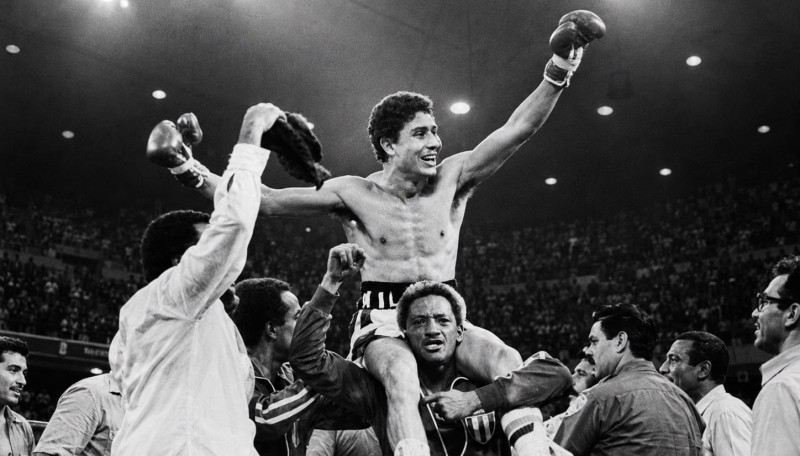
Wilfredo Gómez (Puerto Rico): Won the bantamweight world title at just 17, defeating Cuba’s Luis Jorge Romero in the final before embarking on a legendary professional career.
Howard Davis Jr. (USA): Captured featherweight gold and won the Val Barker Trophy in Havana before winning Olympic gold in Montreal two years later.
Ayub Kalule (Uganda): Defeated Bulgaria’s Vladimir Kolev in the light-welterweight final to become Africa’s first World Boxing Championships gold medallist, later winning the WBA world light-middleweight title as a professional.
Rufat Riskiyev (Soviet Union): Claimed the middleweight crown before taking Olympic silver in 1976.
Mate Parlov (Yugoslavia): Added the world light-heavyweight title to the Olympic gold he won in Munich.
The first 11 world champions
The champions crowned in Havana represented a diverse range of styles and boxing cultures:
48 kg: Jorge Hernández (CUB)
51 kg: Douglas Rodríguez (CUB)
54 kg: Wilfredo Gómez (PUR)
57 kg: Howard Davis Jr. (USA)
60 kg: Vasiliy Solomin (URS)
63.5 kg: Ayub Kalule (UGA)
67 kg: Emilio Correa (CUB)
71 kg: Rolando Garbey (CUB)
75 kg: Rufat Riskiyev (URS)
81 kg: Mate Parlov (YUG)
+81 kg (Heavyweight): Teófilo Stevenson (CUB)
A tournament that became a tradition
Havana 1974 did not simply add another event to the calendar; it created a new global benchmark.
The World Championships initially ran on a four-year cycle before shifting to a biennial format in 1989. Over the decades, generations of Olympic medalists and future professional undisputed champions have passed through the tournament ring.
For Cuba, the 1974 championships set the foundation for decades of dominance. Following Stevenson's lead, subsequent eras produced icons such as Félix Savón, cementing the island's reputation as a powerhouse of the sport.
Havana’s legacy remains core to IBA’s identity. In 2024, International Boxing Day returned to the Cuban capital to celebrate the 50th anniversary of that historic first championship.
From one tournament to a global celebration
International Boxing Day has undergone its own evolution, expanding from a national initiative into a worldwide event.
Today, National Federations, athletes, coaches, officials, and grassroots clubs across all continents use the day to celebrate boxing in every form — from local community gyms introducing children to the sport to elite competitors on the international stage.
That connection between past and present is especially resonant in 2026.
This year’s theme, “Honouring Our Champions, Inspiring Our Future”, highlights not only elite athletes, but also the coaches, referees, judges, volunteers, and administrators who build opportunities for future generations.
More than 50 years on from Havana 1974, the spirit of that first tournament endures: uniting the global boxing family through competition, discipline, and mutual respect.
Comments
Share your thoughts on the above article by NewsHub @ PhilBoxing.