There is no crying in boxing.
Not unless you are Manny Pacquiao, you are visiting a part of your country hit by a typhoon and you are overwhelmed by the death and devastation.
It was Dec. 1, 22 days after Typhoon Haiyan had sent its 200-mph winds and tsunami-tossed oceans through the heart of the Philippines, a country that is made up of 7,107 islands and spreads 1,000 miles from north to south.
Pacquiao and his party showed up to do what they could to heal and soothe. He was bringing Bibles to read to them, preparing inspirational speeches to deliver.
Then he saw it.
“I cried,” he says, clearly stricken again at the memory.
“I saw it on TV, but you can’t really see until you are there. Then, it hits you. The winds were 200 miles an hour. Cars were tossed around like paper.
“There were no homes. Everything was flat. It smelled like decay. Everything did.
“I just was crying.”
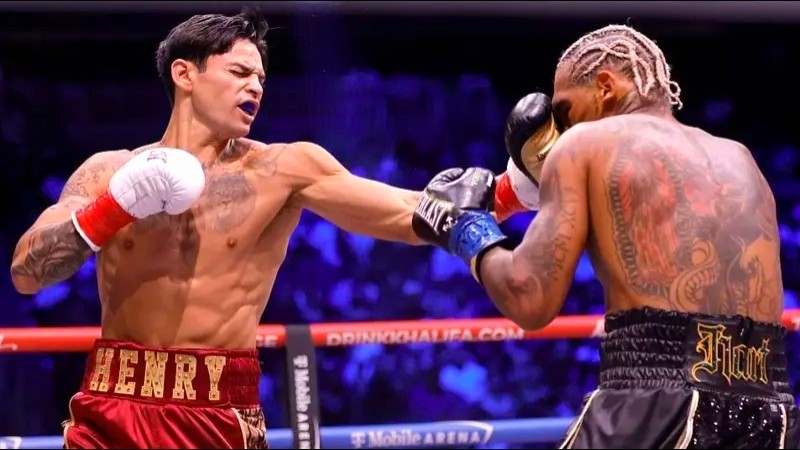
A week earlier, on Nov. 24, he had been almost a fairy tale hero to the people among whom he was now walking, and sleeping with, in their tents. Pacquiao had fought Brandon Rios in yet another of his multimillion-dollar boxing matches that had made him the pride of the Philippines.
That fight was in China. They had somehow telecast it into a huge plaza in the most devastated place of all, the central city of Tacloban.
Hundreds of people died in Tacloban. Just two weeks later, thousands gathered to watch on the big screen, as Pacquiao gave Rios a boxing lesson and Filipinos their first good news in awhile.
Now, he was there in person, his first stop on his emotional tour. He carried the burden of morale-boosting. Also, perhaps, some guilt.
You see, Pacquiao isn’t just a popular boxer. He is also a popular politician, in a country that cares about its politics almost more than anything else. He is the second-term congressman from the southern province of Sarangani.
When the typhoon hit, he was training at home in General Santos City, where the day stayed hot and sunny. When Haiyan hit to the north, both the country and Pacquiao were torn, one literally and the other figuratively.
It wasn’t his district. But he is a national icon. He is also a possible future president of the country, once he works his way through his next political step, a Senate seat.
Should he break training camp for the Rios fight and go to the people? How could a sporting event be more important than people suffering and dying? Or might it be, especially in light of the likelihood that he would only get in the way of the rescue and cleanup. Might not a victory in the ring do more to boost the country’s morale than a photo-op walk through the rubble?
Pacquiao wanted to go. That is his nature ? sharing and giving. The lines of people around his home in General Santos, those seeking food and money, are legendary. It is said that nobody leaves empty-handed.
His trainer, Freddie Roach, says he was the realist, the bad guy. Pacquiao listens seriously to only a handful of people. Roach is one of them.
“I told him he couldn’t go, he couldn’t leave training camp,” Roach says. “It was too close to the fight. I made the call.”
Roach says he had learned from experience a few years earlier, when Pacquiao was training near the Philippine city of Baguio and there was a deadly mudslide.
“He went and visited the victims, saw the devastation,” Roach says. “He wasn’t the same for awhile after that. He was depressed. The typhoon was just too close to fight night.”
So, immediately after the typhoon, all Pacquiao could do was make a donation to the recovery efforts and dedicate a victory over Rios to the people.
He also said he would visit the devastation when the fight was over, and so he did. There was no way to predict the gut-wrenching he was to experience.
“I went to 16 cities,” he says, counting them on his fingers. “No, two cities and 14 towns. There was nothing there in the towns. Just flat. We were walking in water.
“I saw a huge cargo ship, sitting up in the mountains.
“The second day, we went on a search-and-rescue mission. This was 24 days after the typhoon. In 20 minutes, we found two bodies.”
A woman who had been at one of Pacquiao’s rallies in the town of Suhi was grateful for his visit, but overwhelmed by the task ahead. Rosalinda Perez, quoted in the newspaper Inquirer Visayas, said, “We cannot stomach the foul smell from the dead bodies. We can’t eat. We keep vomiting.”
Roger “Haplas” Fernandez, an assistant trainer on Pacquiao’s team, made the trip and says, “We were humbled.”
He also hinted at how popular Pacquiao is, even in the midst of all the pain and horror ? even to the point of badly misplaced logic.
“Some people told us they were happy for the typhoon,” Fernandez says, “because, that way, they got a chance to see Manny in person.”
Pacquiao has already made several donations to the relief effort. He will next fight Timothy Bradley on April 12 in Las Vegas. In conjunction with that, he says he will hold a big fundraiser, with details still to come.
That will be his financial tears. He has already shed the other kind.