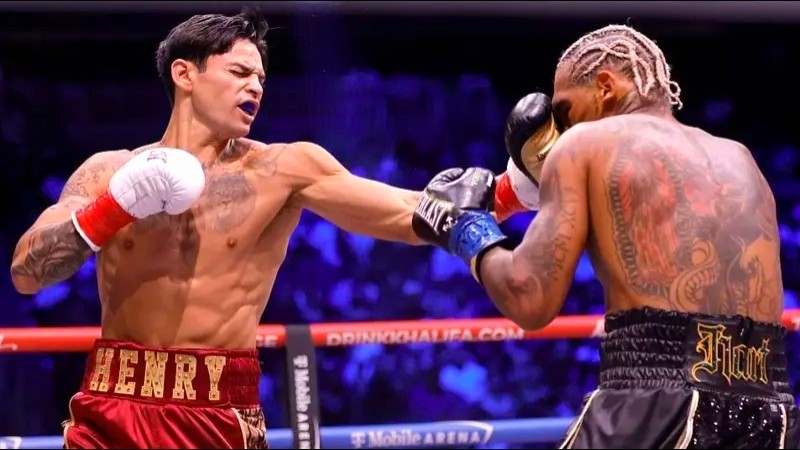
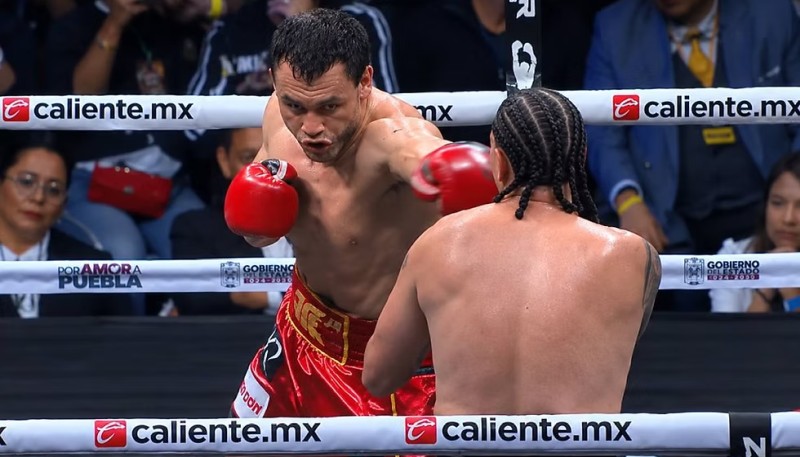
In boxing it is very common to see a fighter retire with some slightly thickened speech and within a few years they?ve progressed to being completely incoherent?
George Foreman once said, ?Boxing is the sport to which all other sports aspire.? I am certain that it?s in large part due to the courage inherent to not just great fighters, but probably more importantly, most fighters. Like everything else, the courage can be a double-edged sword with high consequences.
In 1971 Eugene ?Cyclone? Hart was the hottest prospect Philadelphia boxing had seen in years. The middleweight residents of just North Philadelphia at that time included ?Bad? Bennie Briscoe, Willie ?The Worm? Monroe, Bobby ?Boogaloo? Watts, Stanley ?Kitten? Hayward, and ?Cyclone? Hart. Talented Philadelphia amateurs in the years before legalized gambling in Atlantic City turned professional after hundreds of amateur bouts and Hart was no exception. He was still a teenager in May of 1971 when he stopped ?Kitten? Hayward in the first round at The Arena in West Philadelphia at 45th & Market Streets. Hart?s record was 21-0 (with 20 knockouts); the only fighter to have gone the distance with him was veteran contender Don Fullmer.
Hart had very spindly legs that were the result of childhood polio, but the upper body of a heavyweight. His most remarkable asset was his left hook. Several years later when heavyweight Roy ?Tiger? Williams left Muhammad Ali?s training camp and became one of George Foreman?s sparring partners in Zaire, a reporter asked Roy, ?Who is the hardest puncher you have ever faced?? Obviously, a soft question to showcase George?s power, but Roy was very articulate and pensive, so he paused and then said, ?Cyclone Hart, a middleweight from Philadelphia. When he hit me in the body his arms were in me up to his elbows.? In a post-fight interview with ?Bad? Bennie Briscoe after he and Hart fought to a 10-round draw Briscoe remarked, ?That boy?s punches could knock down the walls of Jericho.? Vito Antuofermo added, ?He hits so hard that he really shouldn?t be allowed to fight.?
On September 21, 1971 at The Spectrum in South Philadelphia, ?Cyclone? Hart was the main event when he faced former light middleweight champion Denny Moyer. Moyer was a rugged fighter who had a record of 80-22-4 including an unsuccessful title shot with Carlos Monzon the year before. The fight was competitive over the first five rounds, but in the sixth round with Hart?s back to the ropes, both he and Moyer fell through the ?too loose? ropes several feet onto the judge?s table and then to The Spectrum floor.
Both fighters were injured and the fight was ruled a No Contest. In 1971, neither CT scans or MRI scans were an option. The presumptive diagnosis of ?concussion? was rendered. I can?t really judge what impact that injury had on Moyer?he enjoyed a very successful career and retired from boxing in 1975 with a record of 97-38-4. Denny Moyer developed dementia and was living in a nursing home near his home of Portland, Oregon when he died on June 30, 2010 at the age of 70 from dementia pugilistica (or ?punch drunk syndrome,?; there are several other terms including chronic traumatic encephalopathy). The grim ending is so common among fighters that it actually loses much impact (the same description could easily be applied to Jimmy Young, Greg Page, Jerry and Mike Quarry, Floyd Patterson, Johnny Tapia, and numerous others). Fighters rarely seem to enjoy a happy ending. The great story of George Foreman reinventing himself and becoming fabulously rich with his great sales skills stands in stark contrast to what is most often recited. Rather the stories of fighters who have fallen on hard times such as Muhammad Ali, Bobby Chacon, Wilfredo Benitez, and Rocky Lockridge are much more frequent.
The scenario of boxers that sustaining punishment over long periods of time and slowly erode is well established. Although it happens less often, there are examples of much more explosive damage occurring in a much shorter time periods despite it not being recognized. ?Cyclone? Hart was never the same after the September 21, 1971 fight with Denny Moyer. He fought 18 more times until 1977, but his record was 9-8-1 in that period. In 1977, after losing to Vito Antuofermo he retired for five years, and then lost a single comeback attempt in 1982. Prior to his 22nd fight he had never been knocked out, even as an amateur. After the Moyer fight eight of his nine losses came by knockout (Willie ?The Worm? Monroe beat Hart via a 10-round decision). ?Cyclone? did have some flashes of his former brilliance in late 1975 when he beat ?Sugar? Ray Seales by decision at Boardwalk Hall in Atlantic City and followed it up with a 10-round draw with ?Bad? Bennie Briscoe at The Spectrum. When examining his 30 wins only two went the distance (Don Fullmer and Ray Seales).
In the past 20 years scientists have learned more about the brain than was ever known in the rest of recorded history. Concussion comes from Latin and translates as ?to shake violently.? With all of the advancements it is almost easier to understand what concussion is not. Concussion is not a loss of consciousness, but a loss of consciousness is often sighted. Concussion at one time referred to what we now refer to as a ?closed head injury.? A closed head injury implies trauma that involves only the brain while the leathery covering and skull are not injured.
Concussion has taken on a meaning that suggests it is a ?mild? type of traumatic brain injury. In science when something can?t be accurately measured less accurate descriptions are often used until numeric measurements can be applied. By the early 1980s CT scans became widely available, and by the end of the 1980s MRI scans were becoming widely available. Once available, concussion became the term used to describe head injuries in which the CT scan or MRI scan did NOT show blood, bruising, or structural damage of the brain. So ?concussion? was used to describe patients that had trauma with symptoms, but CT and MRI scans were ?normal.?
Just because an injury isn?t seen on a CT or MRI scan does not mean the injury is ?mild or minimal.? Physicians and researchers now understand that the brain cells (neurons) are temporarily poorly functioning with low electrical levels and high levels of glutamate (an important transmitter). While this is not as severe as a bleed or large area of bruising, it is misleading to suggest it is ?mild or minimal.? The American Academy of Neurology and many other medical and scientific organizations are trying to better describe concussion and traumatic brain injury, but as far as the average person is concerned it describes some brain malfunction that when sustained repetitively over time has been well characterized in the sport of boxing since at least 1920, when Dr. H.S. Martland, a British neurologist, used the term ?dementia pugilistica? to describe what has often been referred to as ?punch drunk syndrome? or the current scientific moniker of ?chronic traumatic encephalopathy.?
In boxing it is very common to see a fighter retire with some slightly thickened speech and within a few years they?ve progressed to being completely incoherent. Symptoms often do not appear early in a disease, and frequently in neurological diseases many do not appear until the disease is well-advanced. People are often surprised when they are first shown the inside of the skull (sometimes called the cranial vault) because unlike the smooth rounded exterior of the skull the interior has many rough irregular and sharp bony portions that can result in bruising of the brain?s surface.
There has been a significant interest generated in ?concussion? and closed head injuries in the last several years. Most of it is in many ways driven by the National Football League, and probably much more forceful is the influence of millions of mothers who have children playing organized football. Research money is allotted much more generously when large organizations such as the NFL, NHL, NCAA, and others get involved and generate interest.
In the mid to late 1970s much of the pioneering basic science studies were conducted by neurosurgeons like Thomas Generalli, MD at the primate head injury laboratory at the University of Pennsylvania. (Public outcries generated by PETA?s raid of the lab made national headlines after the scenes of graphic violence imparted to baboons were uncovered. But the information and technological advances from the last two decades has served to convince researchers just how modest our understanding really was not very long ago.) The research from the primate head injury studies provided tremendous insights that are still being sorted out. The physics of force delivery explained why angular punches (hooks, uppercuts, and overhands) much more frequently resulted in knockouts than punches that resulted in linear acceleration. This pattern was attested to by neurosurgeon Michael J. O?Conner, MD after watching a Ring Magazine film (on VHS tape) that featured famous knockouts, the vast majority of which were the result of hooks, uppercuts, and overhand punches, rather than straight right or left hands.
Trainers, ex-fighters, and many fans understand the common paths leading to brain damage and hard times, but I think there are examples, although less frequent, of fighters who sustain significant damage in much shorter periods of time. ?Cyclone? Hart?s experience in 1971 started me thinking about head injuries in different ways. There are numerous fighters who sustained damage that seemed to change them forever. One example is another Philly fighter, Meldrick Taylor who in the fight against Julio Cesar Chavez boxed so beautifully in the first 10 rounds, only to change plans and try to exchange with Chavez. The result was Taylor sustained a blow-out fracture of an orbit (eye socket) and with that he sustained a closed injury that changed the entire rest of his career.
I thought about ?Cyclone? when Tommy Hearns came to The Spectrum to fight Alfonso ?Fonzi? Hayman in 1979, because Hearns was 17-0 with 17 knockouts and it seemed reminiscent of Hart eight years before in the same venue. Much of the prefight hype centered around whether Hearns would knock out Hayman. Hayman was a cagey veteran fighter with a lot of pride. He made it clear that he had no intention of being stopped in his hometown. Hearns really displayed tremendous talents that night, but Hayman decidedly went the distance. After the fight his forehead was so swollen that he couldn?t place his glasses on his forehead. That fight raised the question of why some fighters receive a debilitating injury, but others like Hayman underwent similar force with little obvious effect. Are the symptoms of concussion a function of where the damage was sustained in the brain, is one person more susceptible to head trauma than others, or does the ability to recover vary as well?
Another tragic consequence of a closed head injury was the 1986 fight in Las Vegas when Tommy Hearns fought for the first time in eleven months after losing to Marvin Hagler. Hearns was to face James ?Black Gold? Shuler, a gracious person and a tremendously talented amateur from Philadelphia who was a rising star as a professional with a record of 22-0. Shuler sustained a first round knockout loss to Hearns that night, but seemed to recover well after the fight. After returning to Philadelphia from Las Vegas Shuler purchased a Kawasaki Ninja Cycle, and despite being in a congested intersection in Philadelphia he collided into a tractor-trailer and was pronounced dead at the scene. It seems probable Shuler likely was suffering from what is often referred to as a post-concussion syndrome. It frequently is described as a feeling of being out of sorts, almost as though you feel like your watching yourself on a film. There is frequently diminished fine motor control and processing speed that is transient and may last for up to six or eight weeks after the trauma.
The reality is that as our knowledge gets better we may soon be able to understand what falls into a safe zone and what is no longer safe. Until that time it is counterproductive to use the words ?mild? or ?minimal? traumatic brain injuries. This is especially true when the patient is an athlete in whom just a slight decrease in function and reaction time can be critical.
There seem to be a few reasonable steps to limit injury. Usually just paying attention to a problem reduces its incidence. Given the repetitive chronic nature of the injuries it is most likely to occur where the fighter spends the most time?in the gym rather than in actual bouts. So more caution and supervision in the gym may be beneficial. Staying in condition helps avoid sloppy training habits such as ?boxing your way into shape.? Ed Benzel, MD, the chairman at The Cleveland Clinic Department of Neurosurgery, and several researchers there have done some interesting work testing protective equipment (headgear, football helmets, etc.) to compare different materials for safety and efficacy by attaching devices (accelerometers and receptors) to measure impacts. Just by paying more attention to prevention of injuries is likely to reduce them. In closing, common sense and keeping the importance of avoiding ?concussion? is likely to be beneficial in reducing injuries. Until there is a tested and reproducible measurement system that can accurately describe an injury, it is very unlikely that public pronouncements of decreased incidence of concussions are accurate.