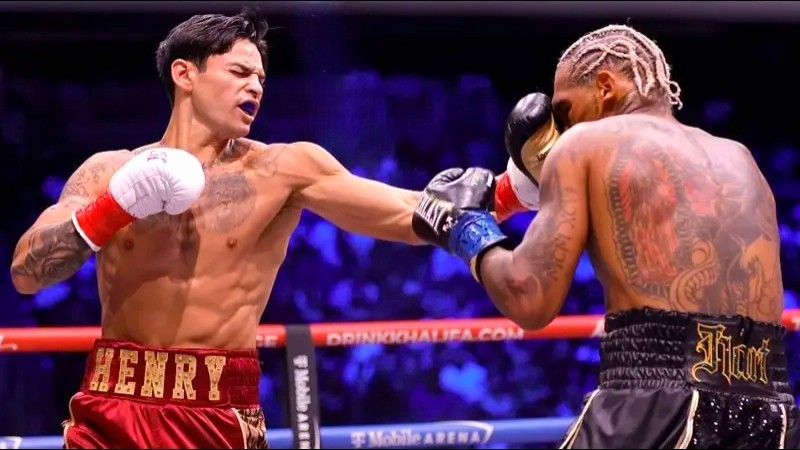
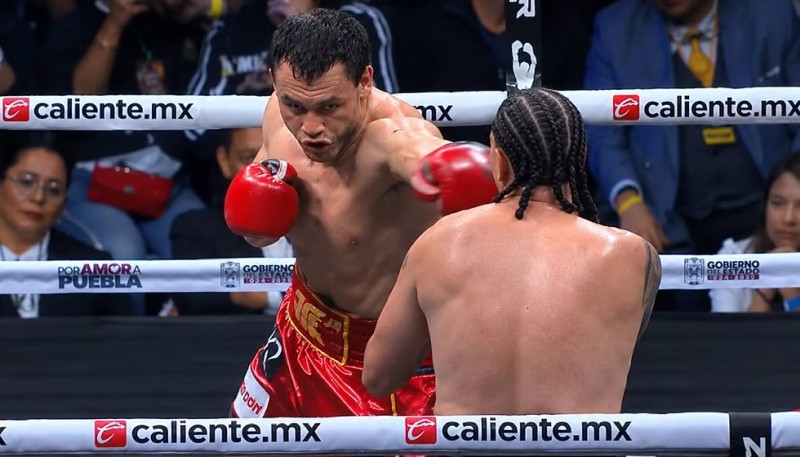
The huge Floyd Mayweather-Saul Alvarez bout at the MGM Grand in Las Vegas is almost here and, already, the competitive tension is thick.
Despite having developed a reputation as a master of boxing head games, Mayweather is finding the 23-year-old “Canelo” to be every bit his equal in the area of psyche wars.
Mostly stoic and straight-faced, Alvarez has maintained his calm throughout the exhausting pre-fight publicity process and press tour. But when backed into a corner by something said by Team Mayweather, the young battler has been quick to go for the jugular, breaking convention and revealing details from pre-fight negotiations that paint Mayweather as a manipulative hustler, worried enough to try and pressure Alvarez into crippling contractual stipulations.
Not too long ago Alvarez revealed that Team Mayweather had tried to pressure him into taking the fight at the welterweight limit of 147 pounds, one division below his usual junior middleweight home. Alvarez last fought at 147 back in 2010, but a return to that weight would’ve been an impossibility without some drastic life-draining effort similar to Oscar De la Hoya’s push to make 147 for his bout with Manny Pacquiao. Then, according to Alvarez, Team Mayweather countered with proposed catchweight limits of 150 and 151 pounds, both of which were refused, before settling on the 152 lb. limit.
After revealing the alleged efforts to drain him via pre-fight stipulation, Alvarez let loose with a bit of information perhaps even more damning to Mayweather’s reputation as someone interested in fighting opponents on an even playing field.
According to Alvarez, Team Mayweather wanted to insert a rehydration clause into the contract, limiting the amount of weight Alvarez could put on between the time of the official weigh-in and fight night. The young Mexican, who has rehydrated to upwards of 170 pounds by fight night would be essentially pinched at both ends— forced to make an uncomfortably low weight and then kept from replenishing himself before stepping into the ring.
“Then, they came up with a second-day weigh-in,” Alvarez told the media during an interview session. “They wanted to do a second-day weigh-in and limit what I could weigh the second day, and I wouldn’t agree to that. And then they tried to force me to stay quiet and to not mention it, and that’s why we didn’t say anything. And we haven’t said anything until now.”
For fans and followers of Floyd Mayweather, this can’t be pleasant information to hear. For the longest time, Mayweather and long-time virtual arch-rival, Manny Pacquiao, were differentiated in the eyes of many by Pacquiao’s use of contractual cheats to gain an upper hand against bigger opponents and, on the other side, by Mayweather’s insistence on facing fighters at their 100% best.
Now, throw all of that posturing from Mayweather out the window. If there was a difference between the two in willingness to fight a fair battle, that difference has been completely erased if what Alvarez says is true— and there’s no reason to believe that it isn’t.
Could Mayweather be legitimately worried about facing Alvarez in a true man on man battle? Could he have been looking to exploit Alvarez’s eagerness for such a huge fight by making whatever demands he could and seeing what would stick?
Whatever the case, right is right and wrong is wrong. Catchweights should not be a part of the game at this level. You either fight someone at the appropriate weight or you don’t. It’s really that simple.
Now, for those of us who do really care about an even playing field and true combat between fighters at their best, Mayweather-Alvarez will have somewhat of an asterisk attached to it. Yes, give credit to Mayweather if he wins, but the question will always persist: What if Canelo had been at his absolute best? And just as Pacquiao, still to this day, gets partial credit for beating catchweight victims Oscar De la Hoya and Miguel Cotto, a Mayweather win over Alvarez will be judged similarly.