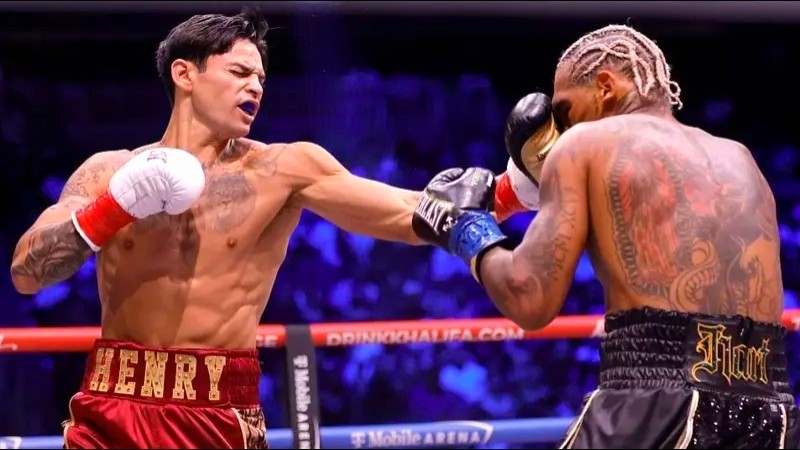
This week, boxing superstar Manny Pacquiao told the AFP that he may run for president of the Philippines in the future. Pacquiao made the statement while promoting his next fight in Macau. “When I started boxing, . . . I was planning . . . and thinking about getting to become a champion. So when I entered politics, it’s the same thing,” said the 34-year-old congressman from Sarangani, located in the southern Philippines. The boxer would be eligible to campaign for the highest political office in the 95 million-strong country in the 2022 elections. Mr. Pacquiao, if you ever become president, here are 5 major reforms that the Philippines needs. 1. Education Reform To whomever might be the future Philippine president: Filipino students require appropriate resources (such as textbooks, classrooms, and excellent teachers) in order to be competitive with counterparts from other emerging countries, such as India and China. There also needs to be major revisions in content and curricular priorities. High schools and universities should emphasize excellence in math, English, science (including the medical fields), entrepreneurship, and engineering — fields which better prepare new graduates to become more competitive in the workforce. In the long-run, better education results in higher wages, more productivity, and a larger number of companies doing business in the Philippines. In the subject of history, many school books convey blatantly false assertions, such as depicting the late dictator Ferdinand Marcos in positive light while glossing over the atrocities and plunder committed by his regime in the 1970s and 1980s. Through a lack of historical accuracy and appropriate perspective, citizens look to Jose Rizal as the de facto national hero without ever questioning Rizal’s position as advocating mere reform of Spanish colonial rule; that in the 1930s, Rizal was picked by American administrators to be the nation’s hero since he was not as “radical” a figure as Andres Bonifacio. It was Emilio Aguinaldo who ordered Bonifacio, the founder of the Katipunan, killed. Sadly, most people, let alone teachers, aren’t informed about the founding of the Philippine Republic. Such disregard for truth, as well as, lack of appreciation for history significantly distorts our national identity. Our educational budget would be more wisely spent by providing accurate information in our nation’s schools. Filipinos would also have a greater sense of identity, patriotism and national pride. 2. Corruption To whomever might be the future Philippine president: After years of promised reforms, the bureaucracy remains one of the most corrupt in the world, according to multiple surveys. Red tape and corruption remains one of the biggest stumbling blocks for social, economic, and political progress. They discourage foreign direct investments which would create more jobs for millions of Filipinos. In many provinces, family clans and political dynasties maintain a monopoly over the local economy, where small businesses are held ransom, or simply become subject to hostile takeovers, by ruling clans. Mr. President, this practice is wrong. And it concentrates power and wealth in the hands of a few and arrogant elite. Let’s remove the feudal practices of the past, and establish a larger and thriving middle class. 3. Military To whomever might be the future Philippine president: The nation’s defense forces remain one of the worst-equipped militaries in Asia, which in some cases still uses post World War II-era hardware and methods. Outdated and/or obsolete tanks, transports, planes, ships, and guns lack fuel, ammunition, and spare parts. While many of our young men and women in uniform serve with true patriotism, gallantry, and selflessness, the military brass needs to practice ethics in handling procurement and government contracts. National security cannot suffer due to billions of dollars lost at the hands of corrupt officers and/or their civilian overseers. Our brave soldiers are woefully helpless in the face of external threats, such as continued encroachment by Chinese warships and airplanes in territorial waters, such as the resource-rich Scarborough Shoal. Such actions by the Chinese are an outrage, and threaten our security and economic interests. Weakness invites bullying. And insufficient guns invite the theft of our national treasures. Our lack of security assets leads to over-reliance from the United States for help. It hurts our collective pride when the Philippine government constantly begs for military and economic assistance from other countries. It also encourages other nations to look upon our homeland and people with condescension and contempt. It’s simply unacceptable. No great people ever tolerates humility or weakness. Not Sparta; not ancient Rome; not Napoleon’s France. Filipinos are the descendants of great warrior clans, but for too long we have been pacified into obedient bystanders. Mr. President, nearly 7 decades have passed since we gained permanent independence (from the Japanese and Americans). We are out of excuses. Let’s also stop continuing to blame past injustices for our plethora of problems. In our Constitution, protection of citizens and the nation’s territories remain the first duty of government. Article II reads: “The prime duty of the Government is to serve and protect the people.” 4. Reproductive Health To whomever might be the future Philippine president: Research has shown that culture and values is the most significant factor in determining a nation’s prosperity over time. Rome became powerful because of its culture. America became prosperous because of its resourcefulness and innovation. The Philippines is morally justified to embrace its conservative values, such as faith and pro-life policies. However, it’s imperative that we educate young Filipino women (and men) about personal responsibility, which includes contraception, sexual health, and family planning. The country currently has a population of nearly 95 million. However, that figure is expected to double by 2030. The government cannot create nearly as many jobs, or provide services, for a population that size (190 million). We can respect our faith-based traditions while acknowledging that the holy book was written more than 2,000 years ago under entirely different set of circumstances. In the Constitution, Section 6 of Article II declared that “the separation of Church and State shall be inviolable”. Contraceptives should be more widely available and encouraged. Practicing personal responsibility is not an immoral act. Such methods prevent public health threats such as AIDS and other sexually transmitted diseases from spreading. In the Philippines, nearly one-third of babies are now being born out of wedlock. Most of these children will suffer in poverty by belonging to single family households, or by being left completely alone in the streets. Mr. President, personal responsibility is a moral imperative. Let’s bring our social norms out of the Dark Ages and out of austere Puritanism. At the end of the day, the Catholic Church will not foot the bill for millions of Filipino orphans damned into a life of extreme desperation and hunger. 5. Energy Security To whomever might be the future Philippine president: Our country remains woefully dependent on oil imports from an increasingly unstable Middle East. With potential large-scale war in Syria, Iran, Israel, Palestine, and neighboring countries, energy prices could skyrocket and cause the Philippine economy to grind to a halt. Nearly 90 percent of the world’s oil supply travel through the narrow Straits of Hormuz in the Persian Gulf, an opening which is only 80 miles wide. What would happen if supplies are cut? Mr. President, the Philippines has no oil reserves. Thus, we as Filipinos cannot allow external circumstances to dictate our economy and our livelihoods. In the Visayas and Mindanao, electricity rates are extremely high. Such high costs of production have driven most manufacturers out of the region. Tens of thousands of jobs have been lost due to the incompetence and/or lack of will by elected politicians. They have had more than 2 decades to fix the electricity and energy problem. It’s simply inexcusable. At this point in time, solar and wind are not solutions because they such technologies are too expensive. What about geothermal? There’s not enough hot springs and dams to create power for 95 million people. What about coal? The Philippines doesn’t have a lot of deposits. The coal that is found in the country are found to be low grade. Without emissions technology, coal is also very harmful to the environment. Mr. President, here’s how to fix our energy problems. Build modern (i.e., safe) nuclear power plants in all 3 regions of the country. Remove the red tape and corruption, and place the administration in a national governing authority to remove local bureaucrats from the approval and oversight process. Instead of (passively) collecting royalties from the nation’s massive natural gas reserves (perhaps as large as 5 trillion cubic feet), build a comprehensive natural gas infrastructure here in the Philippines which would enable Filipinos to extract, transport, liquefy, and convert natural gas into fuel and electricity. Australia is doing it. So are Vietnam, Thailand, and Egypt. Many others countries are doing it. Why can’t the Philippines do it? Cheap energy is critical for staying competitive in a crowded global marketplace. Mr. President, the Philippines has always been a resource-rich archipelago. Yet, nearly half of our population is mired in poverty. It’s been nearly 7 decades since we’ve gained our independence. Our ancestors fought and died for our freedom. Many collapsed in that terrible march in Bataan, determined in their defiance against tyranny; and, highly resolved to secure a more prosperous nation for future generations. We are that future generation. The fate of future ones rests securely in our hands.