Many U.S. boxing fans have not given WBC heavyweight champion Vitali Klitschko (45-2, 41 knockouts) the respect he deserves after a stellar 17-year career. At 6 feet 7 inches tall with a 79 inch reach, the Ukrainian would have been a tough match up for a prime Mike Tyson or Evander Holyfield. Yet, the latter two – as Americans – got more coverage by the western media and, as a consequence, more adulation from fans in North America.
At 41-years-old, “Dr. Ironfist” is poised to retire from the ring and continue his upward climb in politics. The Ukraine has a population of 44 million and is located in between Romania and Russia, north of the resource-rich Black Sea.
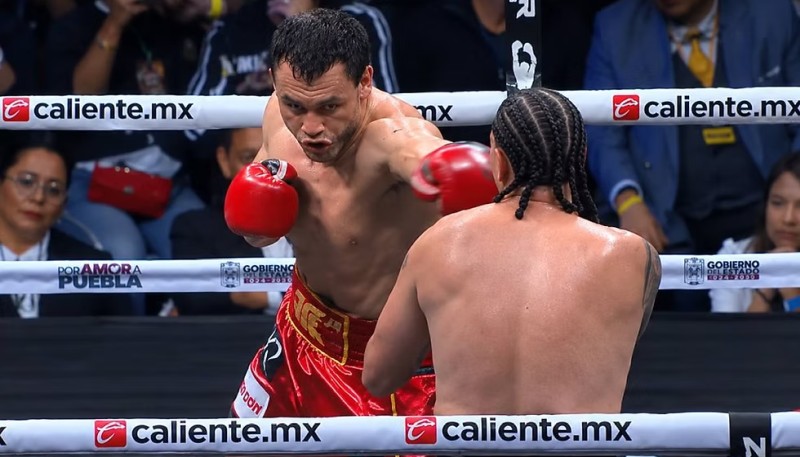
Vitali Klitschko vs Juan Carlos Gomez
Public service is in Vitali Klitschko’s blood. His father was a colonel in the Soviet Air Force.
Politics poses difficult challenges but Klitschko, like Manny Pacquiao in the Philippines, may occupy his nation’s highest office in a future election. The prospect is intriguing enough that nearly 15 percent of Klitschko’s countrymen believe that the boxing champion could one day become Ukraine’s president.
Here are some of his views on current economic and geo-political affairs: Advocates closer ties between the European Union and Ukraine as a “model for our future political and economic development” Favors cooperation between NATO and Ukraine Advocates respect for human rights, including within the nation’s judicial system Wants less corruption and more transparency in local politics Advocates lower taxes to stimulate the economy
There are roadblocks of course. Politics requires burning a lot of cash during election cycles. Negative attacks, which include fabricated hearsay and outright lies, can cause public goodwill to evaporate overnight. Small errors in judgment are magnified by the media. Fickle voters often place their support based on style (and not substance). See Barack Obama.
Finally, daily work often includes mind-numbing details, arguments, and negotiation with policy wonks.
Boxers can have a rough transition into the world of legislation and policy deal-making. When Manny Pacquiao first ran for congress in the Philippines in 2007, he lost at the voting booth despite wielding an enormous advantage in popularity over his opponent.
Fame is no a guarantee of effectiveness; rather, it’s only a starting point.
Additionally, fighters are lone wolves in which success or failure in the ring relies solely on individual effort. In contrast, politics is a team sport that requires a solid ground game at the bottom, and alliances at the top.
In 2006, Vitali Klitschko (a late entrant) campaigned for mayor of Kiev but lost in the election with only 26 percent of the vote. However, he was elected as a people’s deputy to the Kiev City Council. His campaign adviser was none other than former New York City mayor Rudy Giuliani, a moderate Republican who ran for U.S. president in 2008.
In 2008, Klitschko was appointed to the Ukrainian delegation of the Congress of the Council of Europe. In 2012, he was elected into the national parliament.
Vitali Klitschko has positioned himself to be a conservative leader. His support for low taxes provides insight into a pro-business (and perhaps Libertarian) philosophy. His views on the European Union might be compared to Republicans and conservative Democrats favoring NAFTA for the U.S., Canada, and Mexico in the 1990’s.
His positive views of NATO shows Klitschko’s westernized sentiments, and likely opposition to Russian president Vladimir Putin’s efforts to revitalize Soviet-era ideology and practices.
We know that this champion was legendary in the ring. If Vitali Klitschko stands up to apologists and liberals, he’ll provide strong national leadership and make a lasting impact of a different kind.