This week, seven members of the Zetas were arrested by American law enforcement due to charges of money laundering. They used sports to carry out their crime, and unfortunately, this was not an isolated case.
The Zetas are considered one of the most notorious drug cartels in Mexico responsible for killing thousands near the U.S.-Mexico border. Drug money’s influence in sports is seeing an alarming increase. In the case of the Zetas, its leaders determined that it could launder tens of millions of dollars by breeding champion-caliber race horses in California, New Mexico, Oklahoma, and Texas, according to U.S. authorities. View slideshow: 2012 Belmont Stakes
In 2009, the Financial Action Task Force (FATF) conducted a study on behalf of major soccer organizations. The group examined soccer’s vulnerabilities with respect to drug money and terrorist financing. In its findings, FATF identified over a dozen sports that are particularly vulnerable to criminal funding: Soccer Boxing Kick boxing Wrestling Horse racing Cricket Car racing Rugby Motor racing Ice hockey Basketball Volleyball
Conversion of Cash
Sports attracts crime syndicates due to its ability to transform cash into non-cash assets. Because sports comprises a community of well-placed investors, it allows criminals to more easily convert tangible properties back into large sums of liquid cash.
“The price of freedom is eternal vigilance.” – Chris Bell
Middlemen, such as crooked accountants and lawyers, aid such conversions for a fee which can amount to 10 percent of the transaction value. According to FAFT, “Investments in [teams] are a risk area for money laundering due to a lack of transparency regarding the source of funding.”
Secondly, winnings from gambling offer a secondary market to further disguise the source of illicit funds. Unfortunately, when the mafia stakes millions of dollars in a game, race, or fight, they are likely to corrupt the contest in their favor. That’s because their leverage not only includes large payoffs to trainers and officials, they can also carry out bodily harm and death to involved parties and their loved ones.
In the past, the Union of European Football Associations has called on Europol (a pan-European police organization) to investigate possible match-fixing by Asian betting syndicates in some of the most popular soccer matches on the continent.
“Doubt must be no more than vigilance, otherwise it can become dangerous.” – Georg C. Lichtenberg
Sports as a Financial Market
In virtually all sports organizations, there are either minimal or non-existent mechanisms for detecting financial irregularities. With the stock market, the Securities and Exchange Commission (SEC) is able to intercept insider trading based on real-time information. Sports (particularly sports betting) is a $200 billion dollar global exchange absent of any such oversight.
Last year, Full Tilt Poker took hundreds of millions of dollars worth of players’ deposits and placed the sums into the bank accounts of shareholders. Ultimate Bet, another internet poker site, was the victim of a sophisticated hacker who won millions of dollars by cheating on card games. In April 2011, the U.S. government shut down the sites and arrested several of the main operators, including payment processors. However, federal officials have not taken action regarding fraud in sports.
A well-placed source within Homeland Security informed this reporter that Mexican drug cartels pay corrupt U.S. patrol agents between $60,000 to $70,000 per day to let their illegal cargo pass through the border without inspection. When an agent no longer becomes “cooperative”, he and his family are killed. There have been cases of such executions along the U.S.-Mexico border the past few years. It shows the resolve of cartels to win by all means necessary.
Back to horse racing. With each thoroughbred costing six- or seven-figure amounts, the mafia is able to “cleanse” large sums of illicit cash in relatively unmonitored stables located in remote areas. In the case of the Zetas, it appeared that the cartel sent thousands of kilos of drugs into the United States each year, and the proceeds were invested in horse racing.
According to CNN:
Among the horses that were part of the alleged laundering operations were Tempting Dash, winner of the Dash for Cash at Lone Star Park racetrack in Grand Prairie, Texas, on October 24, 2009, and Mr. Piloto, winner of the $1 million All American Futurity at Ruidoso Downs on Labor Day 2010 in Ruidoso, New Mexico, authorities said.
FAFT adds: “Cash received from ticket sales for football matches may be open to manipulation in order to launder funds by falsifying the books of a [team].”
Soccer’s Illegitimate Funding
Soccer is hard to monitor and regulate as there are five million referees and officials around the world. In 2011, FIFA officials were bribed during the bidding process for the 2018 and 2022 World Cup.
On June 1, 2012, former Ghanaian international striker Elvis Hammond, 31, admitted to money laundering after making four unauthorized transfers worth $1.27 million from Ghana into the U.K. and Cypress. Cypress, an island near Israel, is notorious for harboring organizations that perpetrate internet scams.
In February 2012, Argentina’s government announced new rules to combat money laundering in soccer. The new rules will require players, staff, and related parties to provide detailed reports of transactions for those who earn at least $13,800 a year. The Argentinian government wants to reduce money laundering, tax evasion, political corruption and other crimes in sports.
According to the country’s Financial Information Unit (FIU):
Money laundering tricks range from basic to complex and sophisticated, the agency warned, including cash, international transfers, fiscal paradises, shell companies, and the illegal use of non-banking professionals to move money. In particular, selling rights to a player or team’s image for undeclared amounts was being increasingly used to evade taxes . . .
Soccer’s Vulnerabilities
In FAFT’s study, the group listed several vulnerabilities related to soccer’s structure: Low barriers to entry – government officials and representatives from the criminal world often meet at recreational events to discuss opportunities for collusion Complicated networks of shareholders – facilitates the concealment of fraudulent activity Diversity of legal structures Lack of professionalism by management Large sums of cash involved Unpredictability of future results – large transfers are made all over the world; unpredictability in sports disguises irrational (over-valued) payments and hides criminal behavior Financing needs of teams Social vulnerability of young players to criminal elements
FAFT identified four specific areas that are targeted for money laundering: Ownership of teams The transfer market and ownership of players Betting activities Image rights, sponsorship and advertising arrangements
Credibility of Sports
The cartel’s connection to sports warrants special attention. Aside from financial irregularities, they have the personnel to carry out death threats on officials and judges, and thereby direct a game’s outcome through faulty scoring. It is estimated that annual gambling revenues amount to a $100 billion in the U.S. alone. By affecting the results of a contest, the betting public is placed at significant monetary risk stemming from invalid games and false outcomes.
Credibility suffers. Legitimate business suffers. Athletics cease to be a source of upright values for today’s youth, and merely becomes a conduit for backroom transactions and profiteering.
“The condition upon which God hath given liberty to man is eternal vigilance.” – John Curran
The Ails of Boxing
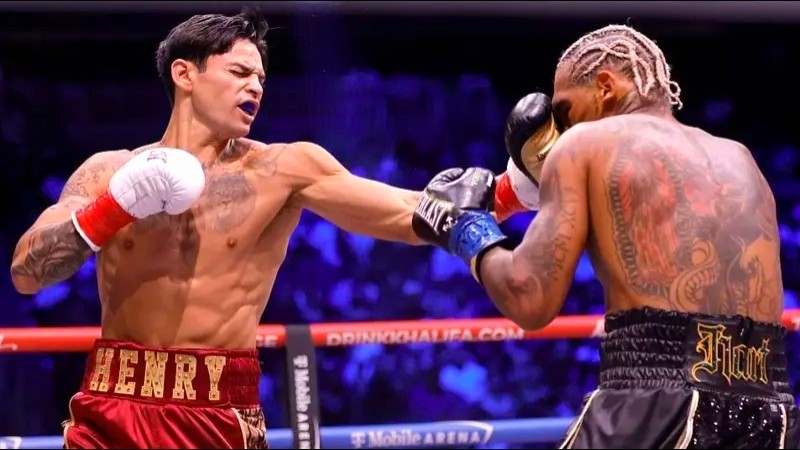
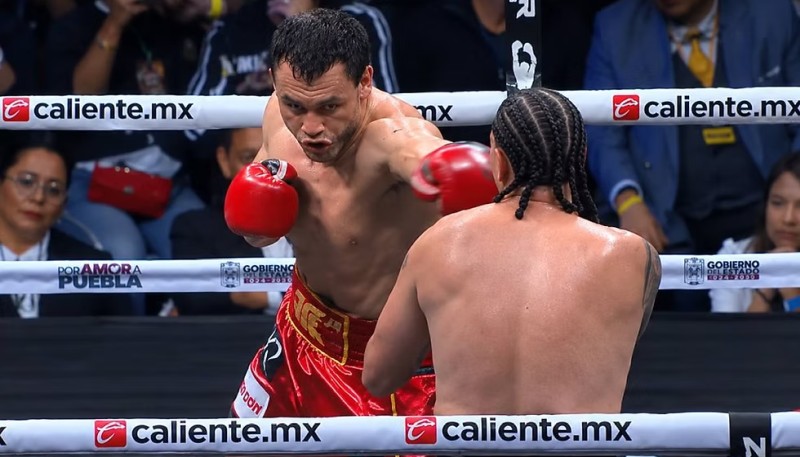
Boxing doesn’t have a single regulatory commission, and it has overlapping, often conflicting, standards and requirements. On the weekend of June 9, boxing promoter Bob Arum called on the Attorney General’s office in Nevada to investigate three ringside judges who (collectively) voted a loss for Manny Pacquiao. Senator Harry Reid (Democrat, Nevada) agreed.
In the welterweight title fight, it seemed the judges defied logic in awarding rounds 5 and 7 to Timothy Bradley. There was significant last-minute betting for the heavy underdog (Bradley) which moved the line. Bookmakers – who always try to keep the amount of wagers even on both sides – lost millions of dollars from being one “sided”.
In 2010, Australian authorities investigated a boxing match after last-minute betting by criminals went heavily for the underdog. The underdog won in highly suspicious circumstances.
In sports, trust is diminishing.
“To prevent evil is the great end of government, the end for which vigilance and severity are properly employed.” – Samuel Johnson
Corruption in Cricket
In May 2012, India’s Enforcement Directorate (ED) began a probe which looked into complaints of money laundering against Indian Premier league (IPl). Finance Minister Pranab Mukherjee told the Rajya Sabha: “There are certain irregularities which are being looked into, particularly relating to some complaints received that there are foreign investments in IPl.”
Last year, Indian officials found that an initiative to raise funds for sports was actually a money laundering scheme. The suspects, which included government employees, were charged with graft.
How to Fix Sports
Regulation costs money. And oversight of sports could be very expensive. Here are ways to reduce crime’s influence on sports. Do the benefits outweigh the costs? Similar to new rules in Argentina, officials, players, staff, and related parties should be required to provide regular, detailed reports of high value transactions. Governing bodies should obtain proper documentation as to the identity, background, business and sources of wealth and funds of each team and its owners. The transfer market, which is vulnerable to tax evasion, insider fraud, and money laundering, should have more transparency. The funding for transfer transactions and offshore payments should have more liberal disclosure terms, which empower watchdog agencies and media. Trades that involve the over-valuing of a player should raise red flags. This money laundering technique is similar to the over-invoicing of goods and services in order to transfer additional value unrelated to the purpose of the transaction. Limit the role of players’ agents. Agents should have strictly sports-based fiduciary responsibilities. Key judges and agents should undergo regular licensing and re-certification procedures.