Not too many years ago sports fans not only admired their heroes’ exploits on the field, they also felt a deep-rooted emotional connection that ebbed and flowed with every monumental achievement or catastrophic failure. They reacted to events in his life almost as if the athlete was a family member, and this held true even if neither party had exchanged a single word.
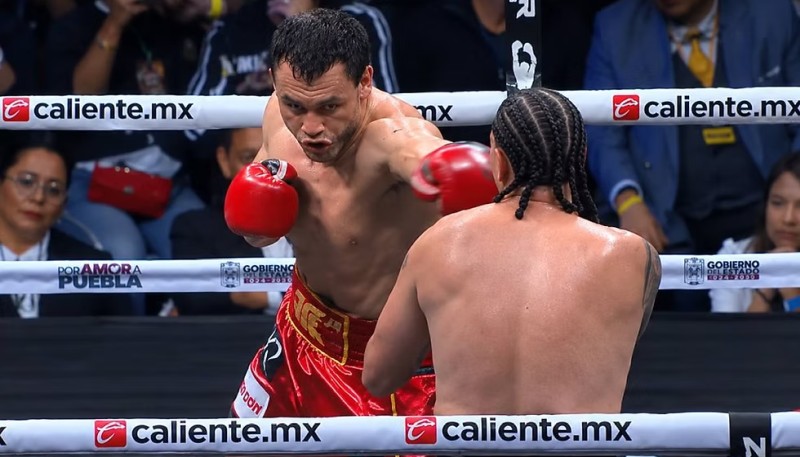
For boxing fans, Erik Morales is such a fighter. For those fortunate enough to witness his 19-year career, the mere mention of his name is enough to ignite waves of adulation that are impossible to ignore. His appeal is three-fold: First, the talent level during his prime was beyond question and his numbers will guarantee him first-ballot induction into the International Hall of Fame in Canastota, N.Y. Second, his is the classic boxing story of up-by-his-bootstraps success; he overcame childhood challenges in Tijuana and his ex-fighter father’s deep objections to achieve worldwide fame and enormous wealth.
But the third aspect is the most powerful of all. Standing 5-foot-8 and possessing a 72-inch reach, Morales had the physical equipment to dominate solely by playing it safe. But Morales decided to go a different way; he put pleasing his fans above his personal safety. He knew that being a great Mexican champion also meant fighting with the passion, power and pride that made legends of Olivares, Zarate, Cuevas and Chavez. It meant taking risks that few would ever dare attempt and more often than not he came out the other side as the winner.
One of the most memorable demonstrations of his machismo unfolded during the final round of his first fight with Manny Pacquiao. Suspecting he had built a big enough cushion on the scorecards, Morales could have lifted his foot off the gas and coasted to victory. Instead, he tore into Pacquiao with a two-fisted assault ? from a southpaw stance. The HBO commentators were amazed at his bravado and when Larry Merchant addressed it during his post-fight interview, Morales asked with a twinkle in his eye “Did you like that?” Merchant’s reply: “I loved it.”
On Saturday, this 35-year-old legend will walk the tightrope once again, this time against undefeated 23-year-old challenger Danny “Swift” Garcia. The Philadelphia native with Puerto Rican lineage will enter the lion’s den at Houston’s Reliant Arena, for most of the crowd will be adoring Mexican fans who will scream for his blood. The reasons why are based on Morales’ storied history, which will be retold here in the form of his 10 greatest fights. This list is based on a combination of performance level, quality of competition and other intangibles. Not all of them were victories, which is a statement in itself. Morales’ greatness lies not in whether he won or lost but how he plied his trade.
September 2, 2000, KO 7 Kevin Kelley ? Don Haskins Convention Center, El Paso, Texas, interim WBC featherweight title
For Morales this was his first major fight at 126 pounds following a two-and-a-half year, nine-defense reign at junior featherweight. It didn’t matter that an “interim” belt was at stake; the names on the marquee were more than enough to sell it because of their mutual reputations for action fights.
The 33-year-old Kelley was clearly on the downside of his career, for after starting 41-0 and 47-1-2, he had lost three of his last seven and had taken this fight on four weeks’ notice. However, he came in off a ninth-round TKO of then-unbeaten Frankie Archuleta and the fact that he gained only six pounds after the weigh-in suggested he was in good shape. As for Morales, he gained only four pounds and proved himself superior in every category once the bell sounded.
The southpaw Kelley curiously started by moving to his left ? directly into the path of Morales’ vaunted rights ? and by switching stances far more often than in the past. By the second Morales had found his range with the right, causing Kelley’s notoriously injured left eye to begin swelling.
In the final minute of the third Morales nailed Kelley with a right in the middle of a switch. Morales showed off his wiles by intentionally slowing his pace in the fourth to draw Kelley in and springing the trap when he finally fell for it. Morales increased the pressure in round five and scored the fight’s first knockdown with a straight right to the stomach and a chopping right to the ear.
Morales picked away at Kelley’s swelling eyes in the sixth with hard jabs and pinpoint crosses but the former champ refused to yield. A little more than a minute into the seventh Morales unleashed an explosive 13-punch salvo that floored Kelley for the second time. Up at nine, Kelley tried to fire back but Morales’ pressure proved too much to handle. Referee Laurence Cole intervened at the 2:30 mark with Morales leading big on all scorecards and the valiant Kelley protesting the stoppage.
September 12, 1998, KO 4 Junior Jones ? Plaza de Toros, Tijuana, Mexico, WBC super bantamweight title
Four months after destroying former 115-pound titleholder Jose Luis Bueno in two rounds, Morales sought to make a bold statement by granting the dangerous Jones a crack at his belt. Sure, Jones was stopped by Kennedy McKinney in his last fight but he still had compiled a 34-0 record against Mexicans, including back-to-back wins over Marco Antonio Barrera. He could stand eye-to-eye with the lanky Morales and his right cross was still among the division’s most potent weapons. He also was in shape; he trained two weeks with Evander Holyfield in Atlanta, two more weeks with Pernell Whitaker in Norfolk and spent several weeks at altitude.
Morales boasted his own streak ? he was 22-0 in Tijuana and passions were such that local betting was unavailable. Still, the atmosphere in the bullring was electric and it didn’t take long for the feeling-out process to turn into full contact action.
Each man took turns coming forward and firing shots, but Morales’ jab was the pivotal weapon early as he landed nearly half of them in the first. Early in round two Jones backed Morales to a corner pad and smashed a right to the jaw that briefly buckled Morales’ legs. The 22-year-old titleholder remained poised as he raised a mouse under Jones’ eye, stuffed in a flush double jab and beat him to the punch with rights.
After fighting in a disciplined manner to preserve his energy, Jones shifted into a higher gear in the fourth by coming forward and drilling in five flush power shots. Later he tried to rough-house Morales in the trenches but the champ kept his cool and more than held his own during a heated mid-ring exchange. A beautifully timed right to the side of the head wobbled Jones and a second right send him tumbling to the floor. Jones back-somersaulted to his feet and cursed himself, for he also sported a cut over his left eye.
Morales tore into Jones with both guns firing and the challenger couldn’t do much more than grab. A flush hook led to a volley of six unanswered punches that led referee Larry O’Connell to intervene at the 2:55 mark.
February 28, 2004, W 12 Jesus Chavez ? MGM Grand, Las Vegas, Nevada, WBC super featherweight title
For Chavez the real prize in this fight was not his WBC belt but rather Morales’ reputation and star power. The two-fisted pressure fighter had won 40 of 42 fights but remained in the shadows as far as mainstream recognition and drawing power. He knew that a victory over Morales on HBO’s airwaves would dramatically enhance the trajectory of his career ? and his life.
For Morales, this fight meant history. Julio Cesar Chavez was the only Mexican to this point to capture three divisional championships and, true to form, Morales wanted to achieve his goal by fighting the roughest, toughest titlist he could find. Chavez’s 100-punch-per-round pace presented a suitable challenge, and, he believed, a fitting canvas for his skills.
Chavez, a notorious slow starter, zoomed out of his corner and found instant success. A hook stunned Morales and an overhand right-left hook combo shook “El Terrible” to his core midway through the first. Somehow, Morales pulled himself together and even produced a stirring rally in the final 60 seconds.
Morales exacted vengeance in the second by scoring two knockdowns, the first with a scorching right uppercut and the second with powerful combinations. The next three rounds saw Morales at his best. He negated Chavez’s aggression with hard jabs and crisp power shots at close range. He seemed almost eager to trade in the trenches, which was a good attitude to have since Chavez never stopped coming, even after pulling a muscle in his right shoulder.
From the sixth round forward Chavez attempted less than a dozen right hands but his pressure and volume was so robust that he forced Morales to fight at full strength. Though Chavez kept the fight interesting it was Morales who banked the rounds with his sharper punches and superior technique. In the end Morales was deemed a convincing 118-110, 117-109, 115-112 winner ? and the newest member of a two-man club.
October 22, 1999, W 12 Wayne McCullough ? Joe Louis Arena, Detroit, Michigan, WBC super bantamweight title
Three months after dispatching Reynante Jamili in six rounds, Morales signed to fight McCullough on the undercard of Naseem Hamed-Cesar Soto in the hopes of creating interest in a future match with the “Prince,” who later won a 12-round decision.
Although McCullough lost to Hamed two fights earlier, “The Pocket Rocket” still presented a formidable style challenge. His all-heart high-volume attack often choked the life from ill-prepared opponents and Morales’ difficulties with making 122 were well-known. Plus, McCullough’s iron chin was a mortal threat to Morales’ perfect 8-0 (8 KOs) record in championship fights. In other words, McCullough was a human truth machine, for he would prove whether Morales was a star-in-the-making or one that would supernova under intense pressure.
McCullough jumped on the slow-starting Morales and won the first with several strong rights. Any doubts about Morales’ worth were answered from the second round forward as he nearly duplicated McCullough’s breakneck pace (he ended up throwing just 12 fewer punches) and far surpassed him in punch impact. Morales often used thumping body shots to set up power combinations that forced McCullough to briefly retreat. Morales opened cuts under McCullough’s right eye in the fourth, his left ear in the sixth and the left eye in the 11th after a series of strafing head shots. Morales ended that round with a right to the temple and a left uppercut to the chin that wobbled McCullough ever-so-briefly, breaking news given McCullough’s legendary toughness.
The 12th was a testament to both men’s character, intensity and durability as they freely swapped blows at an unfathomable pace given the demands of the previous 33 minutes. In the end, Morales’ harder punches and far superior accuracy earned him a comprehensive, if not completely comfortable, decision win.
April 9, 2011, L 12 Marcos Maidana ? MGM Grand, Las Vegas, Nevada, vacant WBC super lightweight title
Four fights into a comeback following two-and-a-half years of retirement, Morales, as is his custom, wanted to shoot high. His original target was Juan Manuel Marquez but THE RING’s lightweight champion declined, saying it would have been a dreadful mismatch, even in Morales’ hometown of Tijuana. Undaunted by Marquez’s rejection, Morales then asked to fight Marcos Maidana ? a whirlwind aggressor, a dynamite puncher and an extraordinarily determined force of nature.
That the WBA approved this match for its “interim” 140-pound belt was nothing short of astonishing, and in some eyes it bordered on criminal. Words like “insane,” “crazy” and “suicidal” were common, for the 34-year-old Morales had looked flabby, slow and defensively vulnerable despite going 3-0 in his return. Many observers expressed genuine concern that Morales could die because they felt his war-weary body could no longer withstand the orders of his warrior’s heart. Morales was a 6-to-1 underdog, but the vast majority envisioned Christian vs. Lion carnage.
Those predictions seemed prescient in the first round as Maidana swarmed Morales and unleashed a torrent of power shots. A diabolical left uppercut slammed against Morales’ right eye, and by the two-minute mark it was almost completely closed. But starting in the second round the pieces of Morales’ aged shell began breaking off and lying underneath ? to the profound shock of just about everyone ? were remnants of the glory days. Suddenly, Morales’ legs had spring, his accurate jabs were crisp and he answered every Maidana surge with speed and resolve. A jolting left uppercut shook Maidana early in the fourth and a fifth round flurry revived memories of March 2005 when he knocked off Manny Pacquiao. Morales didn’t look like a man ready to pass the torch; he wanted to incinerate Maidana with it.
When Maidana stunned Morales with a heavy-handed volley near the end of the sixth, Morales answered with a 17-punch assault that further awakened the echoes. A massive short hook 30 seconds into the eighth had Maidana hanging on but the Argentine quickly recovered and resumed his pressure. Over the next two rounds Morales threw little but landed at a high percentage while Maidana lathered Morales with punches but broke through less often. Maidana’s corner was near apoplectic as a once-certain victory turned into a dogfight. Terms like “Fight of the Year” and “Upset of the Year” were thrown around as freely as predictions of carnage had been less than an hour earlier.
Morales’ miraculous run ended in the 11th when Maidana’s attack finally emptied the Mexican icon’s gas tank. By then his right eye resembled a plum and it was all he could do to last until the final bell, especially after Maidana unloaded 113 punches in the 12th. Maidana might have won a majority decision, but Morales ended up seizing the hearts of those who had doubted him.
October 4, 2003, KO 3 Guty Espadas Jr. II ? Staples Center, Los Angeles, California
Morales’ close unanimous decision over Espadas two-and-a-half years earlier was among his most unimpressive victories ? and the fighter was the first to say so. He blamed changes in his training routine ? preparing in Las Vegas instead of the Mexican mountains ? a poor diet and a liver ailment two weeks before the bout for his sluggish performance. For the rematch, Morales resumed the familiar patterns but was campaigning in a new weight class after his second stint as WBC featherweight king.
The winner of this title eliminator was set to meet WBC super featherweight titlist Jesus Chavez in late February. Morales felt he had something to prove to Espadas, who believed he won the first fight, as well as fans and media curious to see how he would perform at the higher weight.
Whether it was Espadas’ doing or whether Morales permitted it to happen, Espadas got the trench war he wanted in the first two rounds. The pace was hot but the punches seemed to be thrown at three-quarters speed. Espadas’ looping shots were finding a home fairly often but the tenor of the fight changed late in the second when Morales started to find his rhythm. Morales spun from the ropes and worked uppercuts with both hands while a short right caused Espadas to stumble forward. In the waning moments of the round Morales took a half-step back toward the ropes to create room, then nailed Espadas with a flush right uppercut-left uppercut to the jaw.
The fight returned to longer range in the third and Morales’ sharper, stiffer punches soon bruised the area under Espadas’ right eye. By now Morales had properly calibrated his sense of distance, for he pulled his upper body away from Espadas’ wide shots then snapped it back to deliver crisp counters. The final such move finished the fight as Morales saw his opening, executed the timing and delivered a right to the ear that folded Espadas’ legs and sent the rest of his body back-first to the floor. All Espadas could do was roll around on the canvas in search of the ropes but time ran out as referee Dr. James Jen-Kin counted “ten.”
February 19, 2000, W 12 Marco Antonio Barrera I ? Mandalay Bay Resort & Casino, Las Vegas, Nevada, WBC/WBO super bantamweight title
Of all the Mexican vs. Mexican fights ever held, Morales-Barrera I ranks near the top in terms of intensity and action. Their rivalry was deep and multi-layered. Sociologically, Barrera experienced an upper middle-class upbringing in the suburbs of Mexico City while Morales survived the tough streets of Tijuana’s Zona Norte. Professionally, Morales had supplanted Barrera as Mexico’s top fighter after “El Terrible” destroyed two-time Barrera conqueror Junior Jones. And personally they detested each other; the two nearly came to blows six months earlier at a soccer match in Mexico.
Morales was as much as a 6-to-1 favorite but late Barrera money drove the odds down to a somewhat more reasonable 3-to-1. Barrera justified that late show of support by forcing a hard pace, tripling up his hooks and connecting on several jarring jab-cross-hooks to Morales’ face. Morales won the next three rounds by slowing the pace, keeping his distance and occasionally driving Barrera back with combinations. The fifth round was perhaps the best of the fight as Morales dominated the first two minutes with blistering combinations while Barrera came on frighteningly strong in the final 60 seconds. Barrera built on his newfound momentum in the sixth and seventh as the action picked up further steam.
The fighters took turns clubbing each other in the eighth, seizing the lead for short bursts while also inflicting ever-increasing punishment. Morales’ nose leaked blood and his face began to swell while a chopping right in the ninth opened a cut under Barrera’s left eye. The 10th and 11th rounds were nothing short of savage as each pushed the other toward previously unseen limits.
Barrera looked to be in the lead entering the final round and he seemed to cement matters when referee Mitch Halpern mistakenly called a knockdown against Morales in the final 30 seconds. But Morales came out a split decision winner, perhaps on the strength of his superior activity and leads in total connects (319-299) and landed power shots (290-272). Barrera, however, was the far more accurate fighter as he landed 48 percent of his overall punches and an impressive 53 percent of his hooks, uppercuts and crosses.
Though many could argue the decision, they agreed on the best solution ? a rematch.
March 22, 2002, L 12 Marco Antonio Barrera II — MGM Grand, Las Vegas, Nevada, WBC featherweight title
Despite the still-bubbling animosities (Barrera slugged Morales at the press conference announcing the rematch after Morales called him a sissy), their second act couldn’t have been more different than their initial classic in terms of action and strategy. That’s because of what transpired in the two-and-a-half years since.
Starting with his sixth-round TKO over Jesus Salud, “The Baby Faced Assassin” transformed himself into the Mexican Professor. Five months later, Barrera’s precision boxing carved up the wildly unorthodox Naseem Hamed and served up a stunning upset. After disposing of the cut-prone Enrique Sanchez, Barrera signed to fight Morales, who had won five straight and had won the WBC belt by unconvincing decision over Guty Espadas Jr. two fights earlier. Based on recent results, Barrera was installed as a 2-to-1 favorite.
Seeking to duplicate his success against Hamed, Barrera fought in what Larry Merchant described as a “tactical trance” in the first five rounds. Morales was more than pleased with the tepid pace because it allowed him to impose his height and reach advantages while also initiating almost every exchange.
Trailing badly on points, Barrera finally started moving forward in the sixth and Morales appeared taken aback by the sudden strategic shift. Morales rebounded strongly in the seventh and appeared to score a knockdown with a long right to the stomach. But referee Jay Nady waved it off because the fighters’ feet briefly brushed together right before Barrera fell. Still, Morales had found an excellent rhythm as he stabbed with jabs and beat Barrera to the target with rights.
The tide turned again late in the eighth as a Barrera hook cut and swelled Morales’ right eye and in the ninth his mouth was bloodied. A Morales double-jab buckled Barrera’s knees in the 10th while the 11th saw both men enjoy several strong moments. The final round was the only one that approached the original in terms of drama and action, but Barrera, strongly suspecting he needed to win it, produced his most sustained attack of the night. His instincts proved correct, for all three judges gave him the round and the fight (116-112, 115-113, 115-113). Had Morales won, he would have saved his title ? and his undefeated record ? with a majority draw.
For the second straight fight, fans and media believed the judges rewarded the wrong fighter and a disappointed Morales initially bolted the ring, only to return. In a quirky way justice had been done; the overall score of one fight each was correct but the route in getting there produced heartburn and angst. Only a third fight could settle the questions of who was the best fighter in a historical sense.
September 6, 1997, KO 11 Daniel Zaragoza ? County Coliseum, El Paso, Texas, WBC super bantamweight title
At age 39, Zaragoza was boxing’s oldest reigning champion and he was in the midst of one of the greatest Indian Summers boxing had even known. Following a hotly disputed draw against then-champion Hector Acero-Sanchez in June 1995, Zaragoza won the WBC belt for the third time in the rematch five months later, then proceeded to turn back Joichiro Tatsuyoshi twice, the 20-1 Tsuyoshi Harada and the heavily favored Wayne McCullough. The 21-year-old Morales was young enough to be Zaragoza’s son, and the grizzled veteran hoped he would end up treating “El Terrible” as such inside the ring. His 222 championship rounds alone dwarfed the 131 total rounds Morales had logged.
Still, Morales exploited his youthful gifts in winning his first 26 fights, 21 by knockout, and he intended to rush the old champ to test his durability. But once he got a look at Zaragoza’s textbook lefty stance, smooth in-and-out movement and strong overhand lefts, Morales could do little more than stay at long range and poke harmless jabs.
From time to time Morales attempted to overwhelm Zaragoza with multi-punch bursts but he discovered that physical skills alone couldn’t crack this tough nut. He tried fighting southpaw but that didn’t work, and Zaragoza buzzed Morales with a winging right to the ear in the fourth.
Erik’s trainer/father, a former fighter, guided his son toward the answer: Engage Zaragoza at close range, which gave the older fighter less time to react to Morales’ quicker punches. By the seventh Morales muscled Zaragoza backward with assertive jabs and punishing body shots that slowed the veteran’s movement. A crushing hook-cross in the eighth sent Zaragoza stumbling and cut his left eye. A right to the body caused a tiring Zaragoza to double over in the 10th and another one later in the round dropped Zaragoza for a six-count. Only his wiles allowed him to make it to the bell.
Morales withstood a final stand by Zaragoza in the 11th, then delivered a straight right to the chest that sent the soon-to-be-ex-champ tumbling to the floor. As if to say, “nice job kid, you’ve earned it,” Zaragoza turned to referee Laurence Cole and silently asked him to complete the count ? and pass the torch.
March 19, 2005, W 12 Manny Pacquiao I ? MGM Grand, Las Vegas, Nevada
This fight is at the top of the list because it personified every aspect of Morales’ legend. First, he produced a terrific action-packed scrap against a top-shelf opponent and emerged victorious. Second, he overcame doubts by fans, media and bettors in a crowd-pleasing manner. Third, he used his considerable boxing acumen to execute a specific fight plan against a difficult style. Finally, he stepped up to a challenge even when it appeared to some as too dangerous.
After Juan Manuel Marquez rejected a $750,000 offer for an immediate rematch with Pacquiao following their thrilling draw, Morales sought ? and got ? the date just four months after his demanding, but losing, third fight with Barrera. Morales was a 9-to-5 underdog based on the “triangle theory” ? since Pacquiao destroyed Barrera and Barrera had beaten Morales twice, Pacquiao should be favored. But in Morales’ mind, the “reverse triangle” was true ? by beating Pacquiao, who convincingly beat Barrera, Morales would gain bragging rights over Barrera.
Pacquiao attempted to steamroll Morales in the first with his patented rush but the bigger, stronger Morales fought him off with an even more vigorous assault. Morales’ fight plan crystallized in rounds two through four: Slowing the pace, keeping Pacquiao at arm’s length, drilling him with long punches as Pacquiao waded in and answering every attack instantly.
An accidental butt opened a jagged cut over Pacquiao’s right eye midway through the fifth and the flustered Filipino struggled to regain his bearings. Told to back his man up by Freddie Roach, Pacquiao did just that in the seventh through ninth to claw his way back into the fight. In the 10th Morales seized back control as three sizzling rights wobbled the “Pac Man” while his sharp jabs wreaked further havoc on Pacquiao’s eye.
Morales’ trainer/father Jose told his son to “please don’t be overconfident,” and “be careful” before the final round, but “El Terrible” had different ideas. With 1:50 remaining Morales suddenly shifted into a left-handed stance and brawled with the desperate Pacquiao, who gleefully landed several overhand lefts. That didn’t matter to Morales, who surely heard the full-throated cheers his gamble engendered. Despite losing the round he captivated the crowd ? and captured the scorecards.
All three judges saw Morales ahead 115-113. Since they all gave Pacquiao the 12th Morales had correctly assumed he had a big enough cushion to attempt his ploy.
In subsequent years, Roach said this fight was the jolt Pacquiao needed to up his game because Morales showed them just how far they had to go to reach the tip of the mountaintop. That he has, for Pacquiao hasn’t lost since.
As for Morales, Saturday’s fight with Garcia represents another summit to climb, for now he’s in the midst of a profound role-reversal. Where once he was the young buck chasing after the great champions, Morales is now the old man fighting off the fresh hungry studs. Through all the years, one aspect has remained constant: Win or lose Morales will always give it everything he has, both for himself and for those who grant him their unconditional love.