Right on the heels of Manny Pacquiao?s latest ring triumph comes the launch of Pacific Storm: Dispatches on Pacquiao of the Philippines by Recah Trinidad, to be launched at 6 p.m. this Thursday, July 13, at National Book Store in Shangri-La Plaza.
No writer is worthier than our good buddy Recah for this timely endeavor. Himself a two-fisted exponent and dean of the sweet science, Rec has followed the careers of many Pinoy boxers, and occasionally provided them key pointers on how to progress as ring craftsmen. Once he even shared his own secret for a devastating punch with former champ Luisito Espinosa: the “susi” or turnkey right cross that twists into a target jaw or solar plexus.
Common friends still repeat their eyewitness account of one night on a Mandaluyong streetcorner, in the ?70s, when Recah bade a brief farewell to his patented patience and sent the erstwhile indestructible hulk of a hunk, fellow poet Jolico Cuadra, to dreamland alongside a smelly gutter. It was El Trinidad?s susi punch that did the trick.
Now he comes out of his literary corner, as a Palanca poetry prizewinner, with both hands blazing for this compendium of “dispatches” on our new “national hero,” in much the same way that Ernest Hemingway conducted his terse, invaluable reports from a war front.
In fact, the author quotes Hemingway right off the bat, for a Prologue epigraph: “Therefore courage above all is the first quality of a warrior.” Trinidad follows up with his own series of sweet combinations:
“He was a warrior who fought his biggest battle and won.
“All at once, he turned into the most recognizable, most saleable face in the Philippines, country of his birth. But tonight, the winner, he of the windy hair and eyes of live coal, was fireless, flickering, sick.
“He had to wobble back to his chauffeur-driven sports utility vehicle, in front of the vintage-1930 Rizal Memorial Stadium in Manila, onto the lap of his wife, a lovely mestiza.
“Sorry, there was one final round to go.
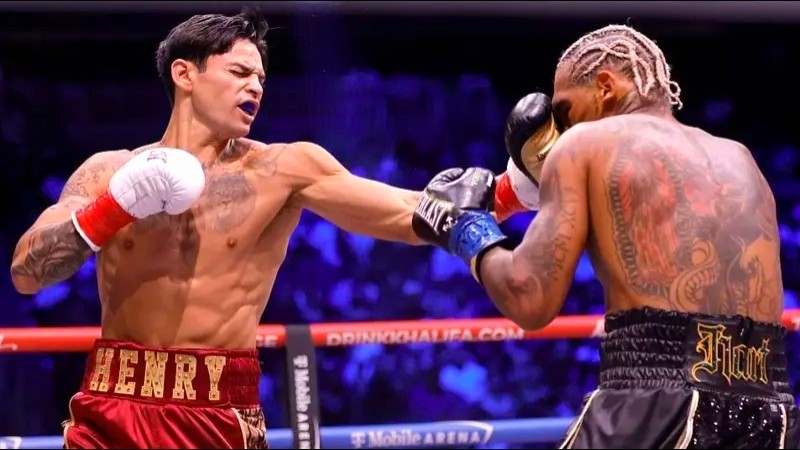
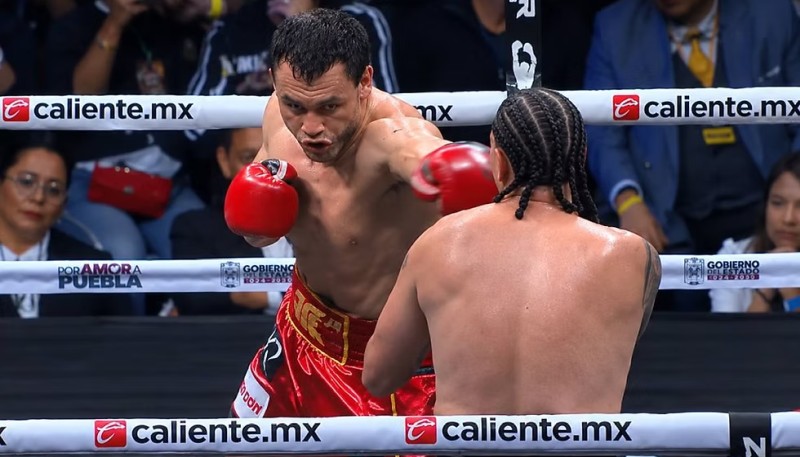
“So he dragged on and parked by another celebration, maybe the millionth, in his honor. Before this, he had howled like a killer wind inside the boxing arena to topple a living monument in the sport, a Mexican boxing legend that had never been knocked out before.
“Long live Manny Pacquiao, last name often mispronounced obscenely (PAC-QUEOOU) by international broadcasters.
“You know what boxing is all about? Read on, please.”
And we do, we do. For the author knows what boxing?s all about ? a gritty, often seamy world of underhanded deals and exploded dreams, yet one also attended by marvelous glitter and seductive hype, and capable of bringing entire nations into paroxysms of pride and delight. Such as what the “Pacman” has been providing us, his besotted countrymen.
And Trinidad doesn?t shirk the eyewitness role he plays inches away from a ring apron, or deep within the bowels of gyms and training rooms, hotel recesses and PR venues. He dispatches questionable personalities and motives, addresses his own gut feel with an avuncular eye.
Why, even our President and her cell-phone-toting, Espa?ol-speaking (right in the ring) spouse ought to read this book.
No mere reportage is it on a boxer?s primacy of skills. Trinidad goes beyond the roundhouse misses and spectacular kayos to weave a sociological treatise on the vagaries and ironies inherent in the sport, in heroism, in fandom, in Pacmania.
“It did rain sporadically on the motorcade prepared by the city government of Manila, but countless fanatics pushed and shoved ? old women in tears waited and waited on the side streets way past sunset ? for a glimpse of the hero, now a glowing deity on a float. The swarm of humanity resembled the mindless charge during barefoot processions for the miraculous Black Nazarene in Quiapo that counts Pacquiao among its devotees.
“It was not what economic doctors had prescribed for the impoverished nation. But the expected happened. Pacquiao?s victory sent his poor nation tilting in ecstasy. He lit the bleary eyes of poor countrymen, thereby making it appear he had instantly knocked out poverty and assorted national aches with the Alaxan relief tablet he had been selling hard on television.
“He had not.
“Pacquiao did not usher in abundance. But his win-win feat was definitely noble, rich in relevance. Here was one genuine hero who was no product of fantasy ? no borrowed courage, no artificial toughness, no rented heroics, no fake sideburns.
“Unlike movie stars and entertainment icons that had freely stolen the adulation of gullible Filipinos, this big winner was emerging from a real blood-and-guts battle, no longer starring in a shallow blockbuster movie.
“The social analyst was right. Filipino faith in Pacquiao appeared to have grown stronger because they saw in him their own resilience and ability to come back from defeat. As a result, Paquiao?s conquest also intoxicated his countrymen.”
Lest a reader of this review think that Recah?s book is all transcendent analysis and insight, that?s farthest from the truth. A blood-and-guts journalist at heart, he peppers the reportage with pithy quotes from close-in interviewees like Freddie Roach and assistant trainer Macka Foley, Pinoy trainer and Manny?s close friend Buboy Fernandez, the “LA Boys” as retinue, promoter Bob Arum, and many other characters, including the subject himself, whether delivering his own post-mortem of the win against Erik Morales over lunch at Max?s Restaurant in Glendale, or in the many other encounters with the grizzled vet of a chronicler, who?s certainly more than just the Norman Mailer of Mandaluyong.
He situates Pacquiao in context, harking back to his pound-for-pound memory of Pancho Villa, Flash Elorde and other Pinoy champs. He brings us to Vegas to expose more of the underbelly. He describes and assesses with clinical precision the fights against Marquez, Barrera and Morales, and essays right into the eve of the Larios fight. Neither does Trinidad flinch away from any of the hero-subject?s indiscretions.
This is sportswriting at its best, the chronicling of an era as exemplified by one boxer among many who has reached his apogee, and may either soar further or tumble ignominiously at the next hour. This is motor-drive photo-vignette documentation in prose, of defining moments that hold us together.
And we wish there can be more books like this: one on Efren “Bata” Reyes, too, or other legends not only in their own minds. Someone from Anvil expressed concern over the 5,000-copy print run, fearing that Pinoys may just prefer to see Manny in the ring (not even in the movie), but not go as far as to read about him in a book. Yet this is cultural documentation, too, for which no excess copies can ever be considered a waste.
Besides, Pacmania has taken on such heights that within hours of the win over Larios, the Internet was inundated with tongue-in-cheek tributes to our man Manny, inclusive of imagined currency bearing his heroic image.
Just recently, retired basketball icon Alan Caidic launched his autobiography, My Life. We welcome the title however prosaic, as we would a book on Caloy Loyzaga, Sonny Jaworski, Paeng Hechanova, Amang Parica, Django Bustamante…
There?s no dearth of materials and trivia curiosa. Here?s evidence. From the States, Nestor Enriquez of the Filipino-American Network yahoogroup posted an interesting recollection as a rejoinder to my previous column mention on Pacquiao (in The Philippine STAR?s “M” Section last Wednesday):
“The most renowned boxing announcer Michael Buffer came to Manila as announcer for the superfeatherweight title fight between Pacquiao and Larios. His classic line ?Let?s get ready to rumble!? is part of boxing history and added to the international flavor of the night? He has copyrighted that famous one-liner?
“Buffer started as a used-car salesman and never had any boxing experience. He has claimed, ?My paternal grandfather was world bantamweight champion back in 1921; his name was Johnny Buff.?
“I communicated with some of the descendants of Johnny Buff (whose real last name was Lepski) who still lives here in New Jersey. Johnny Buff was the best boxer in the lighter divisions from New Jersey. Here is something that Michael probably would not tell you. One night in September, 1922, his grandfather lost the US boxing flyweight crown. The championship was held in the old Brooklyn Polo grounds. The equally famous mayor of Jersey City (Mayor Haque) was at ringside because Buff became the mayor?s boxing prodigy? Johnny fought most of his early fights in Jersey City as it was a boxing mecca in the early 1920s?
“Johnny was losing the fight badly that the mayor left his seat before the 11th round when his hometown boxer was knocked down.
“The person who soundly beat Michael Buffer?s grandfather was Pancho Villa, who was on his way to become one of the greatest boxers in the flyweight division… I am the only one who can relate this to you, as an old mountain boy/boondocker from Cagayan. If you saw the pay-per-view match last Saturday, Manny Pacquiao beat Oscar Larios the same way Pancho Villa took the crown from Michael Buffer?s grandfather.
“During that time, ?Cinderella Man? Jim Braddock was in his early teens. The Irish boxer was so poor that he climbed fences to avoid paying at the gate. From a distance he saw Pancho Villa and later wrote about what he saw in Pancho Villa (a.k.a. Francisco Guilledo).
“The boy from Negros Province changed his name to Pancho Villa, the legendary Mexican bandit, so that the Cinderella Man thought Pancho was a sensational Mexican boxer. There were great Mexican boxers, but certainly, Pancho Villa was as Filipino as Manny Pacquiao. Both would become the two greatest Filipino boxers?”
We thank Nestor for that. Maybe Recah can do something on Pancho Villa as he?s done for Manny. Then there?s Gabriel “Flash” Elorde, who?s certainly part of any troika of great Pinoy boxing champs.
Of sports heroes we can never have a surfeit of. And our literature must take the cue, oft-repeated, that simonpures and savants hear as a loving nag: “Keep on punching.”