LAS VEGAS — Manny Pacquiao put on yet another clinic, but an unaccommodating dance partner kept boxing’s pound-for-pound champion from a more satisfying showcase of his brilliance.
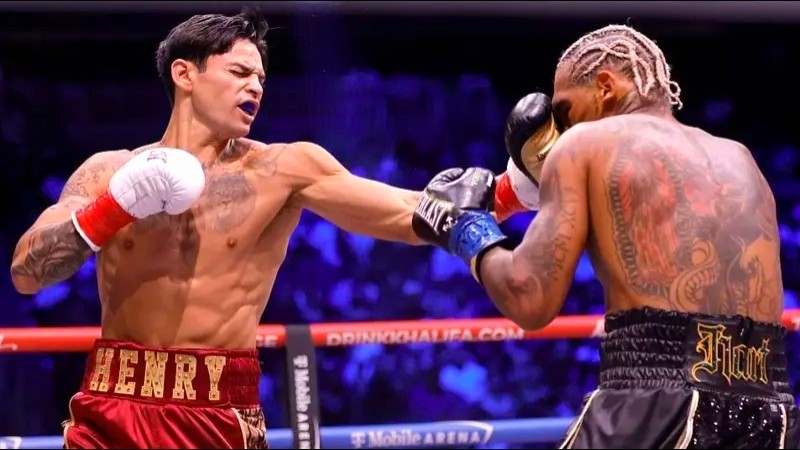
The hard-hitting Filipino spent most of Saturday chasing a strangely passive Shane Mosley around the ring at the MGM Grand Garden Arena, coasting to a unanimous-decision victory before a crowd of 16,412 in the biggest fight of the year to date.
Pacquiao’s 14th consecutive victory wasn’t close, and it was never in doubt. The scores were 119-108, 120-108 and 120-107, with the punch stats reflecting the disparity in action: Pacquiao landed 182 of 552 shots, compared to just 82 of 260 for Mosley.
GALLERY: Best shots from Pacquiao-Mosley
“My opponent had a lot of respect for me,” said Pacquiao, the eight-division champion who was making the second defense of the WBO welterweight title he took from Miguel Cotto in 2009. “I was surprised he ran and ran.”
The 39-year-old challenger described seeing “different types of punches that I wouldn’t have fallen for with anyone else” when he emerged for the news conference in sunglasses nearly 75 minutes after the fight.
Mosley, who received $5 million, did little to dispel the impression he was just happy to be here. He thanked everybody but the janitor at Wednesday’s final pre-fight press conference and spent most of Saturday making conciliatory gestures: the fighters touched gloves at least 15 times and even hugged before the 12th round.
“I don’t think he tried to win the fight, I think he just tried to survive,” said Freddie Roach, who trains Pacquiao, “and when you get to that point in boxing I think it’s time to [retire].”
Mosley held titles at lightweight, welterweight and junior middleweight, claiming the mythical pound-for-pound title Pacquiao now holds. But the fighter who twice upset Oscar De La Hoya bore little resemblance to the Mosley who looked so out of his depth Saturday against a younger, faster champion.
Mosley looked fast and strong, but it was clear from the second round he was outmatched.
A cagey opening saw Pacquiao probe with the right jab, while Mosley tried to set up body shots with the left jab.
In the third, Pacquiao made more concerted attacks, but a cautious Mosley stayed out of range. Mosley did a good job of picking off punches but couldn’t or wouldn’t return with fire. With 1:17 left, Pacquaio connected with a lunging right jab just sharply enough to blind Mosley momentarily, following it up with a short left hook that dumped Mosley to the canvas.
From there, it was all Pacquiao, even as he dealt with a foot ailment that struck in the fourth round.
MANNIX: Pacquiao-Mosley round-by-round analysis
“The first knockdown I felt I got him, and I felt I was stronger than him,” Pacquiao said.
Mosley spent the rest of the night just trying to keep Pacquiao in front of him. He was picking off Pacquiao’s increasingly diverse offerings — hooks to the body, straights upstairs, uppercuts with either hand (which Pacquiao rarely throws), the occasional overhand right — but couldn’t or wouldn’t return fire.
Pacquiao worked the angles, attacked and tried fastidiously to crack the code. Even as he barely missed with whipping hooks, his straight left was doing significant damage. More glove-touching invited scattered boos from the crowd, a din that only grew as the night wore on. The fight bore more than a passing resemblance to Pacquiao’s 12-round decision victory over Josh Clottey in March 2010, in which Clottey refused to engage the champion and seemed content to make it to the finish line.
Even when Mosley tried to open up — like the timely right uppercut that caught Pacquiao in the sixth — it only emboldened Pacquiao. Mosley closed the sixth with a big right followed by a big left, but they weren’t nearly enough to win the round.
Mosley was easily discouraged by the flurry of activity, demoralized by his opponent’s endless reserves of energy. Mosley looked exhausted.
The most interesting sequence of the final nine rounds came in the 10th, when Mosley either struck or pushed Pacquiao to the canvas with his right. Referee Kenny Bayless ruled it a knockdown, though replays revealed it to be a push. Pacquiao appeared incredulous, then completely invigorated: he bumrushed Mosley, putting pressure and going for the knockout. Mosley moved in full reverse, absorbing punches and briefly using his right glove to balance himself. Mosley threw just 13 punches in the round, landing four.
Spurred on by the injustice of the faux knockdown, Pacquiao bore down for the knockout but couldn’t finish a challenger in full retreat. The pro-Pacquiao crowd greeted the final bell with a cascade of boos, clearly underwhelmed by Mosley’s unwillingness to fight.
The details of Pacquiao’s improbable rise from street urchin to worldwide superstar are well-documented — the squalid living conditions in General Santos City, the flight from home after his father killed, cooked and ate his pet dog, the ferry ride to Manila where he learned his craft in the capital city’s barely legal smokers.
After stealing to Hollywood and teaming with Roach in 2001, Pacquiao stockpiled world titles at 112, 122, 126, 130, 135, 140, 147 and 154 pounds — a record haul that may never be matched.
Now he’s done scaling weight classes. What’s left is the third act: a messianic desire to heal the world.
Elected to Congress in the Philippines last year, Pacquaio is emerging as a champion of social justice unlike anything known in sporting life since Muhammad Ali.
“I have a special message to all of you,” said Pacquiao at Wednesday’s press conference. “All my life, I have had to fight. As a child, I had to fight just to eat. And now when I fight, Filipinos call me a hero. I believe the biggest fight of my life is not in boxing. The biggest fight in my life is how to end poverty in my country.”
Already a global superstar, Pacquaio’s stock only rises in the United States. He earned at least $20 million for Saturday’s fight, a figure that promises to swell once the pay-per-view receipts are counted. His English is light years better than even three years ago, when he first burst onto the mainstream radar with his upset of De La Hoya. He’s tapped IMG veteran Lucia McKelvey to help consolidate a notoriously scattered and dysfunctional endorsement portfolio.
Pacquiao’s higher calling prompted the decision to wear yellow gloves Saturday as a “symbol of unity in the fight against poverty.” He encouraged people attending the fight to wear yellow also, which many did.
Many hope the final chapter of Pacquiao’s career will include a long-awaited showdown with Floyd Mayweather, but Top Rank CEO Bob Arum didn’t seem overly optimistic during Saturday’s post-fight press conference. Arum said he’s made an offer to Juan Manuel Marquez to fight Pacquiao in November. If Marquez is unavailable, he’ll fight Timothy Bradley or Zab Judah, who hold belts in the 140-pound division where Pacquiao is still lineal champ.
“The problem is that this is becoming a pattern,” said Arum of the fight’s one-sided flow. “Manny doesn’t allow any opponent to fight his fight. He takes the opponent out of the fight because of his speed and because of his power. Shane had no answer, but neither did De La Hoya, neither did Miguel Cotto, neither dig Margarito.
“You’ve got to understand what you’re watching now. You’re watching a phenomenon.”