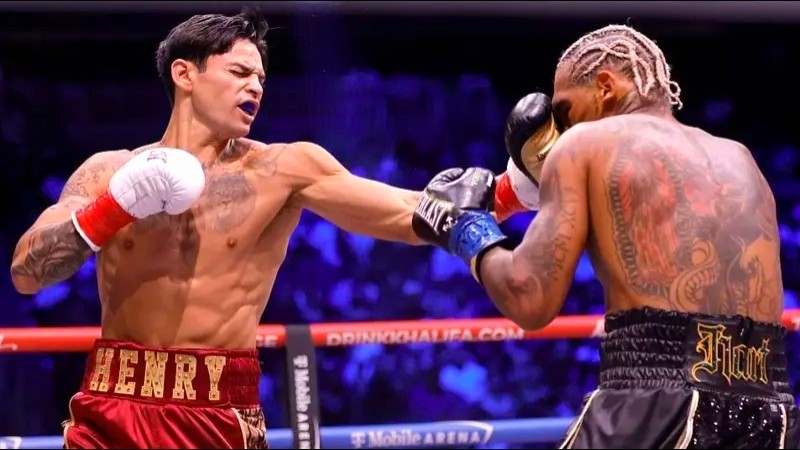
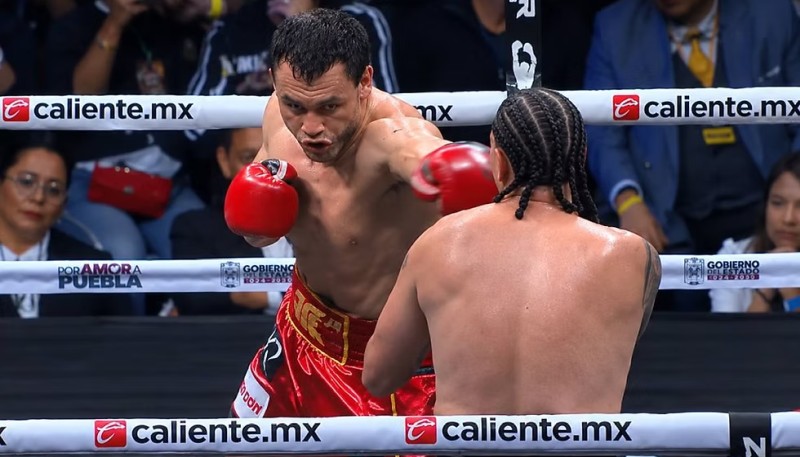
The fervent wish of Manny Pacquiao, expressed simply after his stunning victory over Mexican champion Erik Morales in Las Vegas, on Jan. 21, was sana magkaintindihan na po tayong lahat.
Colloquially, the Pac-Man was saying, “I hope we’ll all finally end our differences.”
Pacquiao’s wish may happen on the issue of the Filipino Veterans Equity Bill now pending in Congress.
The differences in the battle over the equity bill centers around the amount of “full benefits” that veterans should receive.
For some, “full benefits” means $800 a month, the average amount U.S. veterans receive. This was the amount stated in HR 302, the “Filipino Veterans Equity Act of 2005,” sponsored by Rep. Randy Cunningham and Rep. Bob Filner.
The U.S. Congressional Budget Office (CBO) estimates there are 18,000 veterans in the Philippines and 6,000 U.S.-based vets, meaning the Cunningham-Filner bill would cost about $159 million a year.
For others, however, “full benefits” depends on the context. Rep. Juanita Millender-MacDonald (D-Los Angeles), and Rep. Darrell Issa (R-Los Angeles), sponsored HR 170 (“The Filipino Fairness Act”), which provides $800 a month for the 5,000 Filipino WWII veterans in the U.S. and $100 a month for the 18,000 Filipino veterans in the Philippines. Total price: only $22 mil a year.
Supporters of the MacDonald-Issa Bill argued HR302’s $159 mil a year price tag was unrealistic with the U.S. facing a major budget deficit. Besides, they argued, living on $800 a month in the U.S. was about equivalent in hardship to living on $100 a month (5,000 pesos) in the Philippines.
But supporters of the Cunningham-Filner Bill argued, “Equity means equity. Why should there be a difference between what Filipino veterans in the U.S. receive and what Filipino veterans in the Philippines receive? That’s discrimination!”
It was a fight of Pacquiao-Morales proportions. “In this corner, weighing $159-M a year, is the ‘all or nothing’ boxer. In the other corner, weighing $22-M a year, is the ‘fight for what we can get’ slugger.”
Unfortunately, this issue hardly entered the radar screen of the republican majority. Of 198 sponsors in 2004, 179 were democrats and only 19 were republicans. Adding a major obstacle, House Speaker Dennis Hastert declared that only bills supported by a majority of republicans would be allowed to get a floor vote.
As if the problems were not tough enough, major sponsor (and republican) Rep. Cunningham resigned from Congress in December, after being indicted for taking $2 million in bribes.
Fortunately, Rep. Issa (R-Calif.) stepped into the breach and came forward to sponsor the new Filipino Veterans Equity Bill now known as HR 4574.
While Issa still co-sponsors the MacDonald-Issa Bill, he sees room for compromise, noting that all the veterans’ support groups have agreed that $22 million should be included in the federal budget for Filipino veterans equity.
The compromise would allocate $200 a month for ALL Filipino WWII veterans, regardless of whether they are in the U.S. or the Philippines.
In addition, Filipino veterans in the U.S. would still be eligible for $600 a month in SSI benefits, based solely on income and residence. In California, Filipino veterans would be entitled to an additional $200 a month in state assistance.
Feb. 18 will mark the 60th anniversary of the nefarious Rescission Act, which created the inequity problem by specifically disqualifying WWII military service in the Philippines for military benefits.
Two days after this anniversary, on Feb. 20, Philippine President Gloria Macapagal-Arroyo is scheduled to meet U.S. President George W. Bush in Washington, D.C. On behalf of the Filipino veterans, she must press Bush to back the Filipino veterans equity bill, and President Bush must get his republican majority’s backing as well.
The average age of the surviving Filipino veterans is about 85 years old. Because of advanced age, their death rate is exponentially high and any further delay would be unmercifully cruel.