A midnight drive-by along Aparente Street in General Santos City will give a dead away clue that the richest man in the city is in town.
When you see a latest-model of a dainty white two-door Mercedes Benz Kompressor parked alongside an armored Black Hummer, you know that the hottest couple in town is enjoying an evening with friends in their own building that has become a favorite jaunt for paparazzi and celebrity ogling.
This is now the 2010 version of Manny Pacquiao and his wife Jinkee. It will even be more opulent and extravagant this year and the years to follow after the world?s best pound for pound boxer made it clear he is not about to leave the sports that made him overly wealthy and famous the world all over.
VisionQwest Global Group has recently announced it has taken Pacquiao as its client. VQ Global Group is a sports marketing and endorsement firm based in Glendale, California. From the looks of it, Manny is positioning himself as a major product endorser in the highly competitive American market. If successful, Manny could earn more than what he is now earning as a boxer.
In 2009, Forbes Magazine listed him as among the top paid athletes in the world with a combined income of US$40 million during the year.
His last fight against Antonio Margarito alone, Pacquiao reportedly earned at least US$25 million in gross revenue. Much of his earnings, however, go to his annual upkeep, luxurious binge, purchase of real estate and a sprinkling of business ventures. Not to mention the undetermined amount given to charity and bonuses to loyal friends and anybody who gets his fancy, and yes, gambling sprees.
Lost childhood
In his book simply titled Pacman, Time Magazine writer Gary Andrew Poole said there is still the playful child in Manny even though he is now considered one of the most influential persons, not only in his country but all over sporting world.
All that because of a lost childhood.
Manny always reminds his adoring fans who care to listen of his poor beginnings. Yet in private, Manny reportedly avoids recalling the bitter memories of his deprived childhood.
At the age of ten, he quit school due to poverty. He went from farm hand to selling pan de sal, the favorite breakfast bread of Filipinos. Their father Rosalio left them for another woman leaving their mother Dionisia to attend to Manny and five of his siblings by doing laundry for their rich neighbors and selling rice cakes on the side.
Manny in turn turned into boxing as a way out of poverty.
The skinny Manny was 12 when he began fighting under the nom de guerre Kid Kulafu and earning as low as P30 (less than a dollar).
Manny declined to answer why he chose that name although it was presumably to hide himself from his mother?s ire.
Dionisia eventually learned Manny was into trading mitts but there was money coming in every time he fought and every peso for the family means additional food on the table. From P30, the purse increasingly became bigger. He was already earning P250 per fight when he decided there was no money in the amateurs and it was not the way to become a world boxing champion.
Without the knowledge of his mother, Manny embarked into a journey that changed his life forever ? most will definitely say for the better.
The asphalted jungle of Manila
While amateur boxing was thriving in General Santos, there virtually was a dearth of professional boxing cards in General Santos, a city that produced Rolando Navarette, former world featherweight champion.
Manny opted to try his luck in Manila where a handful of his fellow amateurs had already left for ahead of him. Using money pooled by his friends, Manny boarded a ship from the port of General Santos City to a destination of no return.
He linked up with his fellow former amateur standouts while in Manila but soon found that starting out as a professional fighter means surviving first the asphalted jungles of Metro Manila.
Before he could debut as a pro boxer, Manny had the callous in his hands thickened in construction sites earning dirt pay wages while sleeping in cardboard-matted concrete floors in a nondescript sweat-soaked Mandaluyong gym along with his provincemates.
Manny turned pro at the age of 15 in 1995 but hid his real age from the promoters. A boxer can only legally turn professional at the age of 18 in the Philippines. He nevertheless knocked out Edmund Ignacio in two rounds.
He racked up 10 more straight victories until he ran into Rustico Torrecampo and suffered his first loss as a professional fighter.
Even then, Manny was not yet off the poverty hook. He would relate how he went four days without eating because their construction employer did not pay them their salaries.
But from his meager winnings as a struggling professional trying to find his niche, Manny already displayed his generous ways. He would share his winnings with his fellow boxers while sending money to his mother back in General Santos.
In 1998 and in his 25th professional fight, Manny shocked Asian boxing when he knocked out Thai local hero Chatchai Sasakul in the eighth round after being dominated for the first seven rounds to win his first world boxing crown, the World Boxing Council flyweight title.
Manny would go home a triumphant hero and became a toast of Philippine boxing but he was hardly noticed by the American media.
With success, however, also came excesses. Manny was a big drinker and developed his love for gambling which is very much a part of professional boxing.
By then, Manny was already a rapidly growing 5?6? flyweight and on his second defense of his title, he failed to meet the weight limit and lost his title on the scales. To add insult to injury, a drained Pacquiao lost by a third round knockout to Thai boxer Medgoen Singsurat in 1999.
Taking the world by storm
Like his loss to Torrecampo, Manny bounced back to take the world by storm. In 2001, he shellacked Lehlohonolo Ledwaba over six rounds as a late replacement to capture his second world boxing title, the super bantamweight diadem.
He took the first step toward boxing stardom by humiliating then top featherweight Marco Antonio Barrera over eleven rounds to capture the lineal title after moving up in weight in two years later.
After another glitch in his magnificent rise to the top of boxing world when he lost to Erik Morales in 2004, Manny was back to his winning ways. He spiked his record with 13 straight victories improving his record to 52 wins while losing only three and drawing twice.
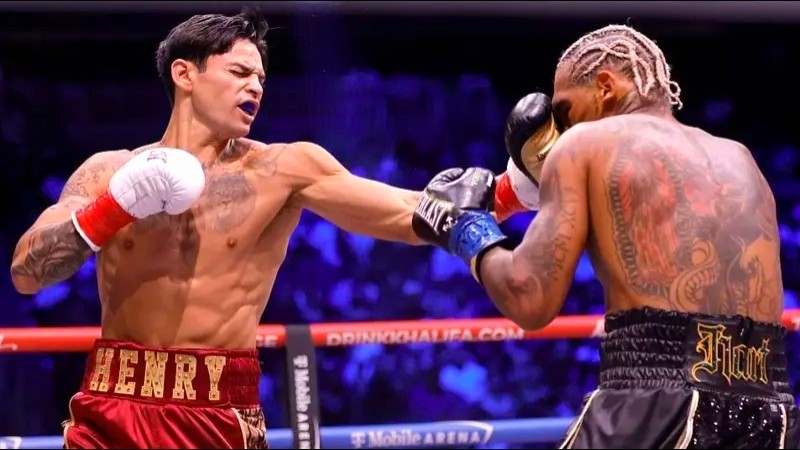
In the process, he captured five more boxing titles in as many weight classes becoming the only boxer in the history of the sports to achieve that feat, a record that may never be equaled or surpassed.
He replaced Oscar de la Hoya as boxing biggest box office draw and is now widely recognized as the top boxer in the world.
Rags to riches
Manny is a classic case of a poor kid who made it big ? an epitome of the rags to riches story.
With fame and fortune, however also came all shades of opportunists and freeloaders. Tales of Manny being duped into many fictitious business ventures, overpriced real property acquisitions and outright thievery are not wanting in space. In fact, some of them have become a taboo topic among his circle of friends.
Manny is not wanting in money to spend. Neither has he the best discipline to do it if his long time coach is to be believed.
He reportedly paid for a mansion in Dasmari?as Village for a price that could be had for about half the price he shelled out.
He issued checks to pay for several printing and cutting machines for his printing press that were grossly overpriced, according to a source who brokered the sale.
Before he opened his own bar, Manny frequented several bars in the city whose owners are more than happy to pad their bills.
But Manny has always been philosophical about his hard-earned wealth. Several times, he admonished friends who complained that another friend of his is being overpaid for a job that would otherwise be had at ten percent the rate.
He reportedly warned them not to take away the right of others to earn a living, according to Pacman author Poole.
It is not clear if Michael Koncz, Manny?s Canadian Man Friday, is still overlooking the shell corporation he helped established to siphon Pacquiao?s earnings in the United States into one account after Manny was chased by the Internal Revenue Services (IRS) for allegedly failing to pay his taxes when Murad Muhammad was still his promoter. Lawyer Franklin Gacal Jr however continues to oversee fight contracts of Pacquiao ever since the two teamed up in 2005.
But wife Jinkee has reportedly taken an active role over Manny?s finances after he squandered more than Php120 million in a failed election run in 2007.
He allegedly spent at least four times more than that amount for winning a seat in the House of Representative in May this year.
Time Magazine?s Andrew Marshall reported that a Team Pacquiao insider admitted the 2010 campaign cost Php300 million.
Manny has no qualms about giving away money and his generosity is genuine.
He has been handing out money, rice and packs of dry goods long before he became a politician.
Manny has, indeed, come a long way from his poverty-stricken childhood.
When he first won a world boxing title, the first car he bought was a used KIA Sportage. When he won over Barrera, he changed cars buying a Honda Civic and a Ford Expedition. Today, Manny maintains a fleet of latest luxurious cars, the Black Hummer being his favorite because of the armored protection it brings to him.
From sometimes not being able to eat a square meal a day during his early childhood, Manny can now indulge. Just recently, he was reportedly billed more than Php 1 million for an all night party in one of the posh restaurants in the city. Never mind if the bill was again padded.
He spends millions during his birthdays giving away cash and hotel accommodations to celebrity friends called to entertain his guests.
For Manny, it is his way of paying back his fans and giving back what God has given him.
(This article was first published in the January 2011 issue of Our Mindanao, a magazine by www.mindanews.com)