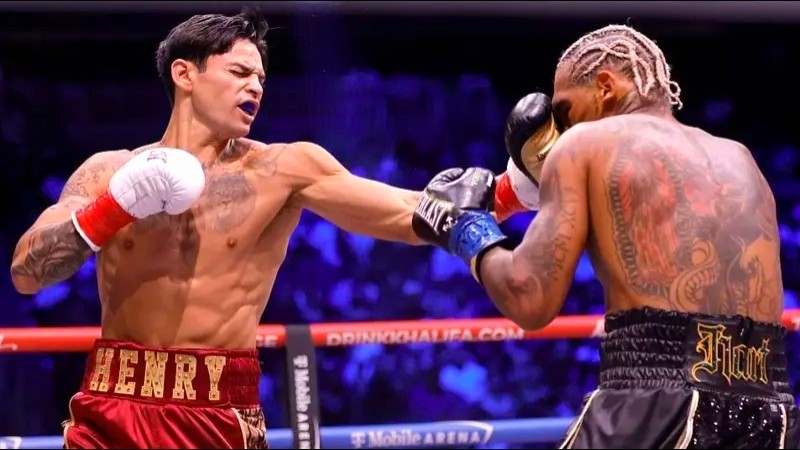
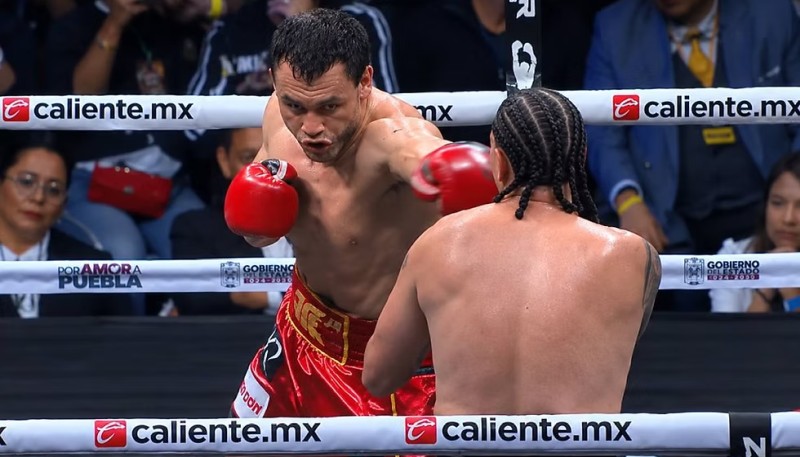
Seeing Manny Pacquiao, outweighed some 17 pounds, fly under and around a physically imposing but frozen ?Tijuana Tornado? last Saturday was better than most expected. Margarito?s broken eye socket in need of reconstructive surgery demonstrates that Pacquiao not only hit him, but hit him hard, and if compubox numbers are correct, he hit him hard 417 times; undeniably, the toughened Mexican boxer showed resilience and courage, if not stupidity, to keep fighting no matter the cost. With two swollen eyes, a sloping haunch for a back, Margarito looked like he had been magically transformed into a troll mid-fight, patiently waiting for the bell to break the spell.
But where does Pac Man Chris Farina 300×200 Post Pacquiao: Where are we now?the year?s most anticipated fight leave us?
In the post-fight interviews the Mayweather question arose. When will he fight? Is it important for the Pac-Man? Does Pacquiao want to fight? Some even suggested Mayweather would rather go to jail than face the Pinoy pugilist. With rumors of Mayweather-Malginaggi andPacquiao-Williams still floating around, who knows what we?ll have to end up buying in 2011 as the ?fight of the year.?
The Mayweather issue was predictably followed by another pointless journalistic inquiry: how good is Manny Pacquiao really? This is a chance for old schoolers to explain why her is not that good and for newjacks to list the reasons why he?s the greatest fighter ever. Boxing journalist legend Bert Sugar explained to ESPN that he?s ?one of the great fighters in history,? hinting that he was good but not the best. Do we really have the means to compare any modern boxer with bare knuckle brawlers who went for sixty round fights?
In the end these are questions and conversations so loaded with false comparisons and circular logic that their best left for the final syllables muttered from a bar stool rather than for a commentator?s microphone.
Michael Rosenthal at Ring Magazine tries contextualizing Pacquiao:
?And remember: Most of boxing?s legends competed at a time when the sport was more popular and the pool of talent much deeper, meaning they generally faced tougher opposition than today?s fighters.?
Here I beg to differ. First, the popularity of something like a sport, in this case boxing, is difficult to judge, a nonrival in economic terms. In other words, because I consume it there isn?t any less or any more for others; therefore, nonrival commodities are much harder to measure in terms of consumption. The PPV buys (1.5 million) only demonstrate the fight?s reception in the U.S. In Latin America it was shown on two cable channels, not to mention Southeast Asia where it was also shown and where boxing continues to experience a wide following (just as lightweight phenomenon Sean John or where the first Pacuqiao losses took place). Popularity then must mean how much media coverage the sport recieves within the U.S, which has certainly decreased from its peak during the 60s and 70s, when old-schoolers then complained that television was ruining the sport. A quick look around the world at the relatively massive and wealthy nations, Mexico, Brazil and Argentina, alongside staples such as England, Japan and Australia shows an increase in interest and talent as seen in televised boxing matches. This is one of the reasons promoters like Oscar de la Hoya are producing new self-contained fighting pools on other continents (televised exclusively only on HBO Latino).
Finally I?m left wondering, who cares about popularity? Better or worse, popular or obscure, the sport will continue to exist, whether the fighters come from the mean streets of Brooklyn or the mean streets of Manila doesn?t bother me in the least. Do down and out kids with a knack for swinging really have that many other options? Are there any cases of young fighters going to MMA for bigger money rather than boxing? Fighters like Andres da Silva and Marcus Davis started as boxers, and if anything left because the competition was too stiff for them.
Boxers certainly have less professional matches than their predecessors who were fighting nearly once a week in many cases, but they spend much more time training and sparring, which might make the talent pool more competitive.
Really the fact that contact sports, boxing or otherwise, experiences a following at all in our current morally conversative climate should come as a surprise. Contact sports are unique in that most people watching them have never actually praticed them. While baseball and football fans enjoy throwing the ball around, most fight fans of fighting don?t spar on a Sunday afternoon. Perhaps that?s why contact sports have always had to make room for World Series and Super Bowls.
Watching two people wale on each other for forty minutes will remain a fringe sport in an increasingly speedier and (on the surface) kinder United States; in the meantime there are plenty of other countries ?behind the times? who will continue to crank out pugilists and host their own fights. In the meantime, the big money fights will stick around because five bucks in the third world is worth fifteen in the States. So as we outsource labor in nearly other sector of society, we will continue to outsource boxing.
I?d bet on hearing three national anthems again before most matches for the next twenty years. And yes there will be boxing matches in the next twenty years, because no matter how far we stray into an inhuman, drab future, we all suffer from nostalgia.