Monday, May 10, brings about important electoral choices as the Philippines conducts local and national elections.
About 100 million Filipinos will select its new wave of politicians to advance – or regress – the country by way of policies and government initiatives.
The archipelago has had a long history, dating back to ancient Chinese and Muslim traders, the influence of Eastern philosophy, to the import of Catholicism from Spain, to American and Japanese occupations, to the Marcos dictatorship, and finally, to the (attempted) restoration of democracy and capitalist society.
From being a mosaic collection of hundreds of self-ruled tribes, to becoming a more cohesive geo-political state, the Philippines has had its share of opportunities and challenges.
Election Photos: [ 1 – 20 ]
Election Photos: [ 21 – 40 ]
For the coming 2010 elections, we explore prospective issues and concerns, and how might a Filipino citizen frame these in order to cast an informed vote.
In this commentary, we examine seven areas, including: I Why first, then What and How, II. A Framework for Society, III. Mindset and Attitude, IV. The 5 E’s: Economy, Exports, Education, Energy, and Environment, V. Challenges, VI. Opportunities, VII. Commentary. I. ‘WHY’ first, then How and What
Said American founding father George Washington, Government is not reason; it is not eloquent; it is force. Like fire, it is a dangerous servant and a fearful master.
For many generations of Filipinos, government has been fire, an entity that has taxed the laborer in exchange for inadequate services; without effective economic redistributive policies; without the ordinary foremost in consideration. Some philosophers argue that taxation can be a form of slavery, by forcing the worker to part with the fruits of his labor, in effect he is a slave.
Philosophical frameworks govern a society. No man can choose this ‘state of nature.’ However, all men and women must choose a leader with values that represent the philosphy he or she deems appropriate for his own society. In a quest for a better welfare for himself, and for a better country, the Filipino voter must choose which leader has values that best serve the Philippines. CLICK Images: Philippine Elections [ 1 – 20 ]
All of history’s most galvanizing leaders first espouse why. Reasons come first before the how and what of mechanics. Framework before details.
For Ronald Reagan, why was because the government had grown too big. For John F. Kennedy, why was for preventing armageddon with an evil empire. For Martin Luther, why was to reform a corrupt church. For Franklin Roosevelt, why was to prevent Nazi domination and mass genocide. For Douglas MacArthur, why was to liberate a continent. For the American people, why means to serve as a ‘shining city on a hill,’ to serve as a beacon of hope to the world.
The mechanics are found in the how and what. The May 2010 elections should be about why. Why do Filipinos exist as a race? Why are the people special in the global community? Why is the Filipino’s purpose transcendent? Why is the Philippines a nation of destiny? These questions, no current leader has accorded eloquently.
Yet, the voter must choose his leader based on the whys of Philippine society. An elected national leader is first and foremost a symbol of what the society is about. What the society is striving for. He represents the singular purpose of a people. The values from which one must embed in himself for success in his own land.
In the words of Thomas Jefferson, “Bodily decay is gloomy in prospect, but of all human contemplations the most abhorrent is body without mind.” In national governance, officials with mechanics and details but without the whys run a country that is a geopolitical mass but without a mind. II. A Framework for Society
The Philippines has long been plagued by many dauting challenges. Hundreds of thousands leave the country each year for work overseas, resulting in a mass ‘brain drain.’ Filipino doctors leave in order to become nurses elsewhere in the world. Millions upon millions of Filipinos are unemployed or are under-employed. Millions of street children grow up in urban squalor without adequate family support, nourishment, shelter, and health care.
Corrupt officials bilk the national treasury with self-interested contracts, often by inflating costs and then pocketing the difference. A Marcos dictatorship left a culture of serfdom without an effective redistributive policy. Lack of an even playing field, along with lack of effective redistributive programs have resulted in a wide gap between rich and poor. CLICK Images: Philippine Elections [ 21 – 40 ]
Still, the appropriate framework can be simplified because the problems of Philippine society have simple root causes. The complications are seen in the effects: in the economy, in the energy sector, in education, in the environment, in the brain drain. But Six Sigma teaches us that the root causes can be very simple.
Honesty, trust, fair play, and infomation remain the foundations of a democratic and capitalistic society. Honesty and trust allow state players to conduct their functions effectively and with transparency. And simply, the lack of these traits result in societal ills. The Philippines has long been an agricultural society. In these settings, upright values were instilled in children. Today’s changing landscape brings urban settings where deceit and manipulation can allow an enterprising individual to rise (and thus be rewarded by such values).
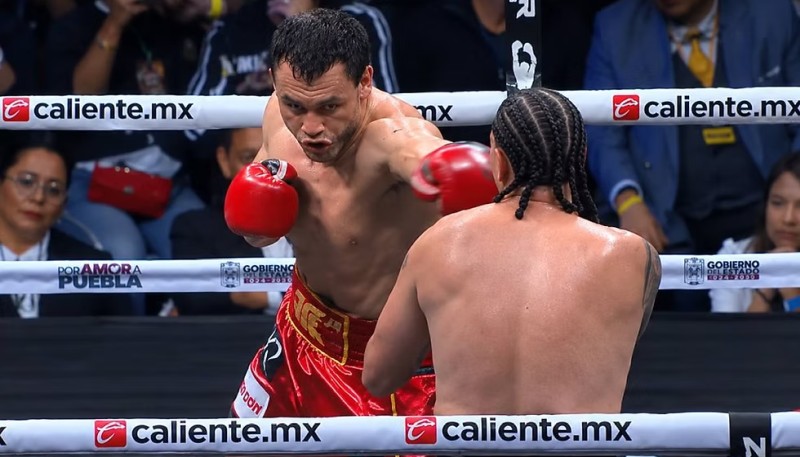
PHOTOS: Manny Pacquiao campaigning (AP)
Filipinos should be vigilant that family remains a strong foundation and priority. The family is a country’s smallest political unit – and regression in familial values results in social decay. Addictions, social ills, lack of initiative, and dysfunctional behaviors can be traced to the decay in family values.
In this election, the Filipino voter must choose the leader with the proper vision for Philippine society. Not only because the philosophical framework espoused can trickle down to the bureaucracies, but because it is an example that leads for the rest.
After the why is defined, what is the appropriate framework for the country? What are its foundations? What are the value ethics by which we can judge success or failure?
to be continued . . .