It only seems like yesterday when the world ushered in not only another decade but also a new millennium. The world convulsed over Y2K fears that thankfully never panned out and we all had to learn to write the number “2” instead of “1” to begin our years. The technology revolution launched in the 1990s advanced by leaps and bounds in the 2000s – a decade for which no name was ever universally accepted – and MaxBoxing was only one of dozens of boxing web sites that benefited from it.
Boiling down a year’s worth of action is tough enough, so imagine trying to encapsulate an entire decade. So many dramas were played out in rings worldwide; legends were created and dismantled, “can’t-miss” prospects either sizzled or fizzled and enough surprises were sprung to keep us coming for more.
The “Millennial” decade was my fourth as a boxing fan and the completion of my third full 10-year cycle. While this past decade couldn’t compare to the 1970s and 1980s in terms of media reach and certified legends, this past decade had its share of great and disappointing moments. So without further delay, here is one man’s list of the best and worst of the last 10 years.
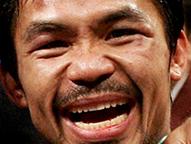
Fighter of the Decade – Manny Pacquiao: At the start of 2000 Pacquiao was just three months removed from losing his WBC flyweight title to Medgeon Singsurat, who dominated the action before stopping the weight-weakened “Pac Man” in round three. By the end of 2009, the 31-year-old Pacquiao stands at the precipice of all-time greatness after capturing belts ranging from 122 to 147, going 7-0-2 in bouts for “major” belts and running through a gauntlet of outstanding fighters. They included Lehlohonolo Ledwaba, Agapito Sanchez and Jorge Eliecer Julio at 122; Marco Antonio Barrera and Juan Manuel Marquez at 126; Erik Morales (twice), Oscar Larios, Barrera and Marquez at 130; David Diaz at 135; Ricky Hatton at 140 and Oscar de la Hoya and Miguel Cotto at 147. In all, Pacquiao went 23-1-2 in the decade with the blemishes coming against Morales (L 12), Sanchez (TD 6) and Marquez (D 12).
It is difficult to decide which feat was more amazing; his run of three Ring Magazine Fighter of the Year awards in a four-year span (a feat equaled only by Joe Louis, Rocky Marciano and Muhammad Ali) or the worldwide acclaim generated by a lighter-weight Asian champion. With a victory over Floyd Mayweather Jr., Pacquiao would make a strong case for being included among the top 30 fighters who has yet lived – a monumental achievement for someone who fought fewer than 60 times when compared to the pantheon’s 100 or more outings against consistent high-quality opposition. But will he get that chance? For his sake and the sake of boxing, let’s hope he does.
Fight of the Decade – Diego Corrales KO 10 Jose Luis Castillo I: This decade had its share of worthy candidates – Barrera-Morales I and III, Gatti-Ward I, Ward-Augustus, Sithchatchawal-Monshipour and all three Marquez-Vazquez fights among them. But after careful video review Corrales-Castillo I rose to the top because not only did this fight feature bell-to-bell hell, it was capped off by an electrifying come-from-behind finish.
Despite owning advantages of two-and-a-half inches in height and one inch in reach, Corrales chose to initiate a trench war to take advantage of Castillo’s tendency to start slowly. The WBC lightweight champion eagerly accepted the terms of battle and by mid-round the two warriors were trading explosive shots at point-blank range without taking a willing step back.
The second saw both doubling and tripling up their hooks, crosses and uppercuts. A right uppercut-left hook combo stunned Corrales, who instantly bounced back behind sharp shots of his own. Each freely indulged their zest for hearty competition by imposing a vigorous pace upon the other, and they responded by taking as well as they received. Castillo owned the faster hands and superior variety while Castillo boasted more natural strength, more consistent bodywork and an iron jaw.
The infighting clinic continued in the third and fourth, and even at this relatively early juncture it had already become a war of attrition. Corrales sliced open Castillo’s left eye midway through the fourth yet he walked through the fire and delivered plenty of heavy-handed blows. Four big lefts – two hooks and two left uppercuts – stunned Corrales in the final moments of round six and by the seventh an ugly purplish swelling erupted under “Chico’s” left eye. With the eye nearly a slit, Corrales gunned for the knockout at the start of round eight, triggering an extended exchange that could only be described as rugged, vicious, frantic, exquisite violence. A Castillo volley dislodged Corrales’ mouthpiece in the final minute of the eighth – a portent of things to come.
Castillo launched an extensive body attack to start the ninth but referee Tony Weeks correctly issued warnings when two of them strayed low. Corrales retaliated with quick-fisted explosions that appeared to weaken the champion – but only temporarily. Castillo ended the session with a pulsating counter-attack that set the stage for an unforgettable – and controversial – final act.
A Castillo hook to the jaw 26 seconds into round 10 left Corrales sprawled on the canvas and badly hurt. The challenger managed to haul himself up by eight, but because his mouthpiece was knocked out Weeks called time, resulting in 12 extra seconds of recuperation time and a bonus piece of advice from Joe Goossen: “Get inside on him.” Castillo rained in a series of torrid hooks that scored a second knockdown and this time Corrales grabbed his mouthpiece with his glove but dropped it as he slowly arose at nine. Another time-out was called and this time 23 more seconds passed before Corrales was called back into action.
And what action it was.
With Corrales teetering on the edge of competitive oblivion, a rocket-like right from nowhere caromed off Castillo’s jaw. The punch stiffened Castillo’s legs and a follow-up hook sent the champion tottering toward the ropes. Two more hooks numbed Castillo’s body and a final 10-punch explosion had “El Temible” hanging on the ropes and nearing unconsciousness. At this point Weeks leaped between the fighters and with that the curtain fell on a fight for the ages.
When asked to describe the fight, Corrales said, “an honor. It’s a great honor to be in there with a great champion and he gave me the chance to prove that I’m a great warrior and a great champion.”
That you were. And it was our honor to watch it.
Round of the Decade – Micky Ward-Arturo Gatti I, Round 9: Although the 10th round of Corrales-Castillo I was very close to taking this honor, even that was exceeded the sheer drama of this one. The deciding factor: Round nine of Ward-Gatti I saw the momentum turn twice as opposed to once for Corrales-Castillo I.
Ward already had Gatti nearing a state of collapse at the end of the eighth and 14 seconds into the ninth a piercing trademark hook to the liver forced Gatti to grimace in agony before taking a voluntary knee. Arising at referee Frank Cappuccino’s count of nine-and-a-half, Gatti was in immense pain yet he found the will to fight on. Ward launched 22 punches – most of which landed – before Gatti could conjure an anemic jab. But at the one-minute mark, Gatti began to mount an inconceivable comeback against his arm-weary rival. Gatti whipped both hands to the body and followed with flush shots to the face, and his momentum grew with every passing second. A Gatti barrage drove Ward to the ropes and caused the already frenzied crowd to pump up the volume even further. As Gatti blinked away the blood from his right eye, he continued delivering his thunder while Ward could do little else but hold up his arms and ask for more.
With drama dripping from his vocal chords, HBO’s Jim Lampley perfectly captured the moment when he shouted, “Ward nods as if to say ‘come on! Come on! Come on, let’s fight!” And fight they did.
With Ward propped up against the ropes, the two men traded vicious power shots at a frightful pace before finally slapping on a clinch with a minute to go. Once he was freed from the strands Ward launched another bombardment of sickeningly flush punches that drove Gatti to his own corner pad.
“You dream of fights like this but very seldom do they live up to the expectations,” analyst Emanuel Steward declared as Ward pounded away. “This is even more than you can dream of!”
With 30 seconds left another Ward volley had Gatti hanging on for dear life and without the strength to even hold up his arms. Gatti was fighting on nerve alone, yet it was he who landed the round’s final punch, a weak left hook to the jaw.
In all, Gatti landed 42 of 61 power punches (69 percent) while Ward connected an amazing 60 times in 82 attempts (73 percent).
“This should be the round of the century!” Steward raved as Ward trudged to the corner and Gatti tottered toward his with a vacant look in his eyes. When all the dust has settled in the year 2099, Steward may well be proved right.
Knockout of the Decade – Antonio Tarver KO 2 Roy Jones II: Sure, there were more destructive one-punch knockouts scored in the past 10 years, but this one not only scrambled “Superman’s” marbles it also shattered his iron-clad armor of invincibility. Ever since Jones turned pro following his fleecing in the gold medal final in Seoul, he proved himself to be the class of the 1988 squad as he not only won, but also won with undeniable style. His dominance was such that most observers overlooked his only defeat – a ninth round disqualification to Montell Griffin – because he avenged it with a venomous first-round knockout.
Had Jones called it quits immediately after decisioning John Ruiz to capture the WBA heavyweight title, he would have had a guaranteed seat on boxing’s Mount Olympus – four divisional championships ranging from middleweight to heavyweight, a sparking 48-1 (38 KO) overall record and a 22-1 mark in championship fights.
Like Pernell Whitaker before him, Jones’ aura of invincibility was such that one couldn’t fathom his being beaten, much less knocked out with a single punch. But that’s just what Tarver did when his hammer-like left cross came out of the blue and drove Jones to the floor. It was perhaps the decade’s most shocking sight and it triggered the beginning of a long and sad decline. With legs deadened by age and his supersonic speed slowed to spurious flashes of lightning, Jones went 5-4 in his final nine fights with two KO losses, the most recent of which was a 122-second stoppage to Australian Danny Green.
Upset of the Decade – Carlos Baldomir W 12 Zab Judah: The celebrated New Yorker came into this fight at his positive peak, both in terms of skill and reputation. The one-time IBF junior welterweight champ looked spectacular in stopping Cory Spinks to become a three-belt 147-pound champion – in Spinks’ hometown of St. Louis, no less – then followed it up with a scintillating three-round knockout of the usually durable Cosme Rivera. Also, the man nicknamed “Super Judah” had seemingly overcome his reputation for immaturity and lack of focus and at age 28 fans and observers believed they would finally see Judah’s talents in full flower.
If ever there was a fighter who was tailor-made for Judah, it was the 34-year-old Baldomir. The Argentine’s blocky physique was built for durability rather than speed, and even that toughness appeared to be a hindrance because it only would have prolonged his agony. A slow starter, Baldomir threw wide punches that would have been tasty fodder for Judah’s counters. Most experts looked at the nine losses and six draws that dotted his 56-fight record, but a deeper examination revealed that the South American had not lost in nine years, going 19-0-2 (8 KO) in the process. Still, the critics pointed to a controversial 11th round disqualification to Joshua Clottey and a draw against the 28-0 Jose Luis Cruz as ammunition because they were the only two widely recognized names he faced during his streak. Add to that a 4-5-1 record against southpaws and Baldomir’s goose already appeared cooked.
The throng that filled Madison Square Garden prepared themselves for a virtuoso performance by their hometown hero, especially with a megamatch with Floyd Mayweather Jr. in the offing – but what they got instead was the Upset of the Decade.
Judah tried to rattle the challenger by making him wait in the ring, then slapping him on the hip instead of touching gloves. While Judah won the first two rounds with his superior speed, the gulf in talent was far smaller than suspected, proving the New Yorker’s histrionics had no effect on Baldomir. The gap closed further in the third and fourth as Baldomir reached Judah with several thudding rights and the champion dramatically throttled down his output and initiated more clinches.
The pace picked up on the fifth as Baldomir pushed the pace with Roldan-like swings and Judah landed sporadic bursts of speed. A late-round butt that was called accidental – but had shades of intent – opened a cut on the bridge of Baldomir’s nose. Judah appeared distracted and fought unevenly while Baldomir was single-minded and energetic, traits that became more evident with every successive round. A huge right at the one-minute mark of round seven had Judah holding on desperately and another right late in the round had the champion reeling around the ring and the partisan crowd shrieking in alarm.
Brimming with confidence, Baldomir steadily increased the pressure and Judah was found wanting. The challenger landed rights almost at will and blood soon bubbled from Judah’s nose. Baldomir’s confidence was such that he had planned not one, but two, victory parties and he made good on them as he swept the late rounds en route to a unanimous decision victory. With that, Baldomir joined Carlos Monzon, Julio Cesar Vazquez and Miguel Cuello as champions from Santa Fe, Argentina but in terms of scoring upsets of the decade Baldomir stood alone.
Trilogy of the Decade – Israel Vazquez vs. Rafael Marquez: This decade was chock full of tremendous “thrillogies” such as Barrera-Morales, Gatti-Ward and Pacquiao-Morales among others. But each of these three-fight series had a dud thrown in here or there. Such was never the case with Vazquez-Marquez when it came to heart-pumping action. In fact, the only disappointment was that the first fight was stopped in the corner because of a Vazquez injury. That development, however, ended up being a mere footnote because each of the 25 rounds they fought were magnificently savage displays of what makes boxing the most invigorating and exhilarating of sporting spectacles.
Propelled by immense pride, determination and skill, Vazquez and Marquez lived up to, then surpassed, the special legacy owned by Latin fighters. Each raked the other with full-blooded power combinations that were delivered with first-rate technique but also with back-alley bravado. Their pain thresholds were off the charts even for world-class fighters and unlike other trilogies the quality of their encounters escalated with every successive meeting. Just when everyone thought they couldn’t top their last performance, they fooled us all with an even more spectacular display.
This trilogy of a lifetime is scheduled to become a tetrology on May 22 at the Staples Center. Can it possibly top what they had done before? One would think not given their ages and the absorption of punishment, but given their history of rising to the occasion – and because each man is the other’s pugilistic soul mate – it wouldn’t be a total shock if this go-round gives us another shot of visual rocket fuel.
Most Disappointing Prospect – Francisco “Panchito” Bojado: Few fighters ever received the plaudits that Bojado did when he began his career with nine consecutive early knockouts from January to November 2001. At just 17, this member of the 2000 Mexican Olympic team inspired comparisons to the immortal Roberto Duran because of his coal-black eyes, his blazing power combinations and his killer instinct. Others saw him as the second coming of Fernando Vargas (who happened to be a stablemate) because he sported the same spiked feather-like sunburst haircut “El Feroz” fancied. There were reasons beyond cosmetics to draw the parallel, for he demonstrated the same precocity and emotional maturity that vaulted Vargas toward becoming the youngest junior middleweight champion in boxing history.
Once the clock struck midnight on New Year’s Eve 2001, Bojado’s Cinderella-like rise turned pumpkin-esque. On February 16, 2002 Bojado met fellow Mexican Juan Carlos Rubio to top a Showtime telecast that included Michael Moorer’s 10 round decision over Robert Davis and Jeff Lacy’s first-round destruction of Glenn Thomas. On paper, Rubio looked a solid choice for the prospect as he lost two of his last three fights, including a two-round stoppage to Teddy Reid. But when Bojado stepped in the ring the streamline lightweight had turned into an alarmingly soft 144 ?-pounder.
Rubio wisely employed his four-and-a-half height and six-inch reach advantage to thoroughly frustrate, then dominate the touted youngster. The judges saw Rubio a 96-94 (twice), 98-92 winner and with that the accolades turned to acid. The result was such a surprise that Ring magazine declared it the Upset of the Year.
Questions about his drive inside the ring and commitment outside it dogged Bojado even as he mounted a seven-fight winning streak that included a revenge decision over Rubio. That’s because he never again looked like the cold-blooded killer that starched his early competition and a split decision loss to 38-year-old ex-champion Jesse James Leija in July 2004 all but sealed his standing. Bojado launched a three-fight comeback in 2007, beating Dairo Esalas by decision and stopping Rogelio Castaneda before losing a verdict to “Contender” finalist Steve Forbes. At the tender age of 24, Bojado was done with boxing and with his exit fans were left to ponder what could have been.
Worst Decision of the Decade – Joel Casamayor W 12 Jose Armando Santa Cruz: There is a perverted brand of serendipity to this award because the most scandalous decision of two consecutive decades occurred in the same building – Madison Square Garden. The first Lewis-Holyfield fight in March 1999 was a unanimous decision for Lewis disguised as a draw so putrid that it sparked a hailstorm of outside investigations. One aspect of Santa Cruz-Casamayor was even worse because the “people’s winner” not only was forced to swallow an undeserved loss, he, unlike Lewis, couldn’t walk out of the ring with a title belt around his waist.
The 36-year-old Casamayor didn’t own any of the four “major” belts, but he was considered by many to be the lineal champion by virtue of his victory over Diego Corrales in his most recent outing 13 months earlier. Interestingly, Santa Cruz had served as Casamayor’s sparring partner for two of the three Corrales fights because of his lanky build and volume-punching tendencies. At 5-10 he was three inches taller but his arm-length was longer by only one inch.
Make no mistake, Casamayor-Santa Cruz was unexceptional in terms of action and at times it was difficult to watch because the styles didn’t mesh well. It was Santa Cruz, however, that applied steady pressure throughout and he got off to a terrific start by scoring a knockdown in the first – albeit a questionable one since the blow in question struck Casamayor’s left elbow. Still, the Cuban fought an extremely negative fight as he alternated between backpedaling, initiating clinches or punching without conviction. Meanwhile Santa Cruz piled up punch numbers, which usually translates to rounds on the judges’ scorecards.
Santa Cruz switched to southpaw in the sixth round, a tactic that proved successful in the seventh and ninth rounds as he clocked Casamayor with left crosses time and again while also making the Cuban champion miss. Casamayor looked like a tired and aged fighter in the final two rounds as he blatantly and repeatedly clinched. In the end, most observers thought Santa Cruz merited between eight and 10 rounds.
Not so, said judges Frank Lombardi and Ron McNair, who each saw Casamayor a 114-113 winner. They overruled Tony Paolillo, who turned in a quizzically close 114-113 scorecard for Santa Cruz. The panel boasted a combined seven fights of championship experience, and it certainly showed here.
“Just when you think you’ve seen everything,” a stunned Jim Lampley began. “Just when you think you’ve seen decisions so bizarre that you’ll never see anything worse than that again, along comes something like this.”
“That’s a tough decision to explain,” said HBO’s “unofficial official” Harold Lederman, who saw Santa Cruz a 118-109 winner. “This guy did nothing but hold and Steve Smoger didn’t do much to stop him from holding. He held and held and held and never even got a warning. If anybody did the clean punching it was Santa Cruz. Joel Casamayor is in a lot of controversies, he steals a lot of fights and certainly tonight I think he stole another one.”
“You’re being polite by saying this was a ‘tough’ decision,” countered analyst Emanuel Steward. “It was a bad, disgusting decision and that’s putting it mildly. I’m so shocked, especially when you consider the two-point round the first round, for aggression, for clean punching. This is what’s hurting boxing.”
Max Kellerman made it unanimous by saying, “that’s not just a bad decision. That’s an outright robbery.”
The CompuBox stats reflected Santa Cruz’s dominance as he threw nearly 300 more punches (801-502) and landed 117 more (246-129). In a recent CompuBox analysis of selected controversial fights over the past 25 years, Santa Cruz-Casamayor ranked fourth in terms of the gap in total connects by the loser over the winner. Only Dave Tiberi-James Toney (149 connects), Lewis-Holyfield I (218 connects) and Troy Dorsey-Jorge Paez I (280 connects) rated higher in terms of statistical robberies.
So there it is, one man’s overview of the decade that recently passed into history. No one knows what the next 10 years will bring but since this is boxing, one can almost guarantee that it will be compelling, creative and controversial.