POLITICS used to be known as the No. 1 industry of Cebu around the middle of the last century late in my young life when as a sportswriter I was shanghaied to fill the gap in the Manila Chronicle?s coverage of the 1957 elections. That was when there were four candidates for the Presidency?Carlos P. Garcia, Jose Yulo, Claro M. Recto and Antonio Quirino. Garcia won that one but Diosdado Macapagal, the running-mate of Yulo, won the vice presidency. Which became the prelude to his own presidency.
The few weeks that I spent with Recto was a crash course on Philippine politics. To break the long traveling times between ?whistle stops??it took two hours, for example, to fly from Manila to Cebu?Recto would hold a running commentary on the political stories in the newspapers carried by the airline. Antonio Quirino, the brother of the President, owned the Alto Broadcasting Station (ABS), the first Philippine television network, and was said to have disposed of it in order to fund his presidential ambitions. The second was the Chronicle Broadcasting Network (CBN), a sister company of the Manila Chronicle where I broke my journalism teeth covering sports. CBN acquired ABS and gave birth to ABS-CBN, which pioneered the first and only all news station, Radio Reloj.
At that time, radio news broadcasts were picked up from the daily newspapers. Radio Reloj was among the first station to have its own news reporters to meet the need of its all-day news broadcasts.
It was a Chronicle policy to cover every presidential candidate. The regular political writers went with the candidates of the Nacionalista and the Liberal parities, the major parties. Recto and Lorenzo Ta?ada, his vice presidential running-mate, ran as candidates of the Nationalist?Citizens Partty.
Recto?s campaign sorties had a party of three composed of himself, an aide who was a retired colonel of the Philippine Army and I. During stops in major towns, Recto would hold small press conferences arranged for him, or simple ?conversations? with reporters who meet him on his arrival.
One of the questions that Recto invariably asked was what the most urgent problem that that community was facing that day. That usually became the theme of the day. The focus of the problem was agriculture and the power blocs then were the sugar bloc, the tobacco bloc and the rice farmers and the major preoccupation was the nationalization of retail trade and the rice industry which were controlled by alien businessmen. Looking back on these, shows that the country has made major advances in the management of the national economy.
In reply to the basic question, Recto could be relied on to come up with a comment or observation around which the story for the day could be built. After all, he was the standard bearer of the Nationalist Citizens Party. His running mate, Sen. Lorenzo Ta?ada, was founder of the Citizens Party. In any case, the NCP offices in Manila produced thematic stories for the day, but in the Chronicle, campaign stories were always led by my dispatch, which ordinarily would be different from the stories of the other papers who didn?t have a ?man? with Recto?s campaign ?caravan.? Those few weeks with Recto taught me more political science than perhaps that of the average poli-sci major.
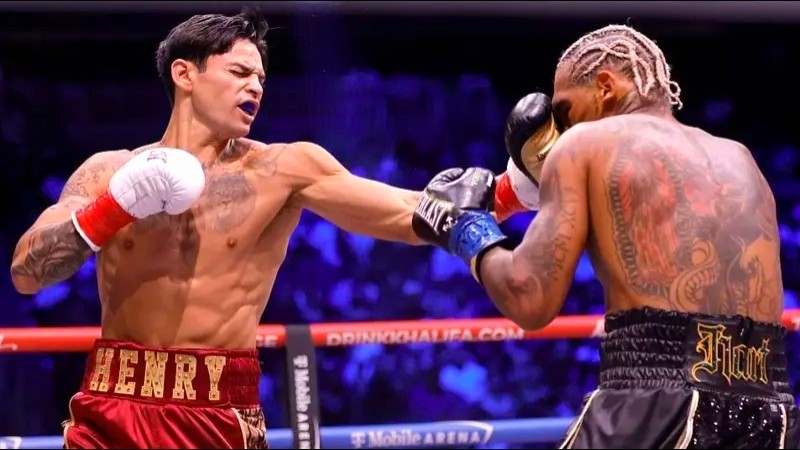
I started this piece talking about politics as an industry. In Cebu, at the time I?m talking about, even children talked politics. In the first place, the Osme?a clan had a strong pervasive influence in the island province. I was going to talk about Manny Pacquiao before I was sidetracked. One of the stories to come out after his thorough punishment he gave Ricky Hatton of England was that he was going to organize his own political party.
We may forgive him if he went overboard after winning $12 million in just under six minutes of actual work. Of course the preparation took months. But it seems that Manny has no intention of going national in his politics. He seems to be just interested in helping the small people like him in local politics. But his entry into small-time politics is just one of the many ventures he has thought up so that he may use the money he won with his national fists to help more people.
My wife has breast cancer and she has been receiving radiation treatments at the Far Eastern University Hospital in Fairview, Quezon City. Late last year, her treatments were transferred to Medical City on Ortigas avenue. It seems that some of the equipment at the FEU cancer clinic needed repairs. Just a few weeks back, we were asked to return to FEU because not only were some of the equipment repaired, new multimillion-peso equipment were added to the clinic.
But now the clinic has been renamed the Philippine Onchology Center Corporation, some sort of a cooperative owned by personnel of the clinic. This was made possible because Manny Pacquiao bankrolled the purchase of the cancer facility. It has become one of the most modern cancer facilities in the nation. By making the former employees part-owners, they are members of the cooperative operating the clinic.
For somebody who is a promdi, Manny has earned more money than many of those born with a silver spoon in their mouths could earn in their life time. One thing is sure, the money has not gone to his head. His mind is as quick as his fists and his heart is in the right place. Don?t sell him short.
But ?defying? the World Health Organization?and the administration which endorsed the WHO suggestion?in order not to delay Manny Pacquiao Day, may suggest he may be picking up some of the more arrogant and unseemly proclivities of congressmen, a company he wants dearly wants to join.