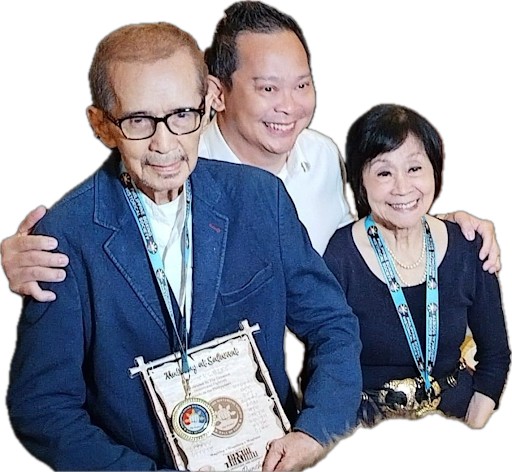
First of all, my greetings to members of the PAF Flying School Alumni Association led by its chairman, Brig. Gen. Artemio Orozco. Last Saturday they gathered at Fernando Air Base in Lipa City for the annual ?Balik-Fernando? reunion of Flying School graduates. The guest of honor was Gen. Alexander Yano, former AFP chief of staff, with Lt. Gen. Oscar Rabena, CG, PAF as special guest.
A few weeks earlier, the association held its general assembly meeting at the Villamor Golf Club ballroom with Gawad Kalinga founder Tony Meloto as guest of honor.
* * *
Since 1923, when two young Yale University graduates, Henry Luce and Briton Hadden, established Time Magazine, only six Filipinos have made it to the cover of this prestigious weekly news magazine, with former President Cory Aquino appearing four times.
On Nov. 25, 1935 Commonwealth President Manuel Luis Quezon became the first Filipino on its cover, with the line: ?We Filipinos are like a young married couple.?
On July 8, 1946 Manuel A. Roxas, President of the Philippine Republic, appeared on Time: ?President?s word made good.?
On Nov. 26, 1951, Ramon Magsaysay was featured with the words: ?I will send my own father to jail, if he breaks the law.?
Oct. 21, 1966?Philippine President Ferdinand Marcos: ?Two decades of independence in Asia.?
Almost 20 years later, on Feb. 3, 1986, Corazon Aquino and Ferdinand Marcos both appeared on Time: ?What?s at stake.?
Feb. 24, 1986?Corazon Aquino: ?Fighting on.?
March 10, 1986?Cory Aquino and Doy Laurel: ?Now for the hard part.?
Jan. 5, 1987?Corazon Aquino: ?Woman of the Year.?
With the setting up of an Asian edition, the magazine may have featured Gloria Macapagal-Arroyo on its cover.
The latest issue of Time, which hits the newsstands today, features the World?s 100 Most Influential People. In 1999, Time named the 100 Most Influential People of the 20th Century. Albert Einstein was chosen ?Person of the Century,? with Franklin Delano Roosevelt and Mohandas K. Gandhi as runners-up. Since 2004 this list of influential figures has become an annual feature of the magazine broken down into five categories: (1) Leaders and Revolutionaries; (2) Builders and Titans; (3) Artists and Entertainers; (4) Scientists and Thinkers; and (5) Heroes and Icons.
Time managing editor Richard Stengel explains that Time 100 is not a list of the most popular or the most powerful people, but rather the most influential and not necessarily for the better, saying: ?We look for people whose ideas, whose examples, whose talent, whose discoveries transform our world. Influence is less about the hard power of force than the soft power of ideas and example.?
This year in the Leaders and Revolutionaries category, there are two presidents from the developing world: Susilo Bambang Yudhoyono of Indonesia and Paul Kagame of Rwanda. Both are former soldiers who turned to politics and have led their countries to levels of stability and progress that have surprised the international community.
Susilo Bambang Yudhoyono or SBY is on the verge of becoming his country?s first democratically re-elected president. The retired general-turned-statesman has brought peace to Aceh, a former civil war battleground, waging one of the most successful wars on terror with scores of militants arrested. He has presided over the most populous Muslim nation in the world with integrity, fighting corruption at the highest levels with a top prosecutor in the attorney general?s office sentenced to 20 years in prison for accepting bribes. Two Cabinet members are also under investigation for allegedly receiving payoffs.
In the words of Pastor Rick Warren, himself one of the heroes in the 100 list, Paul Kagame is ?the face of emerging African leadership.? He cites Kagame?s zero tolerance for corruption: ?Rwanda is one of the countries where I?ve never been asked for a bribe. Any government worker caught engaging in corruption is publicly exposed and dealt with.?
A strong anti-corruption stance exhibited at the highest levels of leadership appears to be the most compelling characteristic of these two countries.
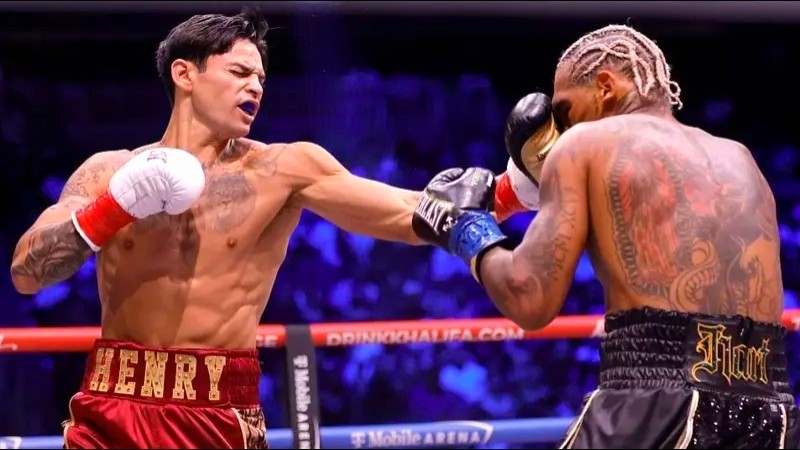
For the first time since 2004, a Filipino has made it to the Time 100 list under Heroes and Icons. Former world heavyweight boxing champion Lennox Lewis has this to say about Manny Pacquiao. It gives us an idea of how the outside world looks at Manny and his impact on the Filipino people: ?Pound for pound, Manny Pacquiao is the best boxer in the world. But even more important than holding that distinction, Manny has connected with the people of his home country, the Philippines, to the point where he is almost like a god. The people have rallied behind him and feel like they?re a part of him because they can see his talent, his dedication, his grace and his class. The grip he holds over the Philippines is similar to Nelson Mandela?s influence in South Africa. I can surely see Manny becoming the Philippine President one day.
?Boxing needs a guy like Manny. Too often, when something positive develops, the sport takes two steps backward; you never know where the black eye is going to come from. With Manny, you don?t have to worry about that. He just loves the sport and knows he?s carrying the hopes of his country in the ring.?
Please, Manny, don?t go into politics. With your achievements you?ve made our people proud of themselves, something you could never do as a politician. Mixing pork barrel with your hard-earned winnings would only stain the fine legacy you have so far established.
The 100 list also has two individuals who have affected our world, but in a negative manner. Mexican drug lord Joaquin Guzman is featured under Leaders and Revolutionaries, while world-class swindler Bernard Madoff is included in the Builders and Titans category.
* * *
Also in the Books section of the magazine is a brief article about how a senior official in Africa blew the whistle on his own government. John Githongo was appointed anti-corruption czar in Kenya but his attempts to expose scams involving high party officials forced him to flee Kenya. His experiences are covered in a book, ?It?s Our Turn To Eat,? by Michela Wrong. The title refers to the assumption in Kenya that winning elections provides one with his turn to steal. Does that sound familiar? Whose turn will it be in 2010, or shall we have the same folks?