He graduated with a double major at Syracuse, dropped out of law school and wound up trying to sell real estate. This was an exercise in futility. As a salesman, he might as well been trying to sell ice to Eskimos in the winter. He was trapped on a treadmill to nowhere.
Then along came a co-worker named Donna Taaffe, who was married to a Sports Illustrated columnist who covered the media.
“He’s bright. He’s got talent. He is wasting his time here,” she told her husband. “We’ve got to get him out of here.”
Which is how he got his introduction to Charlie Brotman, Washington, D.C.’s hottest public relations guy. The hook was Fred Sternburg’s love of sports. That was in 1985.
“I want this job,” Sternburg told him.
“You fit right into my budget,” Brotman replied. “You can be an intern with no salary.”
“Thirteen years later, when I left,” Sternburg recalls, “I was a vice president with no salary.”
But he had learned the business, and Brotman sent him off with the caution to be accurate, to always tell the truth and to find the perfect pitch tailored to his client’s needs.
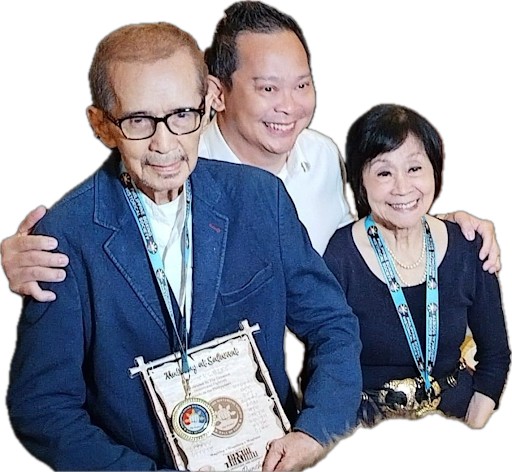
The man and the business turned into the perfect marriage. Sternburg, the perfect trailblazer as a publicist, will be inducted into the International Boxing Hall of Fame in Canastota, N.Y., on Sunday.
How good is he?
The first time I met him was shortly before David Tua, a Samoan, challenged Lennox Lewis for the heavyweight title in 2000.
“What do you know about Tua?” Sternburg asked.
“I know he has the biggest arms I ever saw.”
Sternburg went off and did his research, called me back and said, “I saw those arms. Can you believe a guy built like that writes poetry? Ask him about that when you meet him next week.”
I did, and the tip on his poetry encouraged him to reveal a David Tua few had ever seen. Score one for Fred. It was then I knew that Sternburg knew what his job was all about.
He never steered me to a story I could refuse. That was because he had learned how to fit the guys he was pitching into reporters’ and columnists’ individual writing styles.
Take, for instance, Winky Wright, a junior middleweight that few writers knew about. He was a master boxer. That, in itself, was enough to make him a column. But Fred figured out that I would want to write about how his skills were his own worst enemy.
He told me that Dan Birmingham was his trainer and manager from the day that Wright first walked into the gym in St. Petersburg, Florida. They were together from that day until he retired 22 years later. He explained to me that he could not get a great pay day or a title shot until 1994.
I told him that I needed a face-to-face meeting with Winky. “You got it,” he said.
And he arranged it at a time when Winky was rarely asked for an interview. I learned he fought in eight countries. I learned that even if you beat him, his boxing skills made you look bad.
Then there was Manny Pacquiao. He was affable. He was friendly. He had a lot to say. But with so many hangers-on, sometimes he did not get to say it. When he fought Miguel Cotto in Las Vegas 2009, he was particularly hard to interview before that fight.
First, there was Michael Koncz, an advisor who kept getting in the way. It was his way of protecting Michael Koncz. Then there was Buboy Fernandez, his boyhood friend, who posted a sign “Get in the way and I will knock you out.” It was his way of protecting Pacquiao.
There were also about 100 Filipinos for whom Pacquiao bought plane tickets. When I went to interview him in his suite at the hotel, the three “problems” were everywhere.
Konzz kept Pacquiao away by talking about tickets for about an hour while the hometown invitees were sponging free meals in the living room.
“It’s useless,” I told Fred. “I’m leaving.”
I stormed out and opened the wrong door. It was a broom closet, and one of Pacquiao’s invitees was sleeping on the floor. Another was snoring underneath a pool table. As I left, Sternburg hollered, “Stay in your room. I’ll call you.”
When the phone rang, it was Pacquiao inviting me back. I knocked at his suite, and Sternburg opened the door. “I told you,” he said.
These days, Sternburg helps promote my books.
The International Boxing Hall of Famer got it right. When the folks revise the Webster Dictionary, Fred’s picture should be next to the word “Publicity.”