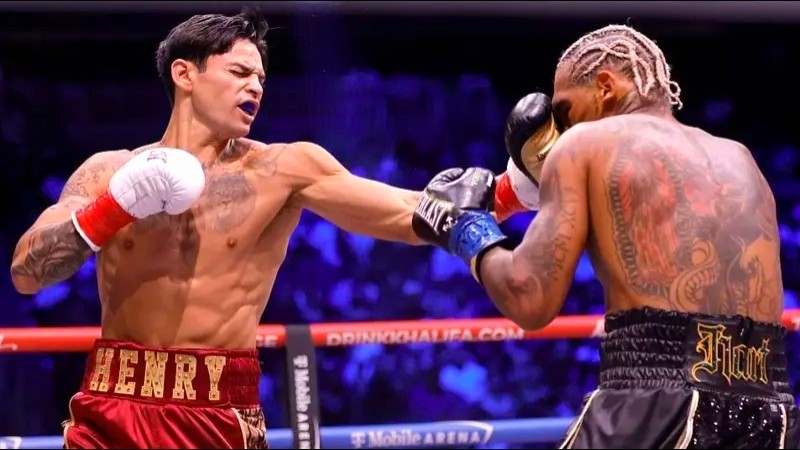
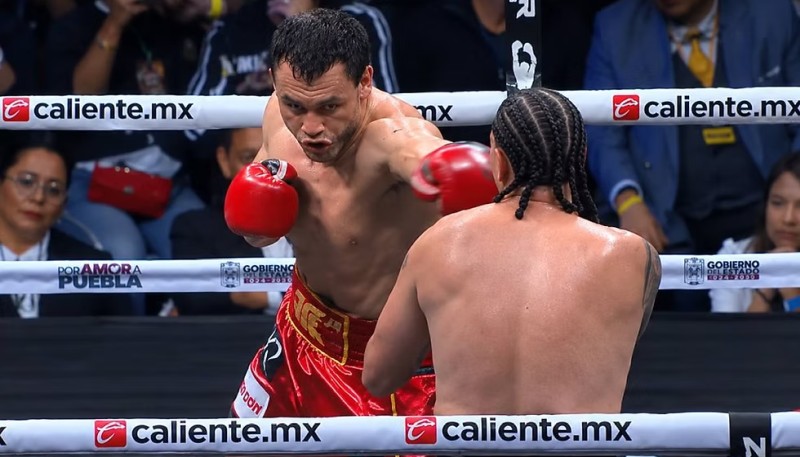
Meanwhile, boxing is in trouble. Not many sports have a reigning superstar who has won only twice in the past four-and-a-half years and lost three of his last five outings. But that?s Oscar De La Hoya?s recent record.
Put the aforementioned realities together and one has an ideal environment for the rise of mixed martial arts as a sports entertainment phenomenon.
?It?s easier for the average person to identify with MMA than with professional boxing,? Donald Zuckerman (an early MMA entrepreneur) said ten years ago. ?There are more than 15,000 martial arts dojos in the United States, and the number of gyms devoted to boxing is diminishing. Every few years, Hollywood produces one boxing movie, but there are dozens of martial arts films annually. Most people have never engaged in a fight with regular boxing rules. But at one time or another, even if it was only on the playground in grade school, virtually everyone has engaged in some form of fighting.?
A decade later, MMA is impacting upon today?s sports culture. Type ?Oscar De La Hoya? into Google and you get 1,740,000 hits. Manny Pacquiao brings in 1,180,000. Pound-for-pound king Floyd Mayweather Jr scores 1,080,000.
Now Google the three biggest MMA stars of recent years: Tito Ortiz (761,000 hits), Chuck Liddell (701,000), and Randy Couture (650,000). Compare them with Bernard Hopkins (408,000), Wladimir Klitschko (320,000) and Kelly Pavlik (156,000).
Get the point?
The original concept behind mixed martial arts was to match combatants who practiced different fighting disciplines against one another. How would a karate expert fare against a practitioner of Brazilian jiu-jitsu? What about a kickboxer against a freestyle wrestler? However, those distinctions soon vanished and, in MMA matches today, multiple disciplines are allowed.
The rules of combat have also changed. A dozen years ago, most MMA competitions featured an anything-goes mentality. Tactics such as kicks to the groin, head butts, and pulling hair were legal. Now virtually all MMA bouts conducted in the United States are governed by the Unified Rules of Mixed Martial Arts, which specify thirty-one forbidden acts ranging from eye gouging and kicking the head of a grounded opponent to spitting and using abusive language.
The ?playing field? for MMA competition varies from promoter to promoter. Some bouts are contested in a cage; others in a modified boxing ring. Rounds are five minutes in duration with a one-minute rest period in between. Championship bouts are scheduled for five rounds; non-championship contests for three. There are seven weight classes. A fighter can win by submission (when his opponent concedes defeat), technical knockout (the referee stops the contest), a judges? decision, or disqualification. In truth, once the shock value wears off, a bad MMA match gets boring quickly. But so does bad boxing.
There are times when boxing goes above and beyond sports and contributes to the elevation of society. Joe Louis and Muhammad Ali are examples of that. MMA fits into another category. To its critics, it?s ugly and grotesque. John McCain has railed against it on the floor of the United States Senate, calling it “human cockfighting.?
?In order to be an MMA champion,? says Jerry Izenberg, ?you need every skill that?s outlawed on the planet. The very things we pride ourselves on not doing, these people elevate to an art form. I wouldn?t even try to dignify it.?
Emanuel Steward is in accord, saying, ?Mixed martial arts is too brutal, too ugly. There?s nothing beautiful about it, like a nice jab in boxing. A few years back, they invited me to watch a UFC event. But with people getting kicked in the head and punched on the ground, I walked out after the third bout. It was sickening.?
Boxing fans also deride a culture that encourages MMA combatants to ?tap out? (quit) and note that MMA combatants are knocked down by punches that would never put a professional boxer on the canvas.
In response, MMA adherents acknowledge that there are more broken bones and dislocations in their sport than in boxing. But they say that MMA might actually be morally superior to boxing because there are ways other than seeking to inflict brain damage on an opponent by which a combatant can win.
They also claim that their sport is safer than boxing. The four-ounce open-fingered gloves used in MMA don?t allow for punching with full force. There?s relatively little leverage on punches when combatants are ?grounding and pounding.? And even when combatants are standing, they don?t get the same leverage on punches that boxers do.