They say life begins at 40, but if you are a boxer who has logged 23 years, 462 rounds and 69 fights, the wear and tear are too visible to ignore.
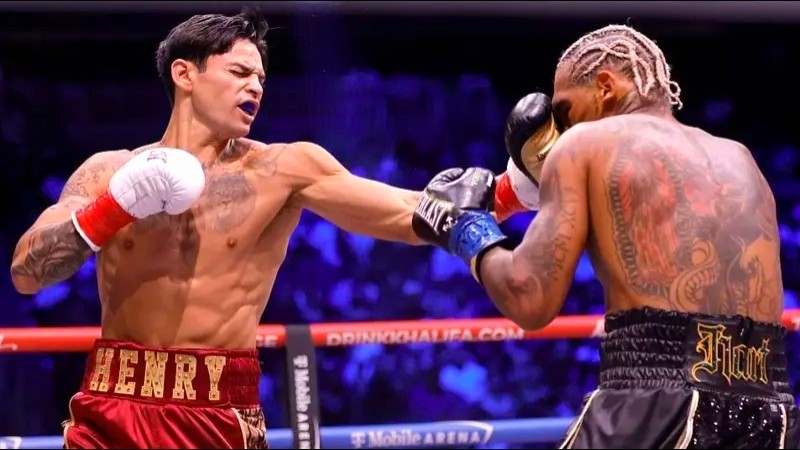
Manny Pacquiao, however, appears to have found a way to defy, or at the very least delay, Father Time. Pacquiao recently turned 40 and it is hard to believe that he still very much involved in the fight game. Heck, just last July, at age 39, Pacquiao was actually crowned welterweight (147 lbs.) champion again after he knocked out Lucas Matthysse.
One can count on the fingers of one hand the number of boxers who still excelled in the ring at age 40. Pro boxing is a young man?s game and while 40 is not that old, it is considered dog years in the punch-for-pay business.
In most cases, great boxers aged 40 and beyond ended up being humiliated by younger and pedestrian opponents. Sugar Ray Leonard is considered one of the greatest champions in boxing, but he was already a washed-up fighter when he climbed the ring at age 40. In March 1997, some two months short of turning 41, Leonard was knocked out in five rounds by the light-hitting Hector Camacho.
Former heavyweight champion Muhammad Ali was a mere shell of his old self when he made his last comeback in the sport in December 1981. Just a month short of turning 40, Ali was battered in 10 rounds by Trevor Berbick.
The prevailing belief is that boxers who continue to fight at age 40 are just in it for the money. Still, there are a few who somehow remained competitive.
At age 40, heavyweight monster puncher George Foreman was unbeaten on the comeback trail. Foreman returned to boxing in 1987 after a 10-year retirement and went on to regain the heavyweight title from Michael Moorer at age 45 in November 1994. Foreman was already 48 years old when he finally retired in 1997.
In 2005, just a month after turning 40, Bernard Hopkins was still good enough to beat Howard Eastman and retain his world middleweight titles. Believe it or not, Hopkins fought for 11 more years before retiring for good in 2016 at age 51. In 2013, at age 48, Hopkins was still good enough to win a version of the light heavyweight (175 lbs.) title.
Foreman was able to fight beyond his prime years because he possessed unbelievable punching power. A 40-plus Foreman was slow and ponderous, but once his right hand landed cleanly on the chin it was lights out for his adversaries. Hopkins also offered above-par punching power during his younger days, but at the tail-end he relied more on ring guile to stay competitive.
In the case of Pacquiao, the Pacman has managed to stay competitive at 40 because of his continued adherence to no-nonsense training. After all these years, Pacquiao still finds the smell of the gym irresistible.
It also served Pacquiao well that his boxing style evolved as he moved up in weight. The younger Pacquiao was a bundle of energy, a frenetic slugger. If Pacquiao did not change his gung-ho style, he would have burned out early. Pacquiao integrated boxing and some lateral movements in his style as he moved up in weight and this helped delay the onset of Father Time.
Of course, nothing lasts forever and the real challenge for Pacquiao is to know when to call it a day. Foreman and Hopkins fought beyond the age of 40 and were badly beaten at the end of their careers.
Oh, just recently, a 41-year-old Adonis Stevenson suffered head injuries in an 11th round knockout loss to Oleksandr Gvozdyk. Stevenson had enjoyed a lengthy reign as super middleweight and light heavyweight champion and could have retired early with his health intact. Stevenson instead stayed too long and is now paying the price. He recently woke up from a medically induced coma, but his right body part is completely paralyzed. Stevenson remains in critical condition.
Pacquiao recently disclosed that he wants to fight for three more years. It can be readily deduced that Pacquiao?s boxing career is tied to his political plans. It?s a risky strategy, but the choice is for Pacquiao alone to make. The ?one fight too many? syndrome is real in boxing and fans can only hope that Pacquiao will be able to walk away from the sport on his own volition.