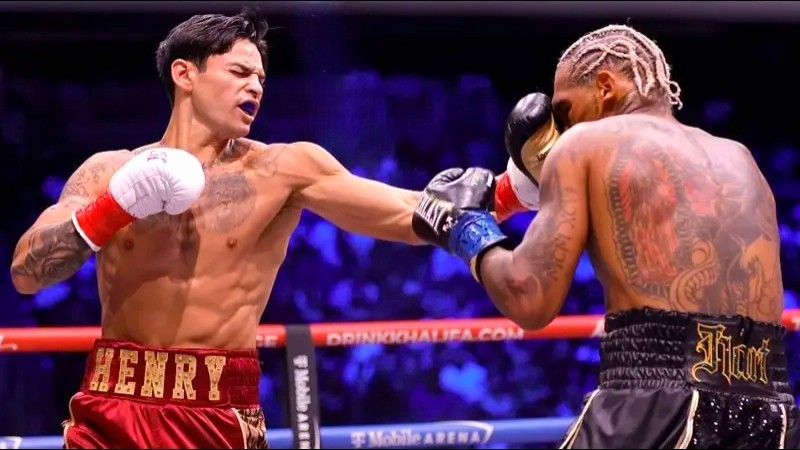
Boxing has suddenly become a hot commodity with companies in full pursuit of unique sports content for viewers/subscribers.
A billion dollars over 8 years was put into DAZN by sports media company Perform Group to create a Netflix for fighting in the US and Canada. $365 million more was issued by the DAZN folks to secure the services of Mexican star Saul Alvarez. Terence Crawford was recently given an 8-figure deal, called by Team Crawford ?one of the most lucrative deals for an individual fighter in the history of boxing.? Showtime and Fox have re-upped with Al Haymon?s Premier Boxing Champions (PBC) for multi-year deals and a suddenly boxing-hungry ESPN signed a 7-year deal with Top Rank for main channel content as well as streaming app fodder.
For those making a living in the boxing business, this kind of money (and these kinds of deals) being tossed around is a good thing. For the first time in a long time, managers and promoters can shop their guys around in a seller?s market.
When the dust settles on this business restructuring, however, fans may be in a worse spot than they were before boxing was desirable ?content.?
?Obviously, if you want to fight Canelo, you have to be a DAZN fighter,? Eddie Hearn recently told reporters while basking in the glow of having signed Canelo Alvarez to his multi-fight deal. ?If you want to fight [Anthony] Joshua, you have to be a DAZN fighter. This Saturday, in three days? time, Demetrius Andrade goes for the world middleweight title and in ten days? time?Danny Jacobs goes for the middleweight title. So, in ten days? time, DAZN have the entire roster of world middleweight champions?so, people like [Jermall] Charlo, there ain?t no fights for you. If you want to be a world middleweight champion, you better join DAZN ASAP.?
Well, yeah. These companies are looking to acquire exclusive content for their networks and streaming services. And now, instead of just HBO and Showtime divvying up the talent, whipping up the handcuffing business politics that routinely kept ?the best from fighting the best,? there will be several competing companies mucking things up.
A promoter like Hearn knows the dynamic and, more and more, the fighters, themselves, are embracing this reality.
Boxing fans have become accustomed to this dynamic and, at this point, they pretty much treat it as a part of the game. But network vs. network politics never got as stifling as they could be getting in this new business environment.
What incentive would there be for networks and/or streaming services to risk the value of their own exclusive content, just to make a fan-friendly fight that wouldn?t really bring them much (if any) extra revenue? How could there even be any realistic mechanism for opposing networks and services to cooperate on making big cross-platform fights, even if they wanted to? Maybe they could resurrect PPV to bilk fans already paying for multiple monthly subscriptions?
Rather than learning the lessons from 40+ years of boxing behind competing paywalls, boxing has seemingly embraced the worst and is intent on actually doing more of that worst. Instead of coming together and foregoing the quick buck for the sake of the sport?s long-term health, boxing?s business people are doing the exact opposite.
So, ultimately, there?s going to be a pretty clear trade-off for boxing fans. There will be more boxing and it will be more accessible to those who care to see it. At the same time, though, the overall cost for the consumer will be higher and ?big? fights will be harder and harder to make.
The cynic might be tempted to say that this new business model for boxing is about delivering more crap for more money while having to deal with more of the business BS that frustrated everyone.