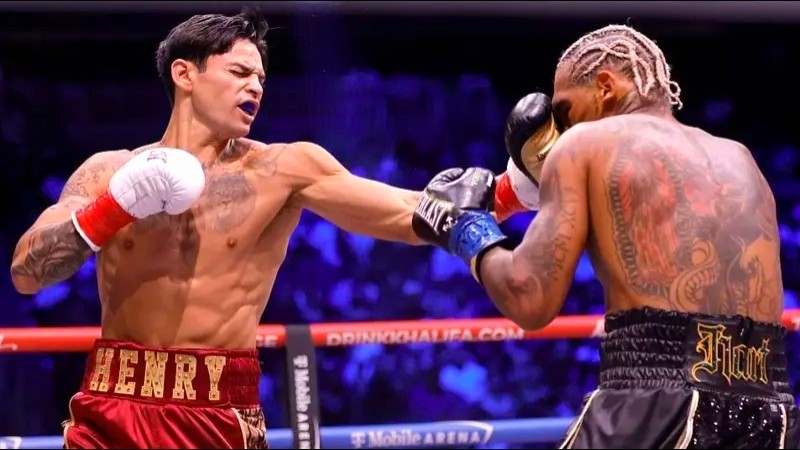
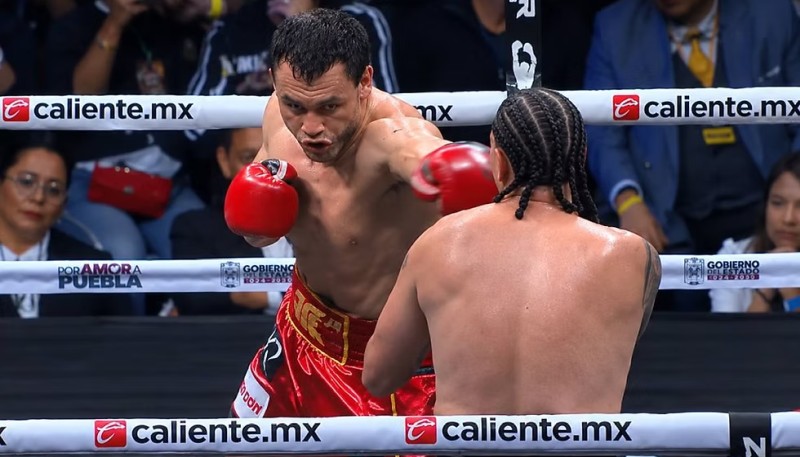
A master of infighting like Henry Armstrong would likely be labeled a ?dirty fighter? and advised to ?pursue a career in MMA? if he fought today?
?It?s really about what you like. Do you like power punching and moving forward, or do you like boxing and moving around the ring??
It?s relatively common to hear this type of rhetoric in boxing these days, often by a TV commentator or a sportswriter (perceived to be, by most viewers/readers, experts on the sport).
It sounds nice. It sounds passive and even pleasant. Maybe for casual boxing fans, it has a similar emotional effect as adults passing out trophies to all the kids who participate rather than awarding one to the winner.
The problem is that isn?t how boxing works. It isn?t how rounds are scored in a fight and it isn?t how anyone watching boxing should be educated so they can understand what to look for?an increasing problem in the sport.
There are four criteria for scoring a round:
1. Clean punching (you?ll sometimes see writers call this criterion ?clean and hard punching.? This is incorrect and is an alteration of how the criteria are explained.) 2. Effective aggressiveness 3. Ring generalship 4. Defense
According to the Association of Boxing Commissions and Combative Sports, which regulates the unified rules of boxing, here are more details about how the clean punching criterion is broken down:
?The test to measure the awarding of points for ?offensive boxing? should be the number of direct, clean punches delivered with the knuckle part of the closed glove on any part of the scoring zone of the opponent?s body above the belt line. The judges should also consider the effect of blows received versus the number of punches delivered. Punches that are blocked or deflected should not be considered in tabulating your score.?
Notice in the breakdown that it is stated to consider the effect of blows received versus the number of punches delivered. This is often exaggerated into the ?clean and hard punching? criterion that many modern commentators and sportswriters have trained many viewers to watch for. However this guideline was not intended to be misconstrued as an imaginary gauge of who hits harder. In reality it is an urging to count the quality of blows versus quantity with regard to things like the eye-catching ?shoe shine? punching sometimes employed by the likes of Muhammad Ali and Ray Leonard at the end of close rounds in an attempt to sway judges.
You?ll also notice that the rules state that blocked or deflected punches should not be considered in tabulating your score. This means that a partially blocked or deflected punch shouldn?t be counted at all, which often seems lost on modern boxing judges, viewers, and commentators. It is certainly often lost on the people in charge of keeping track of punch stats during modern fights?mistakes happen since we?re all human, but these stat keepers often seem to count blocked, deflected, and even missed punches in their tabulations.
In Tom Kaczmarek?s book You Be the Boxing Judge, he makes many great points that echo the intent behind the rules of boxing judging. Regarding clean punching and effective aggressiveness, he says, ?If the fighter moving forward is not punching effectively and is not scoring with good clean punches, he is not gaining an advantage. In the meantime, the fighter moving backward, or side to side, might be scoring with good clean counter punches and good stiff jabs and piling up points, even though he is not moving forward. What we are saying is that effective aggressiveness does not necessarily mean a boxer must be moving forward?If this analysis of effective aggressiveness is misunderstood, it could lead to flawed scoring.?
He also makes an excellent point about body work that it seems many commentators, judges, and viewers have perhaps forgotten: ?For aggressiveness to be effective, the punches must land on target cleanly and inflict damage. For example, clean body shots will inflict damage that may not become apparent until the latter rounds of the fight. When scoring the fight, good clean body punches are sometimes overlooked because they are not as spectacular as those to the chin or to the head. This is one of the most apparent oversights made by judges who may not have the experience or the training mentioned earlier [in the book].?
Regarding scoring rounds and tabulating your score for an overall fight, it?s important to view each round as its own ?mini fight,? ensuring that you aren?t bringing any expectations of either fighter into the new round or that you are still scoring for or against either fighter based on what happened in a prior round. Think of it like a chalkboard, and each round plays out on the board, but at the end of each round, the board is wiped clean and the next round begins fresh. Kaczmarek says, ?each round should be judged as an isolated event, regardless of what has transpired earlier.? He gives an example of Fighter A scoring a knockdown over Fighter B in rounds 2 and 8 of a 10-round fight, but not winning any of the other 8 rounds. But if someone watching the bout does not keep score round by round, Fighter A may appear to be the winner to them based on the knockdowns. ?It usually evokes unwarranted criticism by the viewing public who feel the knockdowns give Fighter A the edge? in this sort of example.
On November 19 in Las Vegas, the light heavyweight champion at the time, Sergey Kovalev, took on challenger Andre Ward. You can read about the overall fight and my take on it here. But it?s also the perfect focal point for this discussion about the increasingly broad level of ignorance of how to score a round of boxing, and the biases that have overtaken network broadcasting and commentary in the sport.
During the HBO broadcast of this pay-per-view fight, the network?s ?unofficial judge,? Harold Lederman, displayed consistent, one-sided bias and an almost willful ignorance of scoring criteria throughout the fight (ironic since he was once an official boxing judge). Comparable in his bias throughout the broadcast was blow-by-blow man Jim Lampley. It seemed that Max Kellerman and Roy Jones Jr. made a few more attempts to be balanced in their commentary during the course of the fight, but Lampley and Lederman didn?t appear to make such an effort at all. It was largely their unfair and extremely biased commentary that led to any sort of manufactured ?controversy? in the minds of some viewers. It must be noted that, by and large, there was only perceived controversy in the minds of some viewers from the United States who watched the HBO broadcast with its aforementioned biased commentary (but not in the minds of most viewers who watched the fight in person in Vegas), and of course Russia (where Kovalev hails from). In other countries where the fight was aired with different commentary teams (for instance, in the UK on the Sky Sports broadcast with Adam Smith, Paulie Malignaggi, and Matthew Macklin), there was no such controversy. Could that be a coincidence?
Kovalev vs. Ward had a few close rounds wherein both fighters seemed to land a similar number of punches. In rounds like that, it becomes necessary to score based more on the other three criteria. Instead, HBO?s unofficial judge repeatedly justified his one-sided scoring by referring to Kovalev ?coming forward,? ?landing the harder shots,? and Ward ?running? and ?backing up.? Never did Lederman notice or address when Ward displayed the superior ring generalship (which is, historically, often exhibited by doing what Harold calls ?backing up??a classic example is the great Muhammad Ali, who?if he fought today on HBO?Lederman would probably deem a ?runner?); nor did he discuss the fact that simply moving forward isn?t enough to fulfill the criterion of effective aggression; nor did he even acknowledge the existence of the defensive criterion. He also seemed completely oblivious to any body work done by Ward. From listening to Harold Lederman, one would think that all a fighter has to do in order to win a round is walk forward and, occasionally, land ?hard? punches. Nevermind how effective this fighter is in his attempt at aggression, or how many punches he might be eating as he plods forward, or whether he displays anything akin to ring generalship. From his comments, it almost seems that Harold Lederman is attempting to re-write the criteria upon which a round is scored. Many viewers are none the wiser because they don?t already know the criteria, and they assume that the HBO commentators are experts who can be trusted. This should be the case, but is clearly no longer so.
Jim Lampley, once an excellent blow-by-blow man, also displayed troubling bias throughout the broadcast. He frequently called the incorrect punches (usually from Kovalev, who seemed to be the only fighter Lampley was really watching with rare exception); called punches from Kovalev as though they landed, when they were dodged or blocked by Ward; and, worse, called punches from Kovalev that weren?t even thrown to begin with. There were times the mistakes he made based on his bias were laughable: once, in the 11th round, Ward landed a clean combination of punches on Kovalev, and Lampley cried, ?Sergey Kovalev has a chin!?
Round 10 was particularly troublesome. Along with Lampley, most HBO viewers saw the round for Kovalev. But without such bias from Lampley and Lederman, the audience might have noticed some very important details that may have changed their minds.
In round 10, Kovalev came out trying to land more and outwork Ward. While a few punches landed, most of the shots that didn?t miss outright were blocked. More importantly, several punches were deftly countered. At one particular stage, a combination from Ward bloodied Kovalev?s nose. This important detail, an indisputable result of clean and effective punching, was completely disregarded by the HBO team. The nosebleed was not remarked on throughout the remainder of the fight, despite the fact that it continued to bleed through the remaining rounds.
Another time, also in the 10th round, Lampley yelled, ?Hard right hand!? when Kovalev threw a right, but Ward deftly dodged it by leaning backward into the ropes?it missed entirely. Later, between rounds, when the slow motion replay was shown and proved that the punch missed, Lampley acknowledged the mistake. Now, certainly, the occasional mistake will happen and everyone is human, but the problem here is that Lampley frequently makes these erroneous calls particularly when the call is in favor of the perceived power puncher in a bout. With his experience, and with the responsibility his job carries based on the influence it bears, these errors shouldn?t happen nearly as regularly. The so-called controversy about the outcome of this fight was in large part caused by the biases on display by the HBO broadcast team.
It was clear from watching the HBO broadcast of this fight that Lederman, Lampley, and hence, many of their viewers, carried the memory of the knockdown in round 2 of Ward by Kovalev with them throughout the rest of the fight. They never wiped their minds clear after that round and began re-tabulating each round as its own individual mini-fight, and instead had expectations of how each fighter should be performing based on that prior occurrence. Worse, Lampley in particular suggested after the fight that the scoring judges awarded it to Ward simply because he?s American (as are they). These actions are not those of an unbiased, clear-headed commentator.
The Kovalev vs. Ward bout was a somewhat close fight that reasonably could have been scored for either fighter. It is, as always in close fights, fine that some people scored the fight for the opposite fighter than the judges did (in this case, Kovalev)?but to cry robbery, to say the judges displayed bias based on Kovalev?s country of origin, is absurd. If one takes a step back and takes their emotions out of the equation, it?s easy to see the cause of this outcry. Kovalev has fought almost entirely in the United States as a professional, and certainly his popularity over the past few years has been as a result of fighting in America. In fact, when he fought Bernard Hopkins in 2014, the fight went to the scorecards and snapped Kovalev?s 14-fight KO streak. All three of the judges in that fight were also American, as of course is the legendary Hopkins, yet the judges awarded that fight to Kovalev in a clean sweep. They didn?t give Hopkins one round on the cards. Throughout Kovalev?s 7-year professional career, his fights have largely been officiated by American judges, but the nationalities of the judges were never mentioned until the Ward fight. To say the three judges responsible for scoring this fight were prejudiced toward the American, particularly when Kovalev has fought many other American fighters during his career, is ridiculous. If the fight had been awarded to Kovalev with close scores, it likewise would have been ridiculous to cry robbery in that scenario. It just wasn?t a fight with wide enough scores to be deemed a robbery either way.
Lampley and Lederman also change up their narrative based on who they?re watching. For instance, during the Kovalev vs. Ward match, the only skills they looked for were ?moving forward? and ?hard punching.? No acknowledgment of boxing ability or footwork. One week later, when Vasyl Lomachenko fought Nicholas Walters, it was the opposite?suddenly backing up was no longer a sin, it was ring generalship. Lateral movement was an ability to be lauded. Lederman admiringly commented on Lomachenko?s beautiful boxing ability, and even began drawing comparisons to Willie Pep. Where was this appreciation of boxing ability when Ward or any other skillful boxer fought who is not being actively pushed by HBO? Yet on December 17 during the Hopkins vs. Smith fight, it was back to the status quo as Kellerman admiringly stated that Smith ?doesn?t box? as if it was a compliment.
Looking at the Kovalev-Ward situation more deeply, it can?t be ignored that Kovalev was the fighter who was still under an exclusive contract to HBO, while this was Ward?s last fight under contract with the network. This is not unusual, either?HBO?s narrative about boxers largely depends on their business relationship with them (or lack thereof). The same is true of other networks, but as time goes on, HBO seems less and less concerned about appearing impartial. One only needs to watch an episode of Jim Lampley?s boxing show ?The Fight Game? to see this in action.
Regardless of how one may have scored the bout, the bottom line regarding the atrocious HBO commentary is that it ended up taking away from a truly great fight. A lot of viewers who were influenced by what they heard, rather than what they saw, came away feeling cheated, when they had just witnessed a wonderful bout by two world-class fighters.
It?s a shame that TV commentators these days in large part either don?t appreciate the art of boxing or don?t have any interest in educating the audience. It?s not just Lampley and Lederman?they are perhaps the most egregious, but are by no means alone in this. There?s a reason most boxing fans so thoroughly enjoy the commentary by the experts brought in because of their experience as either boxers or trainers (i.e., Paulie Malignaggi, Roy Jones Jr., or?in days past?Emanuel Steward). These commentators display real and thorough understanding of the sport and its finer points, and can accurately assess and explain techniques and constructive criticism of the fighters without all of the clear network-driven biases displayed by the commentators hired more for their color commentary. Many of these color commentators have lost sight of any semblance of clarity or objectivity, and even if discussing fighters who aren?t being pushed by their network, they often tend to reveal bias based on style they personally enjoy most, or perhaps the style they think the viewers enjoy most. That shouldn?t be part of the job description, and it?s having an unfortunate impact on fans? understanding and, hence, enjoyment of the sport; how to score rounds; and ultimately, where many fighters? careers go. These days, if a fighter is more of a mobile, stick-and-move type of boxer, the commentators will often speak ill of them in favor of a brawler or a big puncher. It may be because fans like knockouts, so the commentators and networks are hopeful that by pushing the big puncher, they?ll get what fans want the most; or it may be personal taste for those commentators. Either way, though, they are doing a disservice to the sport. If the impending knockout the commentators kept talking about never happens, oftentimes the viewers feel cheated or bored. If a bout is more technical, rather than the commentators bemoaning how ?boring? it is, they should be pointing out what the boxers are doing and why, so folks better understand what they?re looking at. Let?s not forget many of the sport?s most luminary names were not KO artists. Decades ago, the great commentator Howard Cosell was renowned for educating the television audience on what was happening and why. He often explained why Muhammad Ali did certain things in the ring and how it was part of his strategy to win the fight. He certainly didn?t tear Ali down as a ?runner? and bemoan his lack of knockouts the way many modern commentators likely would. He helped educate the viewers about the finer points of the sweet science and, hence, contributed to the public?s appreciation of Ali?s pugilism.
Besides, if boxing was all about who hits harder, why even have a fight? Just have the two fighters demonstrate how hard they can punch on a heavy bag and be done with it.
Because of the dumbing down of the commentary, we also have a consistent labeling of a great fighter like Sergey Kovalev as a knockout fighter, constant mention of his ?hard punches,? when the real key to his fantastic skill is his timing. Yes, he has power, but if he isn?t able to land it, what good is it? The fans come away with the short end of the stick again in this example, because they don?t learn about the level of skill Kovalev really possesses and what it takes to land those big shots. All they?ve learned is that he?s just a ?big puncher.?
Aside from traditional, hit-without-getting-hit style boxers, God forbid if a fighter who displays infighting prowess is shown on network television. He or she will generally be torn down (by the non-expert commentators) as a ?dirty fighter.? Andre Ward and Shawn Porter are perfect examples of that. For all of Ward?s clean and efficient inside work during his fight with Kovalev, Lampley hardly ever called any of it, either choosing to remain silent or giving Kovalev credit for something, even though Kovalev frequently grabbed and held, even employing wrestling and MMA-style headlocks, during these moments. Yet Ward was the one criticized after the fight for being ?dirty? and ?clinching,? particularly by Kovalev?s promoter, Kathy Duva, who never acknowledged that her fighter was often the one initiating these clinches and Ward was, in fact, doing inside work, which of course is not remotely a foul in boxing.
Similarly, during Porter?s fight last summer with Keith Thurman, veteran commentator Al Bernstein remarked that whenever Shawn Porter fights, we often see a lot of roughhousing, almost as if he wanted to warn viewers that if a foul occurred, it would probably be Porter?s fault. Instead, why not discuss why Porter fights the way he does, what his strengths are because of that style, what he?s trying to accomplish, and maybe a historical lesson about some old school boxers he may be influenced by? Or talk about what Thurman needs to do to counteract Porter?s rough, inside style.
Similar to how Ali would likely be labeled a ?runner? and ?feather-fisted? by today?s boxing commentators and media, a master of infighting like Henry Armstrong would likely be labeled a ?dirty fighter? and advised to ?pursue a career in MMA? if he fought today.
Educate yourself. Read Tom Kaczmarek?s excellent book on judging, watch more fights in general?particularly older fights so you can get a feel for different styled fighters as well as legendary boxers?and above all else, keep in mind that television networks today have a stake in how most of the fights shown on their channels turn out when you listen to their commentators. Sometimes it?s not a bad idea to turn the sound down or off while you watch a fight to get a better feel for the action rather than the commentary.
It?s up to the fans of boxing to call networks on their biases, to demand impartial commentators, and effective judges and officials. If the viewers don?t care or don?t know any differently, these sorts of obvious prejudices and forced narratives will continue, and it may end up changing the understanding of the entire sport if allowed to continue.