I don’t particularly like Las Vegas. Its charms defy me. I work while I’m in the city. Friday brings a weigh-in, Saturday brings a fight card and Sunday morning brings a column. Which leaves Sunday afternoon. There’s not a sadder place on a Sunday afternoon. And yet, come the first week of October, I’ll be back in Las Vegas.
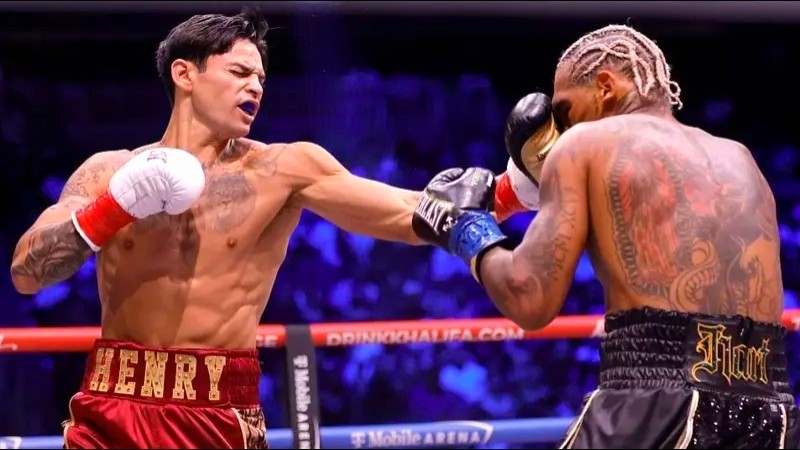
When Manny Pacquiao and Marco Antonio Barrera fight their rematch in Mandalay Bay on October 6, I’ll be ringside. This was not an easy decision for me. When the announcement came, I wished Pacquiao were fighting Juan Manuel Marquez and Barrera was retired. But a number of thoughts and anecdotes have since brought me around.
I first imagined the possibility of a Pacquiao defeat last April. Ringside in San Antonio when he fought Jorge Solis, I was surprised by Pacquiao’s initial inability to overwhelm Solis – an opponent already frightened by the crowd and Pacquiao’s reputation.
I wasn’t alone. In the fifth round, Pacquiao charged forward and impaled himself on Solis’ jab. Afterwards Pacquiao sat on his stool and blessed himself repeatedly. It was not a show of religiosity but nervousness. In the next round, an accidental head butt opened a gash over Pacquiao’s left eye. The sight of his blood loosed Pacquiao. He became maniacal. And within five minutes, he’d ruined Solis.
An hour later, I spoke with Freddie Roach, Pacquiao’s trainer. I asked if he was at all worried the opening bell might ring some night and Pacquiao wouldn’t be fast.
“No. If that happened, we’d see it in camp first,” he answered.
What if, right now, somewhere in the Philippines, Roach has seen it? He wouldn’t tell anyone. He’d be powerless to change it. And if Pacquiao’s prodigious reflexes were diminished, and Roach were unable to mask it, how long would it take Barrera – a veteran of 35 title fights – to notice it? A minute. Maybe three.
Last month, I spoke with Roach once more. I shared my opinion that Pacquiao is an almost prohibitive favorite against Barrera but that Barrera is the most intelligent prizefighter in circulation. How did Roach respond?
“Anyone who tells Manny this is an easy fight I want to slap in the face. I expect Manny to blow him away in the late rounds. But Barrera has the revenge factor. I expect to see the best possible Barrera.”
Roach wasn’t worried. But he was honest about how difficult it is to keep Pacquiao focused between fights. And that was before Pacquiao’s new training schedule came about: Start in the Philippines and finish in Los Angeles, no, start in the Philippines and visit Los Angeles and return to the Philippines and finish in Los Angeles.
Pacquiao and Roach rely on the savagery of Pacquiao’s training camps to remedy Pacquiao’s lifestyle. Whatever he does away from boxing, once in training camp Pacquiao is expected to show what Roach calls “the best work ethic I’ve ever seen in my life.” But is that happening at this moment?
There’s still a good chance Roach’s prediction is apt. It’s hard to revisit the first Pacquiao-Barrera fight and imagine some outcome other than a Pacquiao victory.
Another reason to attend the fight. If Pacquiao goes directly through Barrera the way he did the first time, when Barrera was four years and seven prizefights younger, chances are good that Barrera will call it a career. And what boxing aficionado wouldn’t want a ringside seat for Barrera’s last fight?
Not this one. Whatever Barrera is in the ring – a resentful, ornery, occasionally unsportsmanlike presence – he is a gentleman outside the ring. He is eloquent, polite and dignified. He is a model for athletes and celebrities in general, whenever in public.
The day after his rematch with Rocky Juarez last September on Mexican Independence Day, Barrera went for a stroll through the underground mall of Caesar’s Palace. Of the 10,421 fans who’d filled MGM Grand Garden Arena the night before, most were Mexicans in town to see Barrera.
Yet there he was in the middle of the mall with his wife, alone. No entourage. No scowling flunky with the champ’s belt in one hand and a cell phone in the other. Not even a bodyguard. Barrera was one more Mexican citizen in a pair of jean shorts and a polo shirt shopping with his wife. And because of that, thousands of his countrymen walked right past him – never suspecting he was Barrera.
But I had to know what he’d said to Juarez after the final bell rang the night before and he’d barked at the challenger. I walked over, congratulated him and made my inquiry. Barrera smiled and said, “I told him I was his master and he was my pupil.” Then he shook my hand and followed his wife to the next store.
Such is Barrera, in the ring and out.
Will he be able to solve Pacquiao? Not likely. The delta between the men’s physical abilities, anymore, is probably too great. But the same has been said before about Barrera. So long as he zealously keeps his lead foot outside Pacquiao’s and vigilantly circles to Pacquiao’s right, then, Barrera may still have a chance.
But if Pacquiao is still “Pacman,” still a phenomenon gobbling up every opponent, come October 6 the most Barrera can hope for is to survive the final bell. And if a Pacquiao opponent thinks that way, he cannot survive the final bell.
Nothing is certain, though, and no place stages a better event than Las Vegas. Nowhere makes you feel more welcome on Friday night or alive on Saturday. So depending on how things go that weekend, I may just stay in my hotel room Sunday afternoon. Or perhaps I’ll go for a stroll through the mall.