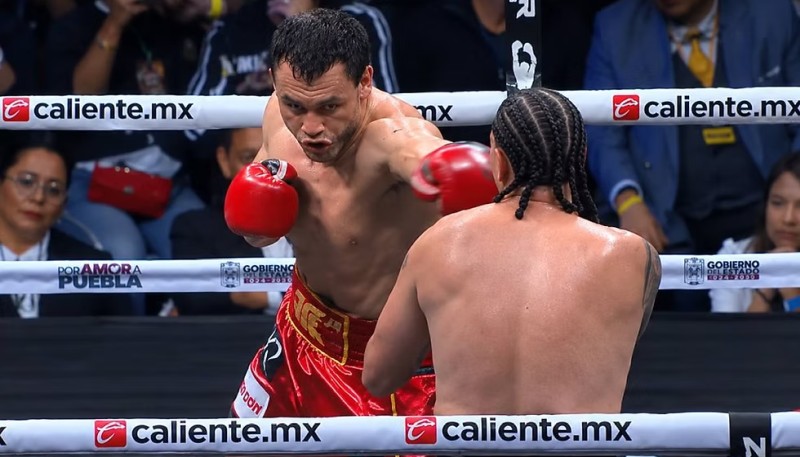
The change from 15 rounds to 12 rounds has not harmed the sport. It has improved fighter safety which should always be a priority?
Boxing is a sport that has evolved in numerous ways since its beginnings in the 15th century BC. Fights then saw leather wrapped around the fist and would be fought until one man could not or would not continue. Thankfully these rules have been changed for a long period of time. However, some of the most recent major changes about the sport have arguably made for a lesser product. Here we look at three major changes and how they have impacted the perceived stagnation of boxing.
Fifteen-round title fights were discontinued by the numerous title organizations throughout the 1980s. The catalyst of this was the death of Duk Koo Kim which happened in the 14th round of his fight against Ray Mancini. Following the fight two people committed suicide due to the brutality of the fight. The WBC would then stop 15-round fights with Larry Holmes and Lucien Rodriguez taking place in the first 12-round title fight in 1983. The WBA would follow suit in 1987 with the IBF adopting the policy in 1988 despite pointing to no evidence a 15-round fight caused more damage. Frank Lotierzo pointed to the changes being due to TV demands which saw a total fight time of 47 minutes as much easier to fit in an hour slot. With the move to mainly PPV and longer broadcasts including the undercard fights the need to fit in an hour time slot has arguably disappeared. Bringing back 15-round title fights would also see more prestige given to world title fights and a real challenge to contenders as they have to go three rounds more than they ever have before. Numerous fights that are now labeled as classics saw all 15 rounds play a major part. Arguello vs. Pryor, Leonard vs. Hearns and Frazier vs. Ali would all have a completely different legacy if they ended after 12 rounds. Good fights become great fights over 15 and legacies become enhanced.
However there was a reason this rule was changed originally. It is to protect the boxer which should still be the priority. Any change which negatively impacts the safety of boxers should go down as a bad idea. As well as this there is evidence that having 15-round fights would not really impact results unless there was a surprising stoppage. Most world title fights are decided by the 12th round. The increased damage a boxer would receive over the last three rounds when dehydration and exhaustion have really set in make this a difficult one to suggest.
Boxing in the 19th century would see dangerous mismatches as men of hugely varying size would take to the ring. This was solved in 1909 when the National Sporting Club of London created the set of weight classes. This was followed up in 1920 by the Walker Law which created the New York State Athletic Commission. There were only eight weight divisions?flyweight, bantamweight, featherweight, lightweight, welterweight, middleweight, light heavyweight and heavyweight. Light welterweight and super featherweight were the first to be recognized but by 1987 there were 17 weight divisions recognized. These are especially prevalent at lower weight; whereas the difference between heavyweight and light heavyweight which spans three divisions in 25 pounds. The difference between flyweight and featherweight which spans five divisions is 14 pounds. This is due to it being a smaller percentage of body weight but is still a lot of divisions for a small weight difference. More divisions mean more champions and arguably less mega fights. Seventeen divisions now have champions instead of the previous eight. If we went back to the original eight imagine some of the fights that would currently be booked. Rigondeaux and Lomachenko battle for featherweight supremacy. Crawford against Bradley. The list of intriguing fights almost doubles. It is also means fans have to remember fewer names as there are fewer divisions.
The reasons for increased divisions are once again mainly safety. If the weight classes were 160 pounds, 175 pounds and anything over which would represent heavyweight? that is a big gap. Someone who naturally just misses the middleweight division would struggle to fight at light heavyweight while in the time of heavyweights that weight over 250 pounds, you probably need another division there. It can also be said to increase the quality of boxing as you get to have more champions and more people?s fights to be interested with. Imagine eight divisions, with a champion defending twice a year. The cards would hold a lower prestige as they feature less title bouts.
Boxing back in its beginnings was also much easier to determine who was champion. Regional titles were developed to find the best boxer in each region and eventually world titles were introduced. Today there is not just one world title but four major sanctioning bodies each of these with a world title and often as many as four titles. This means that for 17 weights you often have more than four world champions. This means that at any one point in boxing there is usually more than 60 world champions. New fans surely find this difficult to understand and follow. It is also makes it harder to know boxing world champions as they are so many of them. Organizations such as The Ring and the Transnational Boxing Rankings try to ignore belts and make it as simple as can be for fans. The sheer number of title belts also arguably makes it easier for boxers to duck other boxers. If Boxer A holds a world title he can just happily defend his title knowing he is a world champion without fighting other champions or taking any risks. This deprives the fans of some of the biggest fights. It also demeans the record books as we see fighters go through many divisions.
It also may be a system that creates more stars as so many boxers become world champions which gives all the boxers a status. This leads to important unification bouts and the general public being more likely to follow a world champion than an upcoming prospect. It also may lead to an increased profile for big unification fights when they do happen. The other benefit is with the boxers themselves who can call themselves world champions and experience the monetary benefits that come with being a champion. For the sport surely it is better for as many people to be financially successful as possible.
So boxing has changed a great deal than the original sport which entertained the masses. The change from 15 rounds to 12 rounds has not harmed the sport. It has improved fighter safety which should always be a priority. A few classic fights could have been enhanced with a few more rounds but in the larger picture is just not worth it. The increasing weight divisions is a source of debate but once again it is about safety and primarily a good thing. Maybe the difference between 8 and 17 could be split to create a happier medium which would still see smaller jumps in weights but a few less world champions and bigger fights. The main issue with modern boxing that turns off fans has to be the creation of so many title belts. It plays hand in hand with a lack of boxing superstars and no one boxer tends to dominate a weight division. If this was changed to one world title there would constantly be bigger fights and bigger superstars helping boxing to be as big as possible.