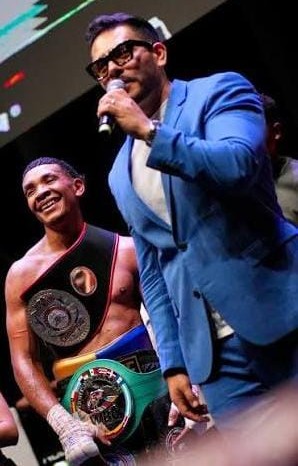
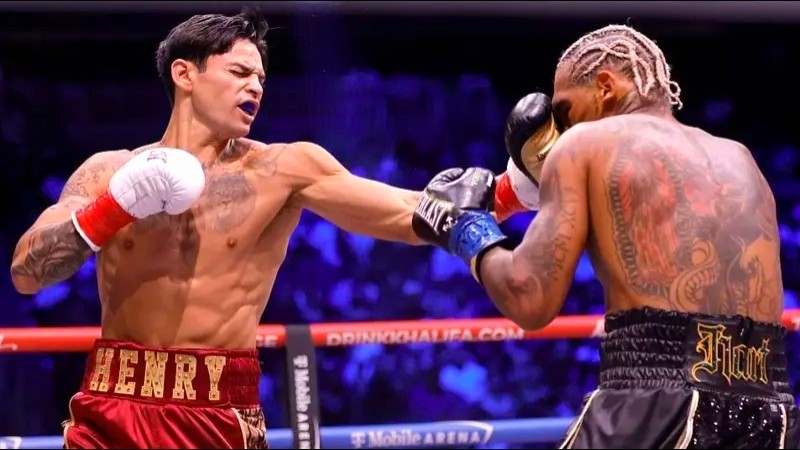
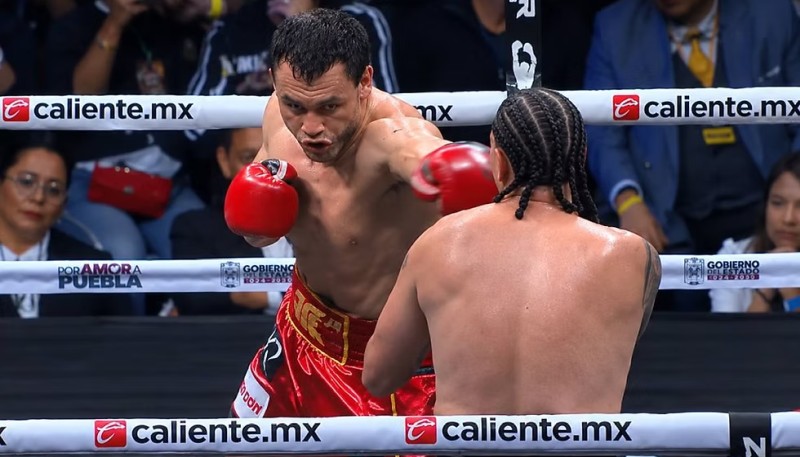
My working years in the advertising agency business quickly flashed when news about Manny Pacquiao losing his Nike endorsement contracts was reported vigorously in both offline and online media. Pacquiao became the latest celebrity to realize just how fast endorsement money can go away, with the international athletic brand announcing it was ending its endorsement deal with the Pambansang Kamao on Wednesday last week. The decision came days after the eight-time world boxing champion made comments about how gay people are ?worse than animals? while campaigning for a seat in the Philippine Senate. In a statement, Nike said it found Pacquiao?s comments ?abhorrent.?
Contract cancellations happen when a celebrity endorser gets involved in a controversial issue, public scandal or, worse, dies. He has to be released lest the product either loses consumer support or perishes. Pacquiao is not alone. Nowcast KCRA KQCANews catalogs a long list of sports heroes and celebrities who had the same fate as him:
? Singer Rihanna?s risqu? image was apparently too much for Nivea and its new CEO then, Stefan Heidenreich, in August 2012, when he told a German newspaper that the singer was a ?no go? as the face of the brand. ?I do not understand how to bring the core brand of Nivea in conjunction with Rihanna,? he said. ?Nivea is a company which stands for trust, family and reliability.? Coincidentally, her boyfriend Chris Brown lost his Wrigley?s and Got Milk ad deals in 2009 after pleading guilty to assaulting her.
? After the US Anti-Doping Agency handed down a lifetime ban in 2012 that also cost him his record seven Tour de France victories, Lance Armstrong immediately started losing sponsors, including Anheuser-Busch Beer, Trek Bikes, and Nike. Forbes estimated the cyclist had lost $150 million in endorsement revenue. He was also let go from the LiveStrong, the company that he started.
? After actress Sharon Stone implied that a deadly 2008 earthquake in China?s Sichuan province was karma for the Chinese government?s treatment of Tibetans and the Dalai Lama, Christian Dior dropped all Chinese advertisements featuring the actress.
? After a photograph appearing to show Kate Moss snorting cocaine came to light in 2005, the model lost her endorsement deals with H&M and Burberry. Chanel also decided not to renew its contract with Moss when it expired about a month later, but said its decision had nothing to do with the drug scandal. Moss quickly issued an apology, but stopped short of admitting any drug use. Lifestyle Feature ( Article MRec ), pagematch: 1, sectionmatch:
? McDonald?s, Nutella and Coca-Cola all decided not to renew their contracts with Kobe Bryant after the Lakers star was accused of rape in 2003. The case was eventually dropped in September 2004.
? Los Angeles Lakers star Magic Johnson announced he was HIV-positive in 1991 and immediately retired (although he did return twice before retiring for good). Johnson, who had made as much as $12 million a year from a variety of endorsements, saw his deals with Pepsi, Nestle, Converse, KFC, Target and Spalding quietly go unrenewed when they ran out.
? Pepsi paid Madonna $5 million at the peak of her fame in 1989 for a two-minute commercial featuring her song Like a Prayer. However, she was canned just several months into the deal after her music video for the song came out and caused controversy with scenes of murder, burning crosses and bleeding stigmata.
? Locally, Robin Padilla?s endorsement of a beer brand in the past has been allegedly cut short because of his perceived ?bad boy? image in reel and real life. Pops Fernandez and Martin Nievera?s endorsement of mass consumer brands was also purportedly put in danger when blind items in entertainment columns started a guessing game on the showbiz couple?s imminent separation. Rico Yan?s major telecom advertising campaign was aborted after his untimely death. A health drink for adults campaign was stopped after the brutal murder of veteran actor Nida Blanca. Risks and rewards
The use of celebrities in mainstream advertising is a common marketing communication strategy. In such an approach, the brand gets a lot of help from personalities that possess certain phenomenal characteristics to tell the product?s story. All the popularity, glamour and charisma attached to a movie star, a sports hero, a TV personality, or even a politician are sold and purchased as the product?s own. A large part of local television commercials feature celebrities. Many companies have had considerable successes using famous names and faces. Alden Richards and Maine Mendoza, Ann Curtis, Sarah Geronimo, Kris Aquino, love teams Kathniel (Kathryn Bernardo and Daniel Padilla), Jadine (James Reid and Nadine Ilustre) and Lizquen (Liza Soberano and Enrique Gil, and young stars like Julia Baretto and Janella Salvador lead the way) figure in multi-category endorsements from fast moving consumer items to consumer durables to service companies.
The need for a brand to use luminaries in advertising is most felt when the concerned brand has very close substitutes available, when there is a need to create a unique and clear differentiation for the brand, and when the brand has to make an impact at its introductory stage. Marketing people use celebrity endorsements for very good reasons. Research has indicated that target prospects are more likely to choose goods and services endorsed by celebrities than those without such endorsements. Celebrities facilitate instant awareness and immediate attention.
In this era of sound bites, channel surfing, visual orientation and quick newspaper scanning, there is a great demand for people?s time and focus. For instance, a shampoo commercial with movie stars is more likely to keep a channel surfer glued to the channel versus a commercial with unknown talents. People want to see Kim Chiu pitching for Payless Pancit Shanghai, Piolo Pascual making a pitch for Sunlife, Kris Aquino talking positively for Chowking or Ariel, Bianca Gonzalez looking at you straight in the eye as she mouths the proposition for Olay, and others of such celebrity.
Celebrities can provide testimony for a product or service particularly when the product has contributed to their status. Consumers will more likely try 555 Sardines endorsed by Marian Rivera since she has openly stated that she eats it regularly. This kind of relationship can increase a consumer?s belief and trust in the product and its benefits. Charismatic celebrities can also define, refresh, and add dimension to the brand image. Local fashion brands are re-launched with a lot of help from international stars and continue to expand their business using testimonials from young stars. Carmina Villaroel?s presence in Selecta Ice Cream commercials adds strength to its smart-housewife-and-mother personality, while Derek Ramsey?s command for Century Tuna advertising reinforces its healthy and sexy equity.
On the other hand, there are can be some negative consequences to using celebrities as endorsers. Despite the potential benefits they can provide, celebrity advertising increases the marketer?s financial risk since they have to dole out huge amounts for talent fees. Large companies may not have a problem spending millions to acquire the fame and glamour of a movie star or a sports icon, but the small ones may struggle to afford it. At some point, it may be wiser to invest marketing funds in more print space or radio and TV time rather than spending precious money on expensive celebrity talent fees.
Amy Dyson and Douglas Turco of Illinois State University reported, ?When a negative image of the celebrity is portrayed, a tainted picture is also painted for the company or brand, making it difficult to gain consumer trust to support the organization or buy the product.? Although there is no way to guarantee that detrimental incidents like these won?t occur, some situations may be prevented by evaluating the proposed celebrity?s personal and professional behavior to determine if they may be vulnerable to negative situations.
Choosing celebrity endorsers is vital to the success of an ad campaign. Dyson and Turco offer the FRED concept ? familiarity, relevance, esteem and differentiation ? to help do the job. Both academics see this as the foundation of a successful endorser selection. The target market must have familiarity or awareness of the celebrity endorser, and should be perceived as empathetic, credible, sincere and trustworthy. There should also be relevance or a meaningful link between the advertised brand and the one doing the testimonial, and more important, between the latter and the defined target market.
For instance, the jologs (low-end) market can relate to Michael V as he talks about the merits of Joy Dishwashing Liquid; Broad C housewives can empathize with a Judy Ann Santos as she pushes Champion Detergent; and Filipino men can easily connect with a Coco Martin and his ?yummy? support for Nescafe, and a Robin Padilla and his approval of Jag Jeans. If consumers can immediately associate with an endorser, they will feel more predisposed to accepting, buying and preferring the brand to competition.
Consumers must hold the celebrity endorser in high esteem and treat them with utmost respect and confidence. Ann, Kris, Piolo and John Lloyd Cruz have these. So do Dingdong Dantes, Xian Lim, Boy Abunda, and Toni Gonzaga, among others. Their publics respect them because of their distinguished careers and unassailable salesmanship. They must also see the endorser as a cut above the rest. If there is no perceived disparity among them, then the strategy will not work. During the height of Michael Jordan?s career, he always rose above the clutter, and this proved to be a huge contributory factor to his effectiveness as an endorser.
?The FRED concept is not a guarantee to success, but it can serve as a guideline when selecting a spokesperson. Each organization and its objectives are different, and should be evaluated on an individual basis,? Dyson and Turco explained. Few studies have actually compared celebrity advertising to the non-celebrity approach, and results of such studies reveal that ads with celebrity spokespersons will have greater effectiveness as measured by higher scores on ad believability and purchase intent than those with none.
A celebrity endorsement strategy must be integrated with target market characteristics, and the other elements of the marketing mix such as product design, branding, packaging, and pricing. The message execution that will be mouthed by the celebrity must likewise be made clear and single-minded. So who will be the next celebrity that can make the cash register ring?