Aaron Davis, his glasses perched at the tip of his nose, plopped into a cushy office chair at the Morris Park Boxing Club and took out his iPad. He chuckled every now and then as he swiped at the screen. Meanwhile, he was surrounded by teenagers ? some of them Golden Gloves hopefuls ? skipping rope and battering Everlast bags. Prizefighting seldom yields contentment but Davis is happy managing one of the better-known boxing gyms in the Bronx.
For the youngsters that walk into the gym everyday Davis is simply known as ?A.? On this day, a buoyant fifth-grader came over to Davis? side after his workout and, nearly whispering, asked Davis about the biggest win of his career. ?Did you watch it on Youtube?? Davis asked, looking up from his iPad. ?Yeah,? said the kid, recreating the scene. ?You went like this.? The kid ducked and, in slow motion, extended his right arm. Davis nodded. ?Yeah ? but with a little more arc.?
In a career that spanned 16 years, Aaron ?Superman? Davis amassed a record of 49-6 (31), won a world title in the process, and, despite frequent criticism about his passion for the sport, never shied away from a challenge. In recognition of his achievements, Davis was recently inducted into the New York Boxing Hall of Fame.
No, Davis probably wasn?t Nietzsche?s idea of an ubermensch, but in one sense he is deserving of his nickname: Davis had 55 fights and was never stopped, a fact the fighter can?t relate without grinning.?Man, all these fighters don?t want to fight,? Davis lamented. He has just finished cleaning out the toilet and spraying down the locker room. ?If I was fighting today, I?d be a superstar.?
Davis certainly had his moments, but his poorest outings are difficult to overlook. In his title defense against Meldrick Taylor in 1991, Davis, in arguably his most important fight, shelled up like a turtle, allowing Taylor to batter his body all night with bludgeoning left and rights. ?That?s one fight I never bring up in a conversation,? Davis remarked. The loss was one thing, but his performance was inexplicable for someone whose lackluster years were thought to be behind him. After all, it was only a year before meeting Taylor that Davis had managed the improbable. On July 8, 1990, Aaron Davis looked like he was on his way to stardom.
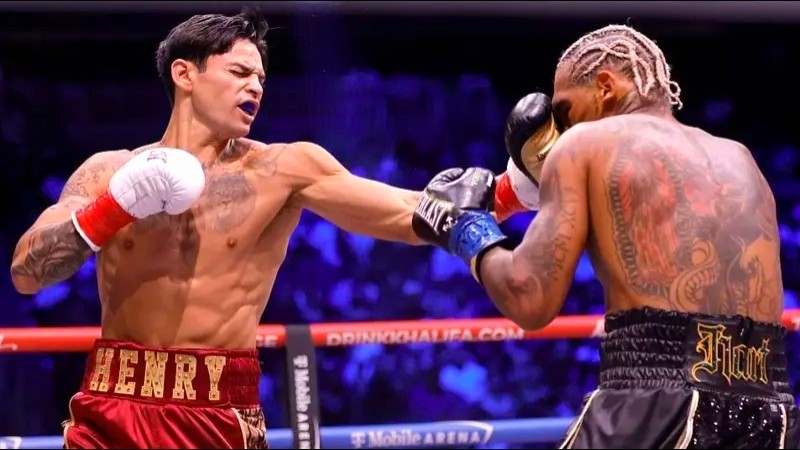
It happened in the neon deserts of Reno, Nevada. Davis, a 6-1 underdog, faced off against Brooklyn wunderkind Mark Breland for the WBA welterweight title. Davis would violently wrest the belt away from his crosstown rival with a picturesque, one-punch knockout in the 9th round. Were it not for Buster Douglas beating Mike Tyson a few months earlier, Davis? knockout of Breland would surely have been considered the upset of the year.
Aaron Davis was born in the Bronx on April 7, 1967, to Larry and Susie Davis. His father was made the rounds in New York as an entertaining club fighter. The locals endearingly called him ?Tumbler? because he would enter the ring by flipping over the ropes. In a rare rejection of the typical, often unforgiving father-son partnership in boxing, ?Tumbler? never intended to teach his son how to throw a one-two and preferred that he pursue a less taxing career. Still, by hanging around gyms so often ? first Gleason?s, then Morris Park ? Davis would eventually lace up a pair of gloves himself. ?When I was a kid I used to see all the pros spar,? Davis recalled. ?When I was 17 or 18, I started beating them up. That?s when I started to take boxing seriously.? There was little objection from the father. In fact, ?Tumbler? would assume duties as cutman in most of Davis? fights. ?I never felt like that I had to prove something to my dad,? Davis said, dismissing any Freudian subtext. ?I never thought about that.? Davis would turn pro at 19 after he inked a contract with MSG promoter Bobby Goodman.
Davis would win one Golden Gloves title in an otherwise quiet stint as an amateur. He was, after all, fighting in a territory where Breland had won five Golden Gloves titles. ?I always looked up to Breland.? Davis remarked, without reservation. ?I like Breland. He was the man, you know? He brought home the gold.? (Breland won a gold medal at the 1984 Olympics in Los Angeles). Few fighters were more heralded than Breland coming out of the amateurs; fewer have been such a disappointment as a pro. By the time Davis crossed paths with Breland, the unbridled hype about how Breland was the second coming of Sugar Ray Leonard had died down. (Dan Duva, Breland?s promoter, once noted that ?when [Breland] retires, all welterweights will be measured by him?). A stunning knockout at the hands of Marlon Starling in 1987 and a dismal draw in a rematch a year later killed Breland?s mythic aura.
Nevertheless, coming into the fight against Davis, Breland was riding a seven-fight knockout streak, and, most important, he was still in his physical prime. Meanwhile, things weren?t all rosy for Davis as he was coming up in the pro ranks. After dismantling veteran Luis Santana for a regional title, Davis put together a string of victories before struggling against journeyman Curtis Summit. It was supposed to be a tune-up, but a lethargic Davis was lucky to escape with a decision. The same pundits who criticized Breland for his lack of passion also pointed the finger at Davis. Maybe he should fight with more conviction like his father, they sneered. Despite his relatively low-profile, Davis called out Breland every chance he got.
He soon got his wish. Once the fight details were finalized, Davis? garrulous manager-trainer, Billy Giles, escalated the trash-talking, ensuring a pre-fight brouhaha. Looking back on that period, Davis admits that he got carried away. But the words, ultimately, were just a means to an end. ?I just wanted to win,? he said. ?I didn?t care about anything else; I didn?t care about no belts. The battle of the boroughs?that was all built up by the media. And you know, Billy Giles, he?s always talking.?