Tattoos are, simply, trendy. Since the 1990s, more and more fighters have sought their identity, or toughness, in a tattoo, but it?s their vulnerability I see?
If you have a tattoo, you?ll hate this article. So, don?t bother reading it?As long as lightweight Billy Tully agrees with me, I?m okay.
* * *
I met Deontay Wilder at Gleason?s Gym in Brooklyn shortly after he returned from the 2008 Beijing Olympics where he won the bronze medal. At that time, ?The Bronze Bomber? had one tattoo on his arm?a depiction of a pair of hands in prayer clutching a rosary.
Since then, he?s covered the majority of his massive six-foot-seven-inch body with ink. ?I?ve got over a thousand hours on me,? the WBC heavyweight champion says of his extensive tattoo work. ?Easily.?
?Everything that I?ve got on me has meaning, from my neck down to my feet. My body tells its own story with all the art on there.?
If Wilder?s tattoos could talk, what would they say? Well, there are four basic categories:
?Love.?
?Scripture.?
?Family.?
?Championship Belt.?
In Jason Bracelin?s article, ?Tale of the Tats,? Wilder explains. ??I?m a very passionate person,? he says. ?I?m a lover and a fighter.? Wilder underscores this point with a tattoo of a feather pen writing out ?Love? in cursive. ?I feel,? he continues, ?if you give me love, I?ll show you love in return, whether I?m in a relationship or whether it?s just friendship.??
?Wilder is a spiritual person,? writes Bracelin. ?If you?re lacking a Bible, his ink can serve as a substitute.?
?I love scripture,? affirms Wilder. ??So I?ve got some of my favorites on my body.? In addition to Psalm 27 on his back, he also has a portion of Psalm 144 on his hands, which read, ?Blessed be the Lord my strength which teacheth my hands to war and my fingers to fight.?
Wilder?s third favorite tattoo topic is his family. He has various tattoos related to his four children?Ava, Deontay Jr., Dereon and Naieya. ?They remind me why I?m doing this,? he says. ?I tell people all the time my children are my boss. I work for them, trying to build a future for them.?
Perhaps Wilder?s most poignant family tattoo depicts him and his daughter, Naieya, holding hands after she overcame spinal bifida. ?While she was going through all the different obstacles that she had to go through, I was going through the same thing in my career, trying to support her. The tat shows us both walking down ?The Road of Success,?? he says.
Wilder?s fourth favorite tattoo topic is his WBC Championship Belt. It took him seven years to earn, and another six hours to get inked on his thigh. ?Once I unify the heavyweight division, I?m going to tat each belt on me.
If that happens, Deontay will certainly make his mark?both in the Boxing Hall of Fame and in Ripley?s Believe It or Not Hall of Fame as the most inked champion of all time.
Deontay Wilder is not the only tattooed fighter. The fighters today are millennials and most of them have at least one tattoo. Humans have inked themselves since prehistoric times?sometimes to stand out, sometimes to blend into a group. The 5000-year-old Ice Man named Oetzi, uncovered in The Alps, had tattoos.
I wonder if Oetzi was a heavyweight or flyweight.
In the past, only a handful of fighters had a tattoo. Tom Sharkey was an outlier. The cauliflower-eared heavyweight contender in the 1890s boasted a four-mast schooner etched upon his 44? inch chest. Light heavyweight champion Carl ?Bobo? Olson, another outlier, showcased tattooed shoulders. Barney Ross, the great lightweight and welterweight of the 1930s, sported a small Star of David on his right forearm.
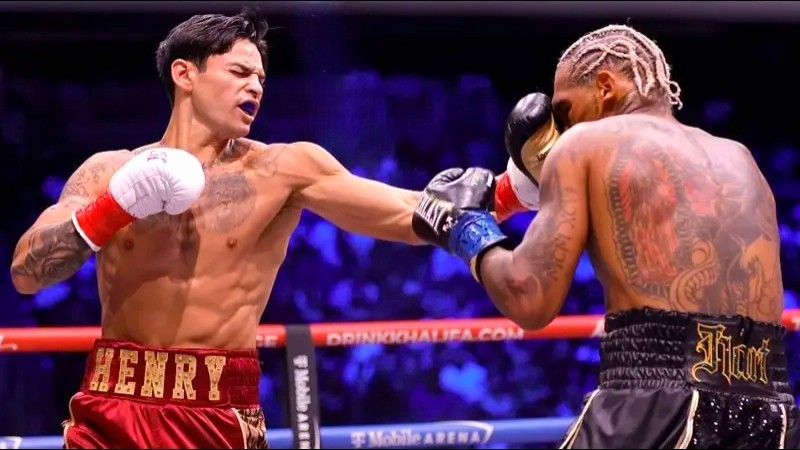
Today, boxers are festooned with tattoos. It?s a relentless barrage, a hodgepodge of body art. Riddick Bowe and Mariusz Wach have their beloved children?s heads etched upon their torsos. Heavyweight contenders Chris Arreola, Lucas Browne, and Malik Scott have an assortment of edgy tattoos. Miguel Cotto, Luis Collazo, Artur Szpilka, Winky Wright, Eddie ?The Animal? Lopez all have their mish-mash of bad-ass tattoos. Champions Kelly Pavlik, Angel Manfredy, Paul Spadafora and Mikkel Kessler, with their power tattoos, have also been bitten by the tribal bug.
Michael Katsidis flaunts a unique full-back tattoo depicting the Virginia sun.
The late WBC lightweight champion Edwin Valero decorated his chest with the tri-colored Venezuelan flag (with Hugo Chavez?s smiling face inked inside the flag.)
Let?s not forget Johnny Tapia?s desperate flurry of grim tattoos, including his Mi Vida Loca stomach etching. Few people know about lightweight Billy Tully?s four regrettable and ?utterly disgusting? army tattoos.
But the Special Tattoo Award goes out to, of course, Iron Mike Tyson for his tribal tattoo engraved upon his cheek; also for his assortment of four odd tattooed faces honoring Arthur Ashe, Chairman Mao, Che Guevara, and ex-wife Monica Turner.
Today?s American culture is having an obsessive love affair with body art, body bling, and self-graffiti. USA Today reports that fifty-three percent of millennials sport at least one tattoo.
I get it: people?not just boxers?need to feel they are living a life of meaning; they want to be happy, important, or feel tough.
It?s not that I want to occupy some moral high ground; it?s just that a tattoo isn?t enough to make someone happy, important or tough. A tattoo is not the answer.
Tattoos are, simply, trendy. Since the 1990s, more and more fighters have sought their identity, or toughness, in a tattoo, but it?s their vulnerability I see.
To some people, getting a tattoo is like walking on the wild side without actually going there.
Muhammad Ali, Joe Frazier, Larry Holmes, Bob Foster, Marvin Hagler, Sugar Ray Leonard?and ninety-nine percent of the greatest fighters of all time?on anyone?s list?never felt the need to be tattooed.
A boxing friend recently said of tattoos: ?A tacky sentiment or lazy quotation imbedded into skin is not a sign of profundity or toughness. It?s self-graffiti; it?s being a walking billboard.?
I agree.
For millennials, tattoos are no big deal. What was once the stuff of badass rockers, bikers and naval officers is now self-expression as commonplace as listing favorite quotes on your Facebook profile.
Deontay Wilder has something in common with the Hollywood beauties Heidi Klum, Scarlett Johansson, Jessica Alba, Julia Roberts, Anne Hathaway, Helen Mirren, Rihanna?even Caroline Kennedy.
They all have been inked.
The body art found on U.S. Presidents James Polk, Andrew Jackson, Teddy Roosevelt, writers George Orwell and Dorothy Parker, and inventor Thomas Edison is unexpected. Outliers all?like Sharkey, Bobo and Barney Ross.
I recently visited ?The Third Annual Westchester Tattoo Convention,? a major east-coast ink-fest held in White Plains, New York. It was my chance to glimpse inside the dark edgy world of tattooing. I think I was the only non-tatted human being in attendance. (As head boxing trainer of the Cage Gym in the mid-?90s, I was almost always the only non-tatted human being inside my own gym, so I guess I?m an outlier, too.)
I am not a Republican, self-righteous, tight-ass. Let people live their lives, and I?ll live mine. But I?ve never liked tattoos. I think the older you are the less chance you?ll be forgiving of them. Neck and face tattoos are usually not as well received as other locations, no matter your age (sorry Iron Mike).
I get it. Deontay Wilder and the others fighters I mentioned perceive their body to be a blank canvas and have gotten tattooed for many reasons: for attention, self-expression, artistic freedom, rebellion, a visual display of a personal narrative, reminders of spiritual/cultural traditions, sexual motivation, addiction, or identification with a group. Even drunken impulsiveness.
At the tattoo convention, I walked around and observed. It was clean, quiet and orderly. People were respectful, and the low buzzing of hundreds of tattoo guns sounded like gentle honeybees. There was almost a sacred hum within the air. The atmosphere was familial and tribal.
Everyone needs to be connected to something?and this tattoo convention was their connection, their tribe.
I looked into the different booths and watched the intimate act of young men and women submitting themselves to the tattooing needle. Their young faces loomed somber and sincere as they were initiated into the tribe. What were they thinking? What were their self-esteem needs?
As I walked up and down aisles, I sensed that everyone secretly knew the truth: It takes much more than a tattoo to make themselves happy.
Like cosmetics, tattoos are like artificial limbs that make up for something felt to be missing or inadequate. People are always devising ways to enhance parts of their bodies?from makeup to diets to wigs to tattoos. Anything to make us more perfect?anything to develop a better friendship with yourself.
I thought of poor, haunted Johnny Tapia.
A tattoo promises to make you attractive and pump up your self-esteem. I spotted an obese woman in a low-cut t-shirt. She was showing off her beautiful new butterfly tattoo. All I could think was that in twenty years, that butterfly would resemble a bat or a pterodactyl.
The guy with a teardrop tattoo, sitting alone, eating a slice of pizza, was a real winner?I think he was advertising himself as a killer who had gone to prison.
I thought of Rubin ?Hurricane? Carter. He never needed a tattoo is be tough.
And lightweight Billy Tully.
Down every aisle I walked, I saw tattooed faces, tattooed arms, tattooed thighs, body suits, and tattooed palms. It was all fascinating.
A tattoo is skin-level theater.
My boxing friend says, ?There are two ways to be happy: work hard and improve your reality, or lower your expectations and get a tattoo.?
I am not a judgmental church-lady, but I tend to agree.
* * *
Insanity does not run in my family. But within the last twenty five years, since ink art has exploded into our culture, many of the young members in my family?male and female?are now walking around with tattoos. They have joined the Deontay Wilder Tattoo Tribe. One cousin was proudly initiated into the tribe with a full-back tattoo, (larger than Michael Katsidis?); another is planning a festive full-sleeve tattoo. Others have adorned themselves with charming arm and wrist tats.
Ah, youth!
I love them all, but what was once considered self-mutilatory behavior and a psychiatric problem has now become normative behavior.
But still?a tattoo is a permanent reminder of a temporary mood.
Recent research, states that ??38 is the average age when most Americans (57 %) think tattoos no longer look cool on you.? (PicoSure/Wakefield)
I?ve been dealing with this personal tattoo issue of mine since 1963 when my fifteen-year-old brother got one?a ?Mom & Dad? in a red heart scrawled onto his skinny shoulder. My brother, in 1963, was an outlier (at least in our neighborhood), just like Tom Sharkey, with his four-mast schooner chest tattoo, was at the turn of the century.
I remember one summer evening, after my brother showered. I walked into the bathroom, and when his towel dropped to the floor, exposing his new tattoo, I almost fainted. I was nine.
Today, if my nineteen-year-old daughter comes home with a tattoo, I will faint. Why would she ever want to make her body into a refrigerator for magnets with trite quotations and embarrassing clich?s which, one day, she will regret?
I need to introduce her to lightweight Billy Tully, the old tattooed prizefighter in Leonard Gardner?s classic boxing novel,Fat City. Gardner writes of Tully: ?Down in a subterranean locker room?Tully removed his clothes. He had four tattoos, obtained while in the army and now utterly disgusting to him: a blue swallow in flight over each nipple, a green snake wound up his left wrist, and on the inside of his right forearm a dagger piercing a rose.?
The human body is already a work of art, not a blank canvas. Or refrigerator.
Billy Tully would agree.
Peter Wood is a 1971 NYC Golden Gloves Middleweight Finalist in Madison Square Garden; a Middleweight Alternate for The Maccabean Games in Tel Aviv, Israel, and author of two books: Confessions of a Fighter, and A Clenched Fist?The Making of a Golden Gloves Champion, published by Ringside Books.