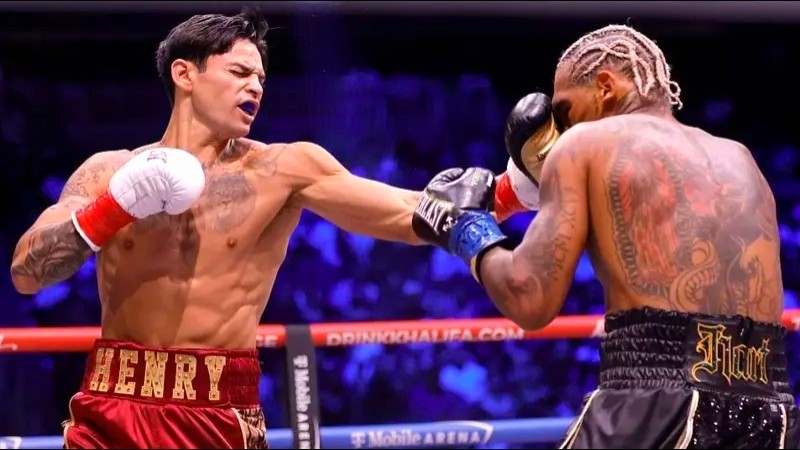
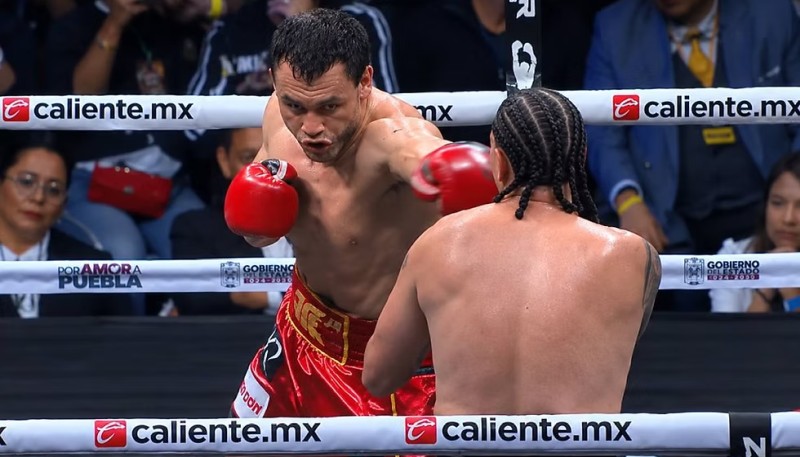
We fans of the sport can reengineer boxing as the sport of tastemakers: the sport of thinkers, history buffs and scribes, rather than the bloodthirsty?
The conversations that require fans to justify their love of the sport seem to be more frequent and more difficult to navigate than every before. Why?
With the recent signing of the Mayweather-Pacquiao megafight, boxing has re-entered the daily conversational universe for the first time in over a decade. Over the next two months, we can expect boxing chatter in the workplace tearoom. At the local gym locker room. Even with your in-laws.
If you?re a diehard fan of boxing, a conversation or two will involve some variant of the following:
?So [your name], you?re a fan of boxing. That?s interesting. I wish I could get into it, but I can?t get past the violence. Why do you like boxing??
Most recently, I had this ?why boxing? question-encounter with the perfect foe: a highly intelligent, academic historian and attractive woman. I wrote the descriptors in their order of relevance, and highlight ?attractive woman? only because it probably amplified my ?need (want)? to communicate carefully. The ?academic historian? part, however, is key, because she?s been raised in a very particular (and rigorous) school of inquiry and scholarship. This historian happens to study the caste system in South Asia, which implied that she was equipped to digest phenomenon with complex, non-linear, and morally dubious histories. Boxing certainly qualifies.
My answer was similar to the one many-a-boxing fan has given.
I love boxing because:
(a) We find the sport exciting: The simulation of a fight to the death (emphasis on simulation) invokes a very authentically human source of curiosity, the same one that packed the Roman Colosseum in yesteryear. We don?t have to act on behalf of this curiosity in our real lives (as in, behave violently. This is something non-boxing fans don?t seem to understand; watching boxing doesn?t desensitize you to the evils of violence in the real world. I?m mostly pacifist, barely squash bugs scurrying across my kitchen, but that watching pugilism is entertaining is difficult to debate against. Acts of aggression, in some form, have served as entertainment in just about every human society. What has changed is the constitution of socially acceptable forms of aggression. Perhaps we?re headed to an age where the only violence we?re entertained by is in silico or with robots (as in the 2011?s Real Steel). That doesn?t mean that our enjoyment of pugilism is any less essentially human. It just means that cultural evolution can create new ways to satisfy this urge.
(b) We find the history compelling: Boxing is arguably the sport with the most captivating cast of characters. The most unique kinds of enigmas, heroes, villains and hero-villains you?ll ever come across. Something about fighting seems to breed fictional protagonists in flesh and blood. There?s nothing like it.
(c) The relation to matters of social significance/metaphors for society: Who the boxers are and how they were delivered to the sport can tell an important story about society. And as society changes, the boxers change. As do the styles of fighting. For example, pugilistic sports are exploding in popularity among women in the western world. This almost certainly speaks to the expansion of socially acceptable manifestations of womanhood and femininity (among other things).
(d) The sweet science itself: The cognitive skill set. The matching of wits and styles. Boxing is a highly scientific enterprise. It?s no different, in many ways, than any puzzle or competitive exercise where mental gymnastics are on display. This one simply involves punches of a wide variety, and is bolstered by the fact that these cognitive gifts play out on a landscape of elite athleticism and conditioning.
The historian seemed to dig it, nodded as I reeled off point after point in succession. The material didn?t come across as pedantic, but rather, was laid out comfortably in regular banter. And she seemed convinced enough that she wanted to read my boxing writing, the ultimate sign that my argument was effective (piquing curiosity is better than fostering agreement, as one can more easily feign the latter).
This exchange would qualify as one of the better ones I?ve had. While I rarely participate in debates on these matters (not worth the time), I have found myself having to answer the ?why do you like boxing?? question more in recent years than ever before, often defensively. Having just had a conversation where I was able to convince someone that my reasons were good enough to warrant further examination, I thought about why I might be asked this question more now than ever before. I came up with a list of reasons, and interrogated each.
Overall, boxing seems to be declining in popularity. The logic here says that because boxing isn?t as popular as it was, fewer people are familiar, and will need a basic introduction to the sport and its appeal. The basic arithmetic of this argument makes sense. This explanation is, however, missing something very essential: a chunk (magnitude debatable) of boxing?s fan base is now watching mixed martial arts (MMA), which is at least as violent, has none of boxing?s long history, social metaphors, legacy of great characters and scholars (this is no knock; it?s just a newer sport).
And interestingly enough, boxing?s overall decrease in popularity presents an opportunity: we fans of the sport can reengineer boxing as the sport of tastemakers: the sport of thinkers, history buffs and scribes, rather than the bloodthirsty. And while the big money machine will always rely on bloodlust (at least in part), it doesn?t need to define the flavor of boxing fandom. Sites like boxing.com, for example, are examples of this?composed of a breadth of thinkers and writers who cover everything from your local fight at the Boston House of Blues, to shakeups within Golden Boy Promotions, and previously unknown stories of Willie Pep?s life and times. Boxing?s recent fall in popularity means that it has pruned many of its smaller branches, leaving only the careful thinkers and dedicated fans. It is becoming an espresso sport, only for those who care to taste the beans, who think the longer trip to the artisan coffee shop 20 minutes away is time and money better spent than the Dunkin Donuts on the corner. This isn?t a good or bad thing, but it might be an opportunity for espresso tasters to look forward to interacting with other espresso tasters, a chance to carve out a more unique niche.
Or maybe not.
There seems to be a general decrease in society?s tolerance for violence. Another big reason that a love of boxing has become more difficult to defend involves an apparent decline in society?s tolerance for violence, an idea supported by a decline in many forms of violence around the world.
The idea here is that as humans learn that violence is something to be avoided, sports that involve violence will decline in popularity. Some problems with this general argument are that sports like American Football are currently more popular and lucrative than ever before. The popularity of football has, however, been sullied by a run of bad press surrounding the prevalence of head injuries and chronic traumatic encephalopathy (CTE) in former players. Whether or not this press threatens the long-term popularity of the NFL brand isn?t clear, but it certainly hasn?t helped it.
It?s probably fair to say that this bad press, and its associated social concern, has trickled into boxing. Or one can argue that the Parkinsonian Muhammad Ali is a worse image than any involving an injured or deceased football player (perhaps the defining image of an athlete ruined by their own craft). Either way, it?s probably fair to say that the public?s increasing familiarity with the dire consequences of head injuries has been bad for the boxing, has called into question the very basics of our fandom: how can you love a sport where participants suffer such savage damage?
To reply, you can either debate the data (that connects head trauma to CTE and other neurological conditions), or try to drive a wedge between the head trauma in football and the head trauma in boxing. One might highlight that boxing has been relatively transparent about the risk, has required ringside physicians and had rules to protect fighters for many years. One can also add that the injuries in boxing might differ from football, where concussion symptoms are difficult to detect by health professionals and can therefore go undiagnosed, and accumulate over time. Football is after all, a team sport, where medical attention is dispersed across an entire team. In boxing, safety concerns are focused on the two individuals in the ring. None of these arguments are particularly strong, however, and convincing anyone that boxing is actually safe is a tall order. It very well might not be.
The next smartest thing would be to concede that safety is a problem, but that you support measures to make boxing safer, including changes in sparring practices (where most of the head trauma takes place), and stricter standards on the amateur circuit. This won?t win you any debates, but you?ll at least sound human while losing.
The scientific aspects of boxing are hard to communicate. Explaining the sweet science aspects of boxing to the uninitiated is?challenging. Much of the difficulty resides in the fact that people can?t make it past the violence: they have a hard time turning off the sound in their head that says ?punching = violent = bad.?
As a former trainer, I?d say the easiest way teach the beauty of boxing is through a training session. There I can teach the art (and arc) of the individual punches, the variation in punch styles and defensive methods, footwork, the infinite permutation of body movements and strategies that underlie a single punch exchange. I can also mimic and contrast the styles of historical fighters (for example, the length and jabbing of Larry Holmes vs. the head movement and upward explosion of Mike Tyson), explain why certain strategies and styles were effective.
Unfortunately, many of my boxing discussions, and especially questions about why I love the sport, are within verbal exchanges. How do we explain these kinds of details in words? In some ways, explaining boxing is similar to explaining quantum mechanics, the sub-field of physics that has captivated many, eluded many others. It is infamously difficult to teach to undergraduate physics students, and even more difficult to explain to the non-quantitatively minded (or equipped). The challenge is in finding shortcuts, metaphors and analogies that can hook into the minds of the curious but unprepared, carry extra explanatory bang for the buck. For boxing, an effective go to example is Muhammad Ali?s use of lead right hand, without a lead jab, in the ?Rumble in the Jungle,? the punch that helped him slay the mighty George Foreman. It took precision, intellect, preparation and involved risk. And it worked. And because everyone knows who Muhammad Ali is, it tends to stick with people.
Thankfully, the difficulty in making people see the beauty signal through the noise (or red herring) isn?t only a boxing problem. Dramatic theater struggles with it. As does studio art. And jazz. And like these other crafts, public appreciation can be difficult to secure and predict. Charismatic or transcendental figures often help build bridges to outsiders. Floyd Mayweather, with his savant-grade mastery of boxing?s X?s and O?s, would qualify but his outside-the-ring transgressions and villainous persona prevent that. This is unfortunate.
The organizational and financial structures are puzzling, corrupt and indefensible. It takes a savvy non-fan to recognize the peculiarities of boxing?s organizational structure enough to formulate actual questions. Boxing doesn?t have a single, unified league. It has several autonomously governed, commensal institutions (IBF, WBO, etc.), each with their own rankings and championship title belts. There is no labor union that protects the interests of the athletes. There are different boxing commissions for individual states.
Trying to explain the structure of this at all, let alone justify it, is nearly impossible. Boxing?s business structure resembles a racketeering ring more than a professional sports circuit, with a staple of shady characters, wink-wink deals, corruption, and rule-bending (and breaking).
But there is hope: while Golden Boy Promotions seems to be in the middle of rough times, its ascent to near dominance in the 2000s provided a model for how a more fighter-focused management could be profitable. If nothing else, it introduced competition to the world of manager-kingpins that have presided over boxing for decades. Newer, relatively fighter-friendly models are partly responsible for knocking Don King out of boxing, and even mainstays from the old guard like Bob Arum had to adjust their methods to accommodate the modern boxer. Even Jay-Z?s Roc Nation has secured big name fighters, and promoted several successful boxing events. While none of this qualifies as the wholesale fix that boxing truly needs, at least people seem to be trying.
It?s the people, not the pugilism. In the end, boxing?s future rests on two contingencies: the public?s belief that it is relatively safe (unlikely), and our ability (those who study, write and talk about boxing) to communicate its beauty: the personalities, the stories, the science. Strangely, the rise of mixed martial arts (MMA) might help with the latter?MMA seems to embrace its Cro-Magnon elements (to great financial ends), and its fans often boast about how much tougher its participants are than boxers. Without getting into an unnecessary comparison between the two, I suggest that the boxing community let MMA win that ?debate,? because boxing no longer needs that crown to be successful. Boxing should, instead, focus on those elements that add humanity to the people behind the punches, and emphasize the outstanding cognitive wizardry on the display in every match. These elements, and especially boxing?s glorious history of unique figures?from Jack Johnson to Dempsey, Willie Pep to Rocky Marciano, Cassius Clay to Mike Tyson?are unlike those in any sport (or arguably any institutionalized human activity). And while boxing might be a different animal today, the stories are there. The hunger is there. The science is there.
We just need to be smart enough to notice and tell the world about it.