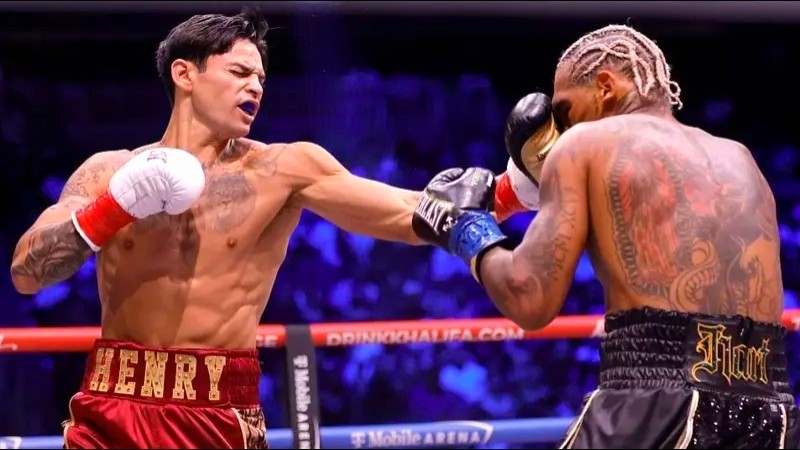
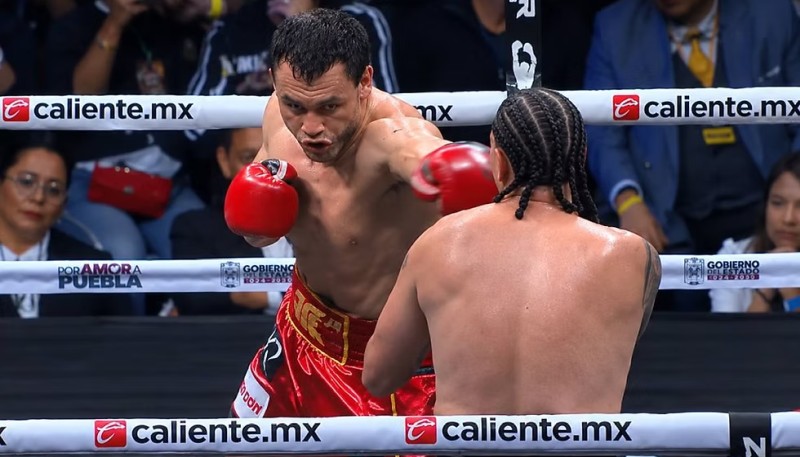
Palance either won fifteen in a row, twelve by knockout, until losing a brawl to a contender or ? more likely ? usually took as many blows as he delivered?
At age seventy-two, celebrating his Oscar for best supporting actor in City Slickers, Jack Palance launched himself onto the Academy Awards stage and cranked out several one-armed pushups. I?d been proud to do those in my twenties. Afterward, the two-armed variety was challenging enough, and before age forty I altogether abandoned the exercise as a concession to popping elbows. I assumed Palance, through genetic good fortune, admirable discipline, and the magic of celebrity, must have discovered a way to if not defeat the aging process then at least batter it back. Accordingly, I was surprised several years ago to read that he?d died of natural causes at one of his homes, in Montecito. He was only eighty-seven and should?ve lasted another decade or two. On screen he?ll endure for portrayals of tough guys from urban killer to hired cowboy gunman to soldier, boxer, film producer, Jack the Ripper, Fidel Castro, and cattle trail boss. Whether despicable, frightening, stoic or crusty, he was always entertaining.
Before World War II he?d charged out of the Pennsylvania coal country ? his Ukrainian immigrant father would die of black lung disease ? to become a heavyweight boxer standing 6-foot-4 and weighing 210 pounds. Records from that era are often undependable or nonexistent, so one can choose from press accounts that say Palance either won fifteen in a row, twelve by knockout, until losing a brawl to a contender or ? more likely ? usually took as many blows as he delivered. Either way, he emerged with a distinctively battered nose that might have precluded leading-man roles but ensured an ominous presence. During the war Palance trained as a B-24 pilot in Arizona and had to jump from a burning plane. His face was disfigured and, despite plastic surgery, ?retained a distinctive, somewhat gaunt look? that first arrested theatrical audiences at Stanford University, where he graduated in 1947. He bounded to Broadway and was soon Marlon Brando?s understudy in A Streetcar Named Desire and ultimately assumed the lead. Hollywood then called, and in 1952 he received his first of three best supporting actor nominations for his portrayal of a man plotting to kill his wife, Joan Crawford, in Sudden Fear. His second came as the thug gunning for homesteaders in Shane.
Jack Palance was almost as robust in life as on film. He married, fathered two daughters and a son, traveled widely and bought a few thousand pieces of art and antiques and several classic sedans, sometimes drank too much, quarreled with his wife, acquired a ranch in Pennsylvania and another in the mountains outside Tehachapi, California, named the spread Holly Brooke Ranch after his two daughters, divorced, married another woman, painted landscapes and wrote poetry, lost his son to cancer, continued acting, and left memories and many collectibles recently sold at the Jack Palance California Estate Auction.
Why hadn?t I gone up there several years ago when Palance put on a sale of his work and from his collection? I would?ve enjoyed talking to him, I think. Depends who you ask. A lady at the auction said, ?I saw him around Tehachapi several times, and he was a gentleman. There was a gentleness about him, despite his image.? Several months earlier another local lady told me that he?d scolded her over the phone for sending an improper part from the hardware store where she was filling in. Another Tehachapi resident told me that Palance had simultaneously kicked the asses of three, four, or even five drunken yokels who?d trifled with him.
Let?s assume he was a man both rough and sensitive, and be clear that for stretches every year he lived on a California ranch entered through a gate yielding to a dirt road that runs between some stunning boulders and back toward oak-covered brown hills that face a one-story stone ranch house, a couple of other dwellings, a big three-section barn, fenced areas no longer occupied by horses and cows, a huge statue of a chicken and an even larger chrome-plated steel rendering of a winged Pegasus horse weighing more than a ton and valued at thirty-five grand.
The live horses must?ve been removed just before the auction since their paddies still decorated dusty fields serving as parking lots. In a scene from a country fair, scores of people browsed the premises, eating hot dogs and chicken, rubbing Palance?s fine antique furniture displayed under canopies, and picking up his old rock and classical record albums. Those planning to participate in the auction lined up at a cash register in the barn?s first room to fill out forms, get their driver?s licenses scanned, and receive numbered cards to signal bids. On the way out they stopped at tables covered by informal photos of Palance with celebrities, many of whom ? like Joan Crawford and Jimmy Carter ? are gazing at the big actor. Before bidders sat in plastic folding chairs under a large canopy, they strolled through the second and third sections of the barn, examining an array of paintings and antiques. The setting was prepared by 15 employees of Keystone State Auctioneers who?d flown out from East Williamsport, Pennsylvania. Last year they handled four days of bidding on Palance?s holdings at his ranch in Butler Township. His artifacts at the California ranch were similar but more extensive.
A trio of machine-gun talking auctioneers spearheaded the effort to sell more than 1,400 items in three days, a frenetic pace requiring about 50 transactions per hour. Many of the least expensive items, for those wanting a Palance keepsake, went on the block Friday at 10 a.m. Gruff trail boss Curly in City Slickers undoubtedly used things like these: cast iron frying pans, metal cook pots, an iron ladle, a leather two-gun holster, a lantern, and an old metal cow bell. Curly threatened to kill Billy Crystal?s character for playing a harmonica and would have been glad to see it sold along with some belts adorned with noisy brass bells. On Saturday cowboy tools like branding irons, horseshoes, and a lasso rope continued to sell along with antique rifles, pistols, swords, an axe and a dagger, but emphasis on art increased. Fred Duran?s pastel portraits of Billy the Kid, Jesse James, Doc Holiday, Wyatt Earp, Calamity Jane, and General Custer brought a few hundred dollars each, and so did statuettes of cowboys, Indians, horses and a stagecoach.
Energetic auctioneers kept the money flowing in, and every hour they yielded to a fresh speaker who would immediately announce ? What a beauty, a thousand dollars for this one ? okay, 500, do I hear 500? ? It would look great in your office ? 200? Okay, get me started now with a hundred dollar bill. One hundred right there ? 125 ? 100 ? 125 there ? 150 ? 150 ? 125 ? 150 in front ? 175 ? 175 ? 150 ? 175 over there ? 200 ? 200 ? 175 ? 200 ? Come on, where you gonna get another one? ? 200 right there ? 225 ? 225 ? 200 ? 225 ? It?s only money; you?ll get another check next week ? 225, 225 ? You bought it for 200 dollars. What?s your number? Let me see your card. And our next item ? what a beauty?
After four hours of this increasingly addictive activity, I didn?t want to leave but had an appointment in Bakersfield, an hour down the mountain in the smoggy Central Valley. Sunday morning, I was anxious to return to the ranch. That?s when the best art would be auctioned. Bidders warmed up buying a $100 beaded purse, a $160 brass calendar, a $230 silver pitcher, a $100 brass barometer, a $700 19th century Viennese urn, and a $3,500 silvered bronze statuette of a sheep shearing from France; everything was selling, $400 for this, $300 for that, $500 for a pair of Italian carved marble angles, $140 for a magnifying glass, $300 for French cast iron Ram?s head, and the deluge continued.
I wanted to get involved but restrained myself during bidding for Gen Paul?s contemporary portrait of an emotional ?Guitar Player.? Four collectors from around the world were on the phone, battling local bidders, one, two, three, four, five ? all the way to 18 thousand offered by someone in Germany. Maybe I could play a little when Number 3094 came up, indicating the 94th item on the third day. I?d been waiting for this beautiful African painting of village life almost three feet high and five feet long, with a thick wooden frame. The artist?s name is Dusso. No way could I afford it. That sentiment was confirmed when they opened too high. But they kept coming down ? 100, 100, let?s get started with a hundred dollar bill. I raised my card ? 100 right here ? 125 ? 125 ? 100 ? 125 over there ? 150 ? 125 ? 150 right here ? 175 ? 175 ? 150 ? 175 ? you bought it for 150 dollars, the auctioneer said, looking at me.
I started bidding on paintings I couldn?t afford without using a credit card, and even by that means should?ve bought at least one of the five sports paintings by former professional football player and internationally-collected artist Ernie Barnes. I?d studied online and seen his work in L.A. galleries and knew it was usually worth five grand and up, but I timidly avoided risk and thus the chance to acquire creative pieces that this day sold for $500 to $1,700, about 10 cents on the dollar. Screw prudence. I?d blown it. Let?s go, I told my friend. I retrieved my very heavy African work, shoved the seats all the way forward in my Honda Civic hatchback, barely got the big frame inside, and driving scrunched up didn?t say much on the way home. t least as I was leaving the appraiser for the auctioneers had patted my shoulder and said, ?You got a steal. For years Jack had that painting over his mantle in the main ranch house.?
Some of Jack Palance?s Noteworthy Films
Panic in the Streets (1950) ? Palance debuts with verve, murdering a man infected with a potentially catastrophic plague. Unaware of the medical problem, the now-stricken Palance concludes the massive manhunt is fueled by something of major value he hasn?t had a chance to learn about and steal. Seeking the prize, he strong-arms a dying man in bed then throws him off the stairs. When health official Richard Widmark arrives, Palance conks him. And while hand climbing the dock rope to a ship, in a hopeless escape attempt, he exhibits intensity and fanaticism that will distinguish other roles.
Sudden Fear (1952) ? This is Palance?s finest film. The producers want to hire his character for a prize role but playwright Joan Crawford, while conceding he is a fine actor, adamantly states he lacks the romantic appeal to set female hearts aflutter. He isn?t, in other words, a leading man. Palance nevertheless charms Crawford, marries her, worries what his inheritance might be, and with a former girlfriend plots to kill his wife, who hears this on her office recorder used for theatrical dictation. Even after he has lost all chance to secretly commit the crime, a sizzling Palance tries to run her down in his car.
Shane (1953) ? Wearing a black hat, a black vest, and black boots, Palance is a nasty gunslinger, hired by cattlemen to kill some farmers and scare the rest away. Unlike in Sudden Fear, Palance doesn?t have much to say, but his silence is ominous and builds tension for the showdown with Shane, played by Alan Ladd.
I?ve heard about you.
What have you heard, Shane?
I?ve heard that you?re a lowdown Yankee liar.
Prove it.
Blond-haired leading men don?t lose many gunfights with sinister character actors. Shane remains a classic primarily because of Ladd?s laconic and dignified performance and George Stevens? taut directing.
Attack (1956) ? It?s World War II, the Americans are fighting the Germans, and cowardly captain Eddie Albert trembles when he should be giving competent orders. Palance, only a lieutenant, tells his captain that if any more lives are wasted he?ll come back and shove a grenade down his throat. Young Lee Marvin outranks both men but is a close childhood friend of Albert and covers for him. When the drunken captain again shrinks while his troops are under fire, Palance storms back. Even after a panzer runs over one of his arms, he keeps coming, and when he can?t walk he crawls.
Contempt (1963) ? How do you combine a young and often naked Brigitte Bardot, a legendary director, Fritz Lang, playing a director, and Palance as a callous producer, and let celebrated director Jean-Luc Godard guide them, and still make a wretched film? Ignore its cult status in France. Bardot is boring. Lang is feeble. And Palance is robotic. He and Bardot either didn?t want to kiss each other, or Godard instructed them to act like their lips were made of cardboard. This isn?t film noir. It?s pretension. And its utter badness is of mild historical interest. Celluloid adventurers should simply watch the first half hour and avoid the final hour of agony.
City Slickers (1991) ? Palance arrives late, roping the neck of a boor who?s harassing a blonde, and leaves early propped up by a boulder after his fatal heart attack, but while present he captures the screen. Never more dynamic and intimidating, and at the same time philosophical, Palance had to be axed so Billy Crystal and his two New York pals wouldn?t be overwhelmed on their dude ranch holiday. Palance?s Oscar reception prompted his most memorable role, that of the septuagenarian stud popping out those one-armed pushups on the stage of the august Academy Awards.
George Thomas Clark is the author of several books, most recently Death in the Ring, a collection of boxing stories, and The Bold Investor, a short story collection. See the author?s website at www.GeorgeThomasClark.com.