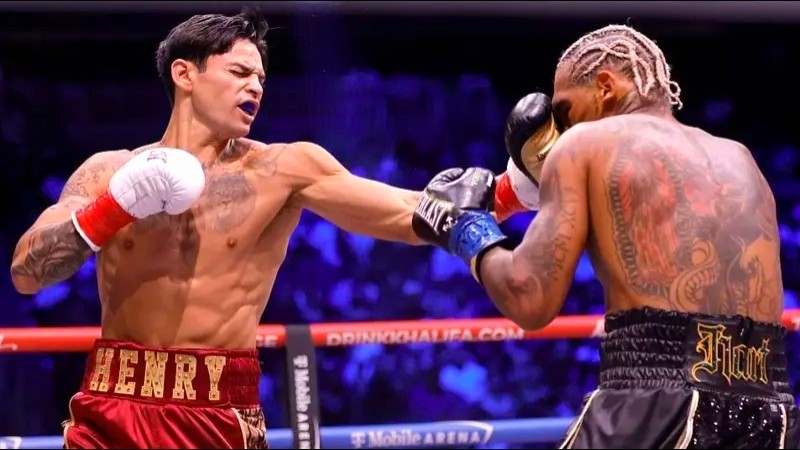
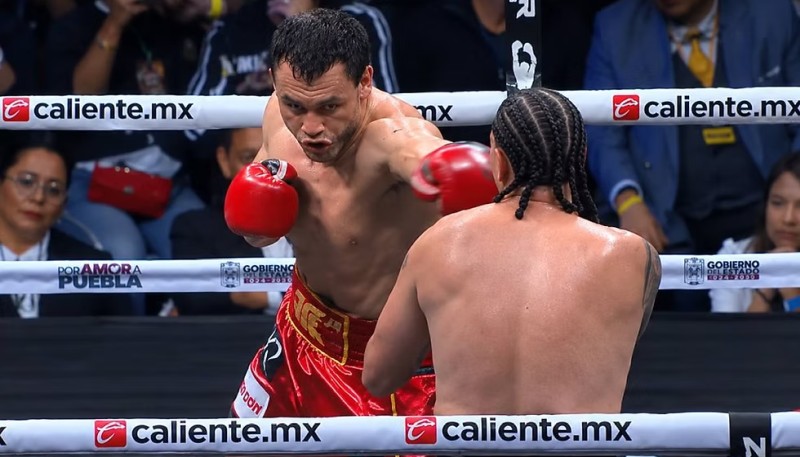
LAS VEGAS — There is consensus among boxing trainers that big muscles are no good for a fighter. The bigger the muscles, the more energy they burn. They are slower to move and brute strength also has little to do with how hard you can punch (that comes from snap, swivel of the hip, genetics and technique) or how big a punch you can take (the origin of a good chin is still one of boxing’s great unsolved mysteries.)
The ideal body of a prize fighter should be lithe and lean. Picture the muscle tone of welterweight wizard Sugar Ray Robinson: strong, smooth, built — yet natural.
Now behold Timothy Bradley, who takes on Manny Pacquiao again for the welterweight championship in Las Vegas on Saturday night. When Bradley took off his shirt and stepped on the scales for their controversial first fight, the muscles Bradley exposed were dramatic.
The pockets of muscle seem to be rising out of Bradley’s body, like small loaves of bread. His abs are so defined you could set a can of beer down between them. Even Bradley admits the abdominal muscles he walks around with aren’t normal. They are doubled abs.
“Abs on top of abs,” he said during his training camp. Though Bradley brags about it, he knows the muscle he carries doesn’t always help him in the ring.
His body is not only his doing. Ray Bradley, Tim’s father, was so dedicated to lifting weights he nearly became a professional body builder, Tim says. The family was raised in a tough part of Palm Springs, Calif., far from the tennis and golf resorts. Ray worked two jobs: hauling luggage as a skycap at the airport and keeping kids in line as a security guard at the local school.
As a young boy, the easiest way for Tim to get his father’s attention was lifting weights. When he wanted to play with the other kids, his father demanded he do a hundred pushups and sit ups a day for a month. No problem. Young Tim got his wish, and the formation of an unearthly set of stomach muscles during a time when most boys are strengthening their thumbs to best their friends at video games.
“I was dense,” Bradley said earlier this week from Palm Springs, where he still lives and trains. While his father’s dream was to play football, boxing was a better fit for Tim.
“I couldn’t believe I could actually beat people up and make money,” Bradley said.
Bradley was so troubled, he was kicked out of school for fighting in the second grade. As an amateur, Bradley realized he couldn’t fight in the street, so he and Ray intensified their workouts. Ray would drive his car down the streets of Palm Springs blasting music while Tim did his morning runs alongside. Other drivers shouted that Ray was abusing his child.
Ray ignored them. Tim recalled his father would taunt him to work harder. In the beginning, Bradley struggled to keep up. Before long, the extreme workouts became routine.
As an amateur, Bradley competed at 152 pounds, five pounds heavier than his competition weight today. Unlike other fighters who move up in weight throughout their careers to capture bigger purses — Pacquiao started to fight at 108 pounds — Bradley has had to lose weight to stay competitive, a punishment to his body. Between fights, Bradley’s weight balloons. In the midst of a deep depression, Bradley’s weight jumped to as much as 185 pounds after the 2012 decision over Pacquiao, which nobody thought he had earned.