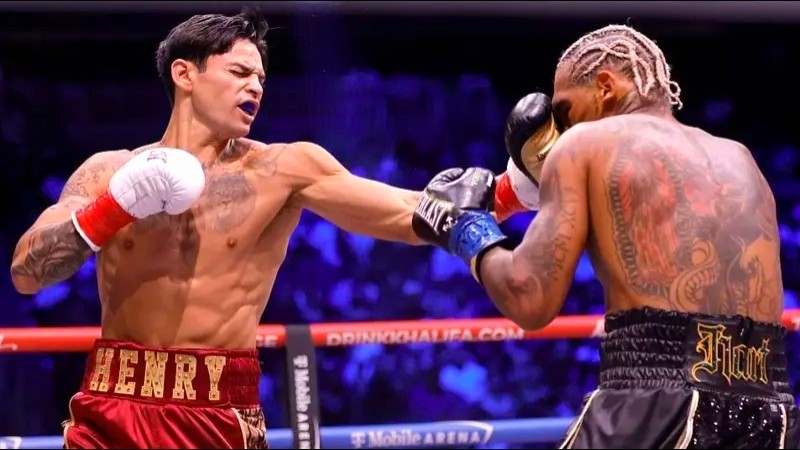
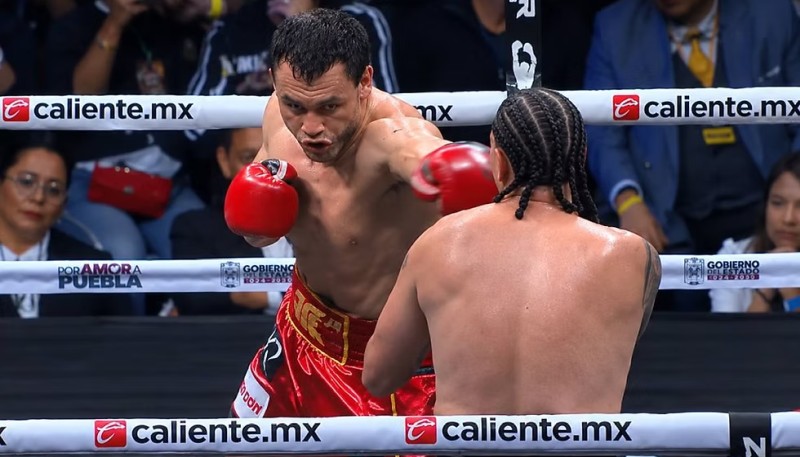
BOXING HERO Manny Pacquiao should put on hold his plan to run for vice mayor of Manila next year. His life has become this big because of boxing. He should stick to it and make hay while the sun still shines.
Not to belittle his noble intentions of serving the people, but he can be of help in so many other ways without necessarily becoming the vice mayor of Manila.
The report about him being wooed to be the running mate of Arnold “Ali” Atienza, son of Manila Mayor Lito Atienza, who is now on his last term, has left many in a dither. It also left many questions unanswered.
There is no question that he is popular, but is this enough? Many say Pacquiao has still a lot to learn when it comes to running the affairs of the country’s premier city, including presiding over Manila’s city council which is composed of grizzled politicians. Why is he in a hurry then? Has money and fame corrupted his thinking? Is he only being used by his politician-friends?
“I make my own decision,” said the 27-year-old Pacquiao, also known as “Pacman” in a recent interview. “I was not forced to join the fray,” added Pacquiao, who is facing Mexico’s Erik Morales in a rubber match in Las Vegas on Nov. 18.
At this stage however, everything is pure speculation. As Ali Atienza said the other day, “It’s too early to talk politics.” This, despite the fact that he is being endorsed by residents of Manila to succeed his popular father because of his youth, energy and management skills (he was only 21 when he became Asian taekwondo champion in 1994). Now 33 years old, Ali is chair of the Manila Sports Council and was recently appointed by President Gloria Macapagal-Arroyo as Presidential Assistant on Youth and Sports.
* * *
NOTHING HAS CHANGED. I don’t think I want to hear another report about the Philippine basketball team losing again in its campaign abroad. I may sound like a broken record, but I am repeating here what I have been saying in the past, that basketball is not for Filipinos.
For instance, in the ongoing Al-Emadi International Basketball Championship in Doha, Qatar, SMC-Pilipinas went down in defeat three times in a row, losing to host Qatar, 77-58, last Wednesday; to Latvia, 73-65, on Thursday and to African champion Angola, 82-67, Friday.
Still, the RP team, made up mostly by well-funded PBA players and a few pro-bound college stars, has a slim chance of winning the title with back-to-back victories in its last two games.
In the recent William Jones Cup in Taiwan, SMC-Pilipinas failed to make the round of four after losing four games in five starts during the qualifying matches.
What a pity.
Isn’t this RP team supposed to be the best in the land, a brand-new team that is supposed to be strong, well-trained and competitive? It seems to me nothing has changed. We are still the favorite whipping boys of our much-improved rivals despite our bold ambition to regain our past glory in the international basketball scene.
The PBA’s all-out campaign to take part in the Doha Asian Games in December and qualify for the 2008 Beijing Olympics is a great idea, but, as I have said again and again, it is not a practical idea, an idea which is virtually impossible to achieve.
I have no quarrel with PBA commissioner Noli Eala and national coach Chot Reyes, but they should wake up to the harsh realities of the times. Philippine participation in the basketball event of the Doha Asiad is even hanging in the air because the Philippines continues to be suspended by FIBA, the international basketball federation.
On the country’s obsession with basketball, Carlos Loyzaga, the greatest Filipino basketeer of all time, once noted, “Basketball (in the Philippines) has top priority over the other sports, but this is wrong because there are other sport disciplines where the Filipino athletes can excel.” By other sports disciplines, Mr. Loyzaga probably meant boxing, football, taekwondo, archery, chess, golf, bowling and billiards where height is not an advantage.
Basketball’s tremendous popularity started in the 1950s and 1960s when the Philippines consistently won the Asian Games and ABC championships. In 1954, the national team, led by Hall of Famers Loyzaga and Lauro Mumar, won third place in the World Basketball Championship in Rio de Janeiro, Brazil. Loyzaga was also named to the WBC Mythical Five that year.
The decline in Philippine basketball, specifically in the Asian Games, started during the 1966 Bangkok Asiad, lasting up to the present. The Filipinos marked their last appearance in Olympic basketball in Munich in 1972.