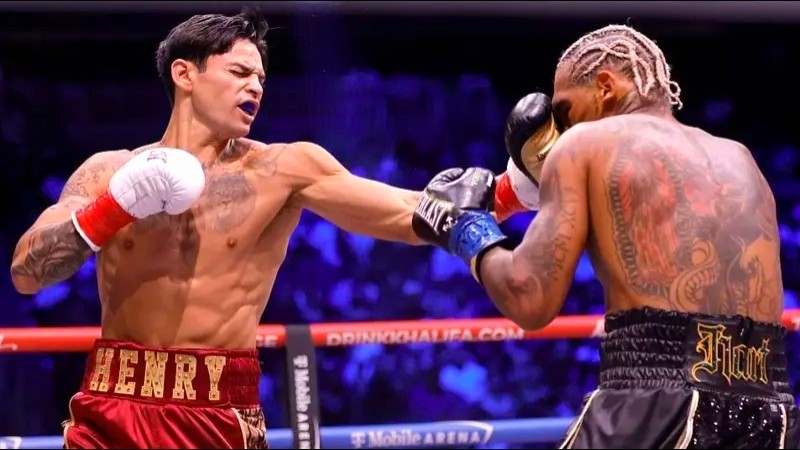
After the ninth round last week in Los Angeles, Victor Ortiz walked to his corner and pointed to his jaw — which had just been cracked in two places by underdog Josesito Lopez.
Ortiz knew something was wrong, because he couldn’t close his mouth, and because he was spitting thick streams fo dark red blood. After some heated discussion with his team, the former WBC welterweight champion indicated that his night was done.
Just like that, he conceded his narrow lead and withdrew from a fight in which he was an overwhelming favorite to win.
It set off a debate that rages every time a pro fighter decides to throw in the towel: Is quitting an acceptable option in one of the toughest athletic competitions in the world? Or is it the ultimate taboo in a sport which expects its participants to show bravery, endure pain and fight to the finish? Taboo?
Fighters have been quitting abruptly for as long as there has been fighting. The most famous was all-time great Roberto Duran’s surprise surrender to Sugar Ray Leonard in 1980.
After fighting decently for seven-and-a-half rounds, Duran turned his back, waved his hand — and quit. Duran was considered the toughest hombre in boxing — a hard-nosed scrapper from the streets of Panama who had thumped the bigger Leonard five months earlier.
For him to wave the white flag in such a meek, humiliating fashion was unthinkable to most purists.
Since then, there have been other notable surrenders. Oscar De La Hoya quit against Manny Pacquiao in 2008 after absorbing a vicious beating. Andrew Golota abruptly stopped fighting Mike Tyson in 2000 (and was berated by trainer Al Certo before being doused in beer upon exiting the ring). And in 1989, Roger Mayweather — Floyd’s uncle and trainer — stayed seated on his stool after getting whipped by Julio C?sar Ch?vez.
Last week, Ortiz’s promoter, Richard Schaefer of Golden Boy Promotions, wailed on those who criticized Ortiz for quitting. He said any fighter who steps in the ring is worthy of praise, regardless of the outcome. And he is right. Fighters don’t deserve to be condemned under any circumstance.
But they do deserve to be questioned.
Professional fighters are not looked upon favorably when they quit. Fair or not, that is the reality. For Ortiz, this was the second time. The first was in 2009, when he surrendered against Marcos Maidana despite having Maidana down three times. That time, it wasn’t a physical injury that made Ortiz stop fighting. He simply gave up.
Taking the two surrenders into consideration, the paying public — which already pays too much anyway — should have second thoughts about Ortiz when it comes down to plunking down money to watch him.?
Certainly, no boxing fan wants to see anybody die. But they do want their money’s worth. They do want to believe that if a fighter can continue, he will continue. With Ortiz, that determination is starting to get hazy, regardless of what his promoter says.
Pain is part of the game and not everybody can do it. Nobody forces people into pro boxing. Once in it, however, fighters should be held to a high standard of integrity and commitment.
So, is Ortiz a quitter?
No.
But it does make people wonder what’s going on in his head, and whether he will stop fighting again in the future. In which case, some boxing fans may save their money to watch someone else.
And that is perfectly justified.