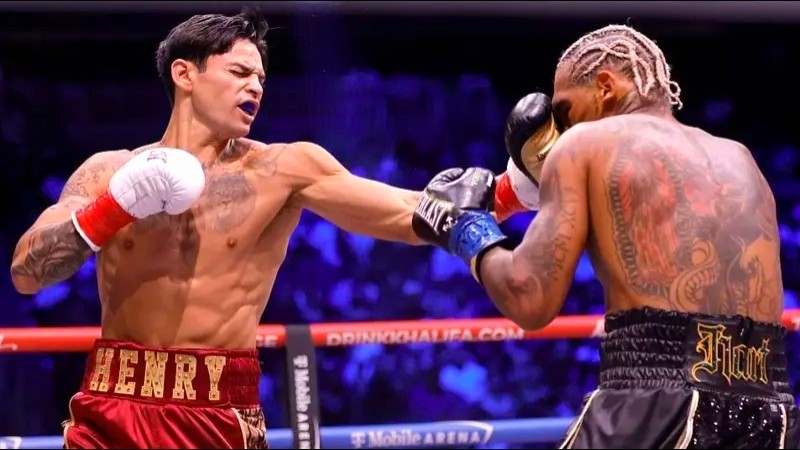
MANNY PACQUIAO is now the country’s greatest boxing champion, eclipsing other Filipino sports legends. He is a fearless fighter expected to make many other exciting conquests in the years to come. Today, however, Pacquiao takes on a formidable challenge: he wants to unite the Philippines. Unity is, of course, almost an entirely impossible task because it will require not only a herculean effort on Pacquiao’s part but also the elimination of political buzzards and deadwood currently surrounding him.
To succeed even more, Pac?quiao should select his fights with boxers who represent the arrogance of superpower nations. He must convince his politician patrons to rechannel the money they plundered through jueteng, smuggling and other underworld activities into low-cost housing projects, tree-planting and environmental preservation programs, and micro-financing small-scale entrepreneurship. He must convince legislators that street children are not criminals and should be saved from their impoverishment through nurturing, guidance and parental empathy, not through incarceration and criminal condemnation. Uniting this nation can only occur with our people’s elevation from their squalor. Squalor is what Manny Pacquiao understands as he once roamed the streets of Manila and General Santos City looking for food, possibly in trash bins, and brawling with street and slum toughies in his childhood.
Pacquiao can learn from legendary fighter Huo Yuanjia, founder of China’s Jingwu Sports Federation. “Fearless” is exactly the story of one of the world’s greatest fighters, who transformed martial arts into a philosophy, and who fought his way out of darkness and despair into world history. Huo’s father was a great Wushu fighter capable of winning his bouts but who refused to humiliate his opponents. Huo trains himself by beating schoolyard bullies. Fight followed fight until he became known as a skilled and powerful fighter. However, fame is accompanied by growing arrogance. Filled with pride, he even kills in vengeful spite and indignation, with no remorse, until he realizes that his victory in killing a respected fighter has cost him the lives of his mother and daughter, who were killed in brutal revenge. Fleeing his grief and shame, he meets people who do not know him nor care about his wealth, fame and past life, treating him only with their simple kindness and generosity.
In his spiritual sojourn, Huo realizes that sportsmanship and not brutality is the essence of martial arts. It is the spirit of brotherhood, not arrogance, which was his father’s message in restraining himself from humiliating his adversaries. He goes back to Tianjin, challenges American strongman O’Brien, who dismisses China’s fighters as “Sick Men of the East.” Huo’s victory startles the Foreign Chambers of Commerce because Huo deprived them of a winning fighter who brought them wealth, and more so because they were worried that Huo’s victory would fan the flames of anti-Western sentiment. Big business hatches a plan by pitting Huo with fighters representing the four major foreign powers in China. Instead of killing his opponents, which he could have easily done, Huo demonstrates the spirit of sportsmanship.
That fateful day in September 1910 is something that only legends can accomplish. China then, like the Philippines today, was a cauldron of civil unrest whose people had been subdued by a lengthy period of military defeats and foreign occupation. The Treaty of Nanjing opened China to hungry Western traders, while the opium trade flourished. Chinese historians call this period as “the time of unequal treaties” as it was a time of unprecedented degradation for China and its people. National morale was low with government corruption, colonial dependence and crime at their peak. Against this uncertain background, only historical legends can inspire and unify an entire nation, and even after their deaths, will there be continuity in the transformation of people’s lives. Huo rose to the challenge of his time.
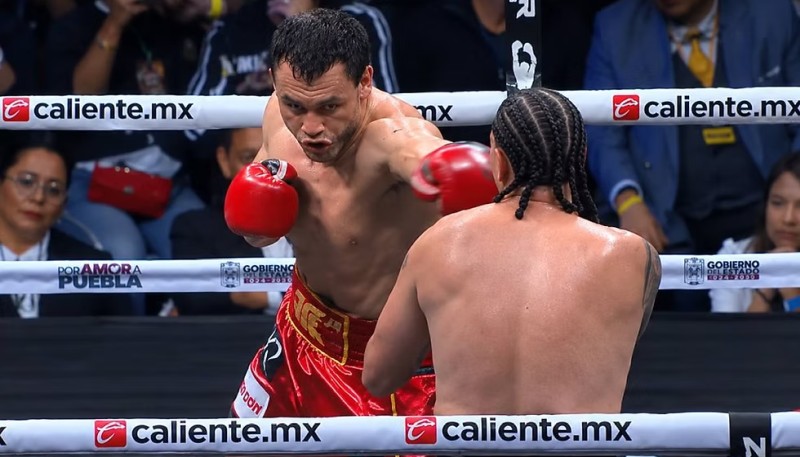
Pacquiao is now in an enviable position to confront the challenge of elevating his people from misery and squalor to national pride and dignity. Boxing commentator Frank Cos?tarelli Jr. articulates: “Boxing is as brutal as it is unforgiving and makes no distinction when claiming its victim, many times giving little or no warning, the very best are not exempt. Each boxer’s clock is different. Some mature or peak faster than others. Some are like meteors racing against the night sky or shooting stars shining brightly and then fading. A fighter is always one punch away from oblivion and the effects of that one punch may not be short term.” Matthew Hurley himself observed about Erik Morales: “There was a sadness there seeing such a proud warrior who had given up so much to the sport he has grown up in since first placing the gloves up in his father’s gym at five years old, humbled, but in the end, all the great ones reach this point. Its inevitably is just one of the many reasons why boxing, at its highest level, is so compelling.”
Manny Pacquiao is destined for this kind of oblivion. But he may prove Costarelli and Hurley wrong by rising to the same legendary greatness as Huo Yuanjin. In Japan, the movie Fearless has been entitled Spirit. But being a fearless fighter and being a spirit that inspires the unification of a nation are two different things. Pacquiao has a vast chasm to cross between fearlessness and true legend.