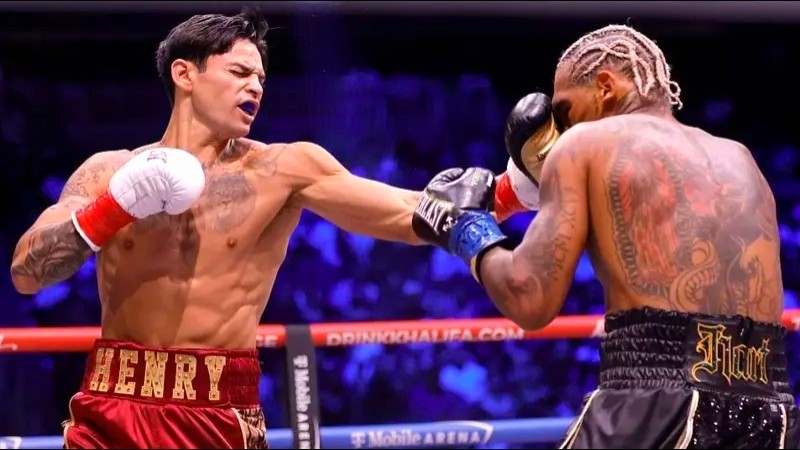
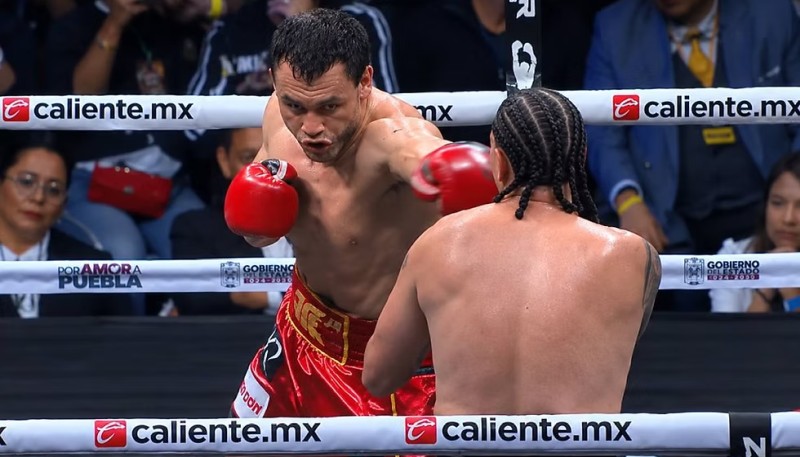
ONE lesson truly stands out from Manny Pacquiao’s second fight with Erik Morales: To succeed in an endeavor, there’s no substitute for rigorous discipline and training. Pacquiao demonstrated this by undergoing three months of training in the United States where, it must be presumed, he submitted himself to the necessary discipline. His performance in that fight showed a marked difference from his performance in the first fight.
The same lesson can be drawn from the performance of our champs in last year’s Southeast Asian Games. Many of our top athletes prepared themselves for the Games by training in China (facilitated to a large extent by the much-maligned Mike Arroyo, but which was not even grudgingly acknowledged by the extremely hostile media).
* * *
The role of preparation and professional training was underscored the other day at the press conference of “The Lettermen,” the romantic balladeers of the late 1950s and 1960s, who are performing tonight at the Manila Hotel. At one point, they sang our much-loved “Ikaw” a capella and we were amazed at their mastery of Filipino pronunciation — the usual American twang was missing.
Tony Butala, the only original of the three Lettermen, told us that in their long singing career they have always made it a point to pronounce foreign words in their songs as correctly and faithfully as possible. But do you know the meaning of what you had sung? They were asked. They instantly sang the English translation, which, of course, was not quite as nice to listen to. Preparation and training are things that we Filipinos are not big on, but should be.
* * *
The Filipino nation, desperate for heroes, went wild for homegrown champ Pacquiao. The other day, we got another hero, albeit a dead one. Capt. Aniano Amatong of the Philippine Air Force chose to first steer his defective aircraft away from a populated area in Paombong, Bulacan instead of ejecting from his plane, thus crashing to his death in a fishpond. Before that, he had ordered his co-pilot to eject.
Amatong’s heroism comes to light in the wake of reports of a coup plot allegedly being hatched by young military rebels who recently escaped from detention; and of an ongoing recruitment effort to have more young officers join the plot. His selfless and noble feat presents such a marked contrast to the lust for power of the young coup plotters.
Sadly, these plotters, like the first generation putschists, don’t seem to give a damn about the harm that they might cause an economy just turned away from an Argentine scenario, and now moving toward recovery.
* * *
Luckily, these young plotters are, perhaps, still the minority in the Armed Forces of the Philippines (AFP). Over two months ago, this columnist was invited to be a member of the board of judges in the final stage of the Metrobank Foundation’s “Search for the Outstanding Philippine Soldiers 2005,” chaired by Rep. Arthur Defensor of Iloilo. What impressed the judges most about the two-dozen candidates drawn from the three major services’ officers’ corps and enlisted personnel ranks was their quiet dedication to duty and love of country — away from the media limelight that has spoiled the Oakwood mutineers and, before them, the gang of Gregorio Honasan.
I was particularly impressed with how the Air Force personnel tried their best to keep those planes and helicopters flying by improvising, cannibalizing parts and stretching their ingenuity to incredible limits.
* * *
One of the winners by a near-unanimous vote was Capt. Giemel Espino. He pilots the only rainmaking plane in the AFP. At great risk, Espino and his one-man crew, Sgt. Alvin B. Alcantara, charge into big rain clouds in a primitive single-engine plane and seed the clouds to induce rain in drought-infested areas of the country. Their plane is not designed as a rainmaking plane and does not possess adequate navigational equipment; but this does not deter them from helping to save crops and huge amounts of money for our agriculture sector. I shall write more about Captain Espino.
Suffice it to say that here is one young man who answers to the call of duty without regard for his personal safety. At my request, his unit has submitted a proposal for the acquisition of more sophisticated rainmaking planes, each costing $340,000. I shall forward this to Speaker Jose de Venecia so that, perhaps, the House could allocate some funds for this urgent need.
* * *
President Gloria Macapagal-Arroyo has registered a negative 15 points in the latest survey by the Social Weather Stations group, but it seems that, like the proverbial prophet, she is better appreciated by Filipinos abroad. My Sydney-based friend Oscar de Guzman e-mailed the results of an informal poll conducted last Jan. 13 in a Filipino program called “Talakayang Bayan,” aired on SBS, a federal government-funded radio station heard all over Australia.
De Guzman said “the last 10 minutes were allocated for listeners to call in and express their views on whether GMA [Ms Arroyo] should stay in office until 2010 or resign.” The callers were all women and “100 percent expressed their support for GMA to continue to the end of her term.” Most of the comments centered on “how she improves the value of the peso,” while most asked, “Who will replace her?”
I understand that this overwhelming support for President Arroyo is common among overseas Filipinos, in sharp contrast to the way she fares poorly in surveys at home. I wonder if this has any connection with what Speaker Jose de Venecia observed in our radio program last Sunday: that most of our overseas workers work in countries with parliamentary systems and know how well the parliamentary system works, which is why Ms Arroyo’s stand on Charter change has their support. If this is the case, I told De Venecia in jest, perhaps, the plebiscite on the parliamentary shift should be conducted among Filipinos overseas rather than among Filipinos here.