Driving into Las Vegas early Saturday, the sense of something special later that night loomed despite the dozens of speed traps along the only route from California.
A billboard advertising the second fight between Manny Pacquiao, of the Philippines and Erik Morales, of Mexico, welcomed motorists driving into the desert gambling Mecca.
Pacquiao and Morales had fought almost a year ago with the taller Mexican fighter using his experience and long arms to deflect the knockout punch of his Filipino counterpart. The Tijuana fighter captured a unanimous decision that night.
But things had changed. Morales lost a decision against a slick-fighting Philadelphia fighter and for the first time in years seemed to lose that edge. Even his eyes seemed weary that night in September.
Unlike the Tijuana boxer, Pacquiao seemed more animated with a spark of energy that showed as he punched the mitts, pummeled the heavy bag or swished punches in the air while shadow boxing. Energy was bristling in his every move at the Wild Card Gym in Hollywood leading up to the fight.
Inside the vast Thomas & Mack Center on fight night, just before the main event, a roar swept into the arena on one side from rabid Mexican supporters of Morales, then an equally deafening roar from Filipino fanatics of Pacquiao. Seldom have I heard anything like it.
“It’s an incredible crowd,” said Graham Houston, a columnist for Boxing Monthly, a British published magazine.
Once the fighters began unloading their punches without reservation or concern for weariness, it was obvious one of the participants would be unable to continue.
But who?
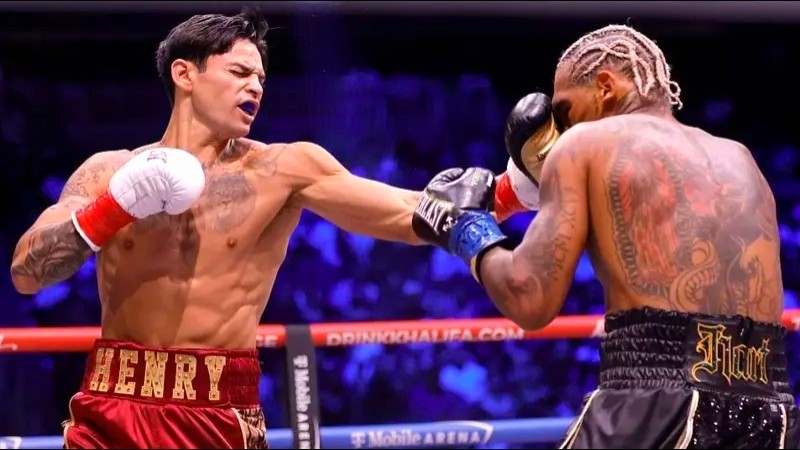
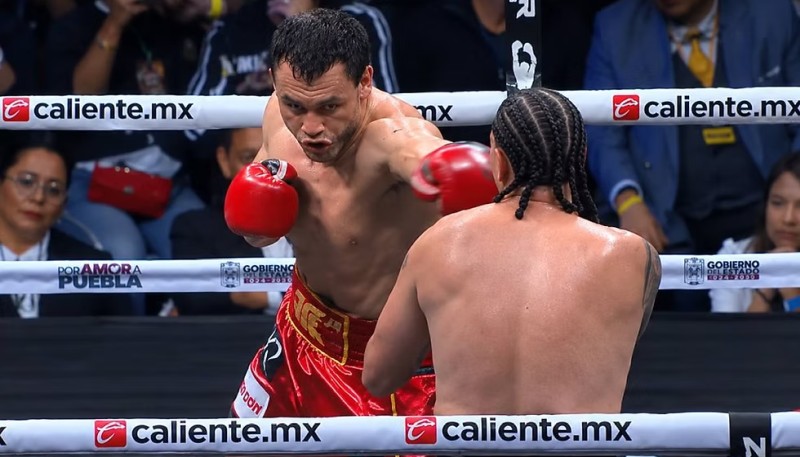
Morales had his moments early in the fight by using his longer arms and stiff jab to keep Pacquiao from getting his timing. Just when it seemed he was gaining an easy round the Filipino boxer with that left-hand howitzer would connect with frightful force. Stunned and groggy, Morales would suddenly shake any semblance of pain and strike out with uppercuts and left hooks and reverse the momentum.
Boxing writers looked at each other in press row surprised at the fighters’ pace, the skills, the inability to detect an advantage between the two junior lightweights. The crowd let out sighs and cheers in a madcap display of puzzlement.
For nine rounds both fighters refused to accept the other as his conqueror and willed themselves to dish out more blows, more counters and more punches. Then suddenly Morales went down.
A crowd of 14,000 gasped. Had the great warrior known as “El Terrible” actually slumped to the floor from a punch? After a count of eight Morales rose to fight again as referee Kenny Bayless wiped off his gloves. A few seconds later, it was apparent the first knockdown was not an aberration. Morales went down again.
The Filipino fighter’s supporters erupted in cheers for a few minutes. But suddenly, when the sight of Morales sitting with his head down on a stool became visible to the crowd, a respectful silence ensued. All of those in the arena had realized they had witnessed a gargantuan battle. It was something to talk about to their grandchildren whether they live in Mexico, the Philippines or Montpelier, Vt.
Every hero needs an antagonist and Morales served that role to the hilt.
“Morales fought like a warrior,” said Gabriel Bautista, who traveled across the Pacific Ocean to see his hero Pacquiao. “Now it’s Manny’s turn to try and be like Morales.”
There were many other Filipino fans like Bautista shaking hands with Mexican fans. No gloating, no boasting, just two very large groups of boxing fans who converged in Las Vegas to witness one great contest.
“He beat our guy the right way,” said Manuel Armenta, who traveled from Mexicali, Mexico, to see his hero Morales. “Manny Pacquiao is a great fighter.”
That seemed to be the sentiment among most supporters of Morales.
Ralph Lardizabal contributed to this column.