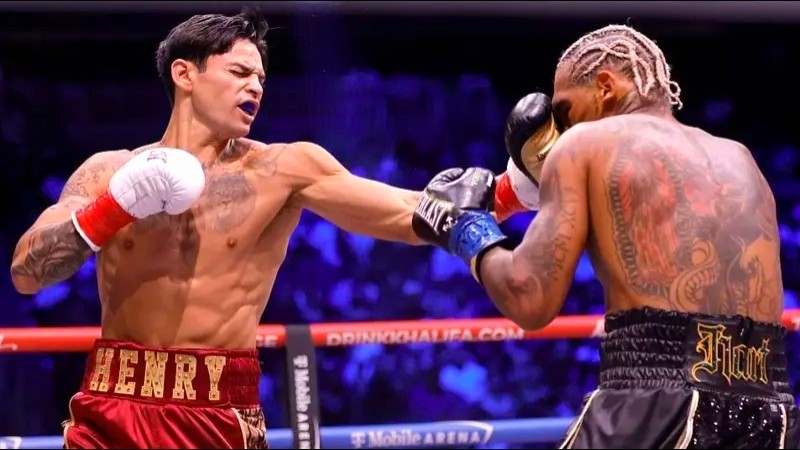
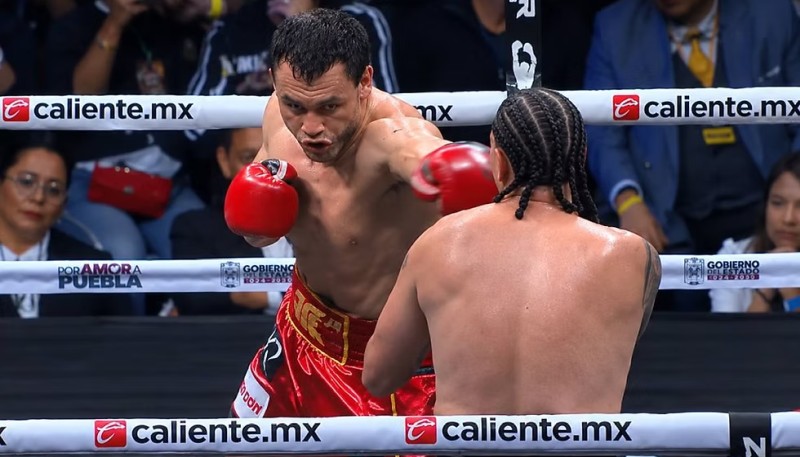
ON Saturday, January 21 (Sunday, January 22, Manila time), Manny Pacquiao squares off with Erik Morales in Las Vegas, Nevada, to avenge his defeat at the hands of the Mexican last year. While Pacquiao may attribute a lot of significance to the return bout, the pride of General Santos has already assured his place in the pantheon of international boxing greats.
Pacquiao has worn the World Boxing Council (WBC) flyweight crown and the IBF world super-bantamweight diadem and is the current WBC international super-featherweight champion, having knocked out Hector Velasquez in September 2005.
But the boxing world really stood up and took notice of Pacquiao after his series of bouts with three of Mexico’s greatest fighters, knocking out one, battling the other to a controversial draw and losing by only a point to the third.
In November 2003 in San Antonio, Texas, Pacquiao stopped Marco Antonio Barre?ra, considered one of the strongest featherweights in the world, in the eleventh round. In May 2004 Pacquiao met Juan Manuel Marquez, holder of the WBA and the IBC featherweight world titles. Pacquiao knocked down Marquez thrice in the first round, but Marquez fought back and managed to salvage his crown in what many spectators felt was a bout that Pacquiao had won.
In March 2005, at the MGM Grand, Pacquiao lost to Erik “El Terrible” Morales in a bloody 12-round bout that went to the scorecards. Some questions were raised about the scoring, but the boxing commission refused to entertain a protest.
Pacquiao is now acknowledged by boxing buffs as one of the best boxers in the world, pound for pound, and deserving to stand alongside such Filipino boxing legends as Francisco “Pancho Villa” Guilledo, Ceferino Garcia and Gabriel “Flash” Elorde. All three have been inducted into the world’s Boxing Hall of Fame.
Going by the name of the Mexican revolutionary leader, Pancho Villa was described “explosive and relentless, a miniature Jack Dempsey, with a strong punch in either left or right.” Campaigning in the US, he was the most prominent of the early Global Pinoy pugilists.
On June 18, 1923, Villa beat Jimmy Wilde to become the world flyweight-boxing champion. He went on to defend his crown up to July 1925 when he lost by KO to Jimmy McLarin. Villa insisted on fighting despite suffering from an infected tooth. Ten days later, he died of blood poisoning.
Nat Fleischer, founder of Ring Magazine, and boxing historian Charley Rose have ranked Villa the “Number Two All-Time Flyweight.” Villa was inducted into the World Boxing Hall of Fame in 1961 and into the International Boxing Hall of Fame in 1994.
In the mid-1930s Ceferino Garcia of Tondo, Manila, began fighting as a welterweight, winning a championship by knocking out Barney Ross in 1937. Deciding to fight as a middleweight, Garcia traveled to the US and won the title in 1939 in New York by knocking out Fred Apostoli.
Feared for his “bolo punch,” Garcia successfully defended his title twice before losing it in 1940. He was the heaviest Filipino ever who became a world boxing champ. Garcia was inducted into the Ring Magazine Hall of Fame and into the World Boxing Hall of Fame in 1981.
Gabriel “Flash” Elorde, a native of Bogo, Cebu, captured the admiration of international boxing fans when he decisioned world featherweight champ, Sandy Saddler, in a nontitle bout in July 1955. In January 1956 Elorde took on Saddler again, this time for the latter’s world title. In a bruising battle, Elorde lost to the wily champion who used every dirty trick in the book to cut his hardy Filipino opponent. The fight was stopped by the referee on the 13th round. Elorde was bloodied but was ahead on points when the fight was stopped.
Four years later, in March 1960, Elorde won the WBC world junior lightweight title in March 1960 by knocking out American Harold Gomes in a classic encounter at the Araneta Coliseum in Quezon City. He went on to become the longest-reigning Filipino world boxing champion, defending his title in 10 bouts over a period of seven years.
In 1974 the World Boxing Council named Elorde “the greatest junior lightweight boxing champion in WBC history” for winning 79 bouts in his professional career. In 1993 he became the first Asian inducted into the New York-based International Boxing Hall of Fame. He was also enshrined into the World Boxing Hall of Fame.
There are many other Global Pinoy pugilists whom we shall write about in future columns. But this week, the spotlight rightfully belongs to Manny “PacMan” Pacquiao. The odds in Las Vegas appear to be against him, which may be fine for the hardy warrior. Being cast as underdog appears to bring out the fiercest best in him. He has vowed to give Morales a fight neither of them will forget, and befitting a candidate for the world’s Boxing Hall of Fame.