“I ALWAYS turn to the sports pages first. They record people’s accomplishments; the front page, nothing but man’s failure.”
Those were the immortal words of Earl Warren, former chief justice of the US Supreme Court. Thirty-seven years after he said them, his words still ring true.
In a nation badly in need of heroes to emulate and good tales to tell, the Philippines turned to its athletes to soothe the wounds inflicted by political noise and economic uncertainty.
It has been a banner year for Philippine sports, thanks to the incomparable Filipino athlete, who made 2005 a year he will recall with fondness a long time from now.
For nine days of friendly, but intense competition in the 23rd Southeast Asian Games, the entire Filipino nation watched in awe as homegrown athletes and a sprinkling of Fil-foreign campaigners climbed the podium with gold medals adorning their necks while the national anthem played in the background and the Philippine flag proudly danced in the wind.
In the end, the Philippines punctuated its campaign with a harvest of 113 gold medals, more than enough to seize the overall championship it missed by only one gold 14 years ago in 1991.
The 23rd SEA Games was won because the athletes did their best despite economic and political uncertainties and because sports officials and big business joined forces to make the Games a resounding success.
Outside of the SEA Games and in other arenas, Filipinos excelled and earned accolades from across the globe. In particular, our stout-hearted boxers and highly skilled pool players continued to amaze the sporting world with their triumphs. Again and again, Filipino athletes proved they are world-beaters.
The victories of 2005 overshadowed a few disturbing events along the way, specifically the unfair accusations of cheating in the SEAG, the absence of basketball in the biennial meet, the La Salle brouhaha in the University Athletic Association of the Philippines and the highly questionable return of the Fil-Ams in the Philippine Basketball Association.
With only a few days to go, the year 2005 will end with the euphoria of a hundred triumphs and an even brighter hope for a better future for Philippine sports.
Undisputed champions
Several months before the 23rd SEA Games, the capability of local sports officials, led by the Philippine SEAG Organizing Committee (Philsoc) and the Philippine Sports Commission, to conduct the games was in question, mainly because there was very little money to spend for equipment, training and overseas stints of the athletes and the renovation of venues.
Philsoc pegged the expenses for the Games at roughly P1 billion, a huge amount considering that the government’s cash-strapped condition and the fact that PSC itself also depends on dole-outs from the national government. As in 1991, Filipino patriotism was put to a severe test, and Filipinos in business and almost all other sectors of society passed the test with flying colors.
Through the First Gentleman Foundation, which spearheaded the gargantuan task of raising funds for the SEAG, several giant firms responded to the call.
Slowly but surely, the money trickled in and the laborious work began. Venues were spruced up and athletes began serious training.
In June, several athletes went to China to further hone their skills. They went in batches, with some athletes opting to go elsewhere where they can pit their skills with the best in the world.
Back home, preparations were in full swing. Cebu, Bacolod and Subic and several other satellite venues were tasked to host some of the games, a strategy that worked in the organizer’s favor since these venues helped source out the funds for local operations.
The preparations were frantic but earnest and some of the venues in Manila have yet to be renovated when November set in, but the signs were encouraging.
When the athletes came, the country was ready. The opening ceremony, held at the Quirino Grandstand at the Rizal Park, was simple but colorful and depicted the shared heritage among Southeast Asian nations.
And from the day the Philippines won its first gold medal, courtesy of long jumper Marestella Torres, Filipino athletes were unstoppable. There were golds won in the water as diver Sheila Mae Perez, swimmers Miguel Molina and Miguel Mendoza, rower Benjie Tolentino and Pinoy traditional boat racers picked up the golds one after the other.
Outside of the water, the wushu artists combined for the largest haul of 11 golds; the boxers, thanks to four hardy women, beat the Thais to the race for overall honors in the event with eight golds, and track-and-field stars missed their target by one and won nine. Billiards and snooker aces grabbed eight, taekwondo jins won six, wrestling had five and the bowlers added four.
There were noteworthy performances elsewhere, with long-jumper Henry Dagmil and hammer thrower Arniel Ferrera setting new SEAG records, Perez, Tolentino, Molina and billiard ace Alex Pagulayan accounting for three gold medals each, while gymnast Roel Ramirez and tennis Fil-Am import Cecil Mamiit winning two each.
But the Filipinos had their share of heartaches in the Games, too.
Gymnast Christa Santos slipped of the beam and was injured, equestrienne Mikee Cojuangco-Jaworksi fell of her horse and track star Eduardo Buenavista was disqualified in the 5,000m run.
The heartaches extended from the playing arena to the international stage. Even before the first whistle was blown, Vietnam’s head of delegation Nguyen Hong Minh accused Filipino sports officials of conspiring with other countries to “rig” the Games, while Thailand Prime Minister Thaksin Shinawatra scored the Philippines for engaging in spotty officiating.
Denials and hand-washing followed, but the accusations proved unfounded and were dismissed as fertile imaginings of sore losers.
At the close of the Games, the Filipinos celebrated with plenty of good reasons — 113 golds, 84 silvers and 94 bronze medals — to finally become the undisputed champions in the region in the Southeast Asian Games.
Basketball — the gold that got away
The Philippines may have won the overall championship in the SEAG, but it will also be remembered as the Games, where basketball was not played — and was sorely missed.
Basketball was a sure gold in the SEAG as the Filipinos were unbeaten since 1991, but the Philippines lost its chance to defend its crown when politics intervened and turned a beautiful sport into an ugly intramural.
The controversy began when the RP team selection lost to a commercial team in a tune-up game several months ago, prompting the Philippine Olympic Committee to call for the suspension of the Basketball Association of the Philippines.
The move was led by no less than the POC president, Jose Cojuangco, who gathered his forces to force the BAP to its knees. The BAP was subsequently expelled by the POC general assembly, a move protested by the basketball association. The news reached the Fiba, which suspended the Philippines from joining international events but still recognized the BAP as the legitimate basketball association in the country.
The BAP’s newly elected president Jose Lina tried to reach out to the POC to no avail. Lina’s subsequent efforts were also snubbed, prompting the BAP to go to the courts. It won a decision that tasked the POC to recognize the existing basketball association, but with time running out, basketball was finally excluded in the SEAG calendar.
Like most Filipinos, other Southeast Asian countries were disappointed with the scrapping of basketball, especially Malaysia, the women’s defending champion, but eventually had to grin and bear it, while hoping that the POC knew what it was doing.
Boxing and billiards heroes
Basketball is one of the four B’s in Philippine sports, the other three being boxing, billiards and badminton. They are, at the moment, the most popular sports in the country. But with basketball relegated to the sidelines in the SEA Games, boxing and billiards seized the moment and polished their heroes to perfection.
The boxers, for instance, made their mark during the year with impressive triumphs in Los Angeles, California and will continue to stamp their class in scheduled fights for the coming year.
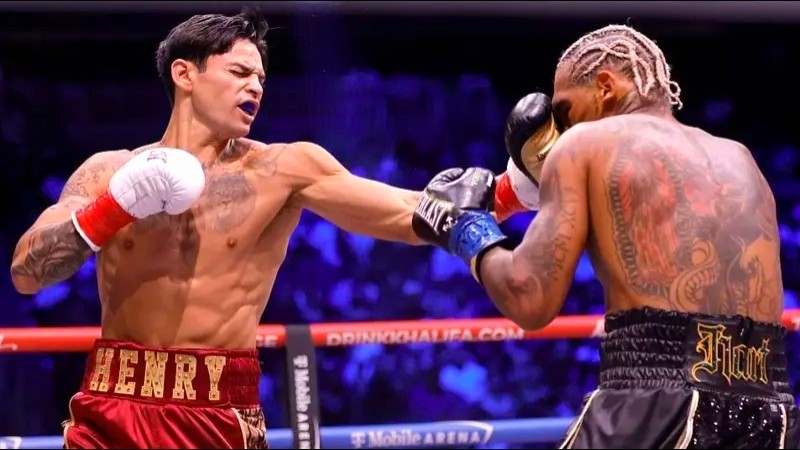
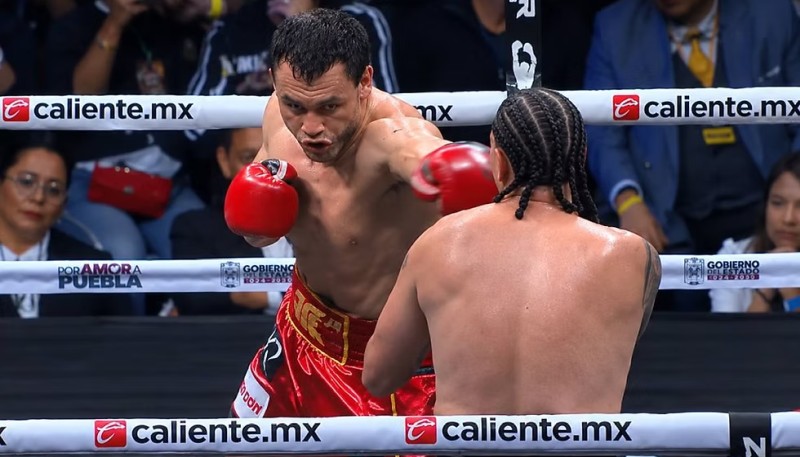
In one Glorious Sunday in September this year, three Filipino pugilists rocked the international boxing community by demolishing their opponents in a double-headliner featuring Pinoy boxing superstar Manny Pacquiao and Mexican ace Erik Morales.
Morales lost some of his glitter when he succumbed to American Zahir Raheem in a 12-round decision, while Pacquiao led an all-Filipino show, highlighted by victories of promising fighters Rey “Boom Boom” Bautista and Fil-Hawaiian Brian Viloria.
Bautista, a neophyte in the international boxing scene, started the carnage with a third-round stoppage of Columbia’s Felix Murillo. Viloria was even more devastating. The Fil-Hawaiian stepped up his attack right in the first round and caught Mexico’s Eric Ortiz with a vicious right that floored the Mexican, who was counted out.
Not to be outdone, Pacquaio scored a clinical sixth-round demolition of Hector Velazquez of Mexico and later declared that he’s ready for a rematch with bitter rival Morales.
Even Pacquaio’s younger brother, Bobby, got into the act in 2005, scoring a split decision over another Mexican, former world champion Carlo Hernandez in Las Vegas in October this year.
Bautista ended the year with two more victories. Barely three months after his return to local soil, the Boholano stole the thunder from Obote “Thunder” Ameme wth a second-round KO of a scheduled 12-rounder right in front of his provincemates to retain his World Boxing Organization Asia-Pacific bantamweight title and only recently this month, won via a unanimous decision over a tough Gerardo Espinoza of Mexico despite being knocked down in the second round.
Pacquiao himself is in the thick of preparations in the US for his upcoming battle of attrition against Mexican hombre Morales on Jan. 21 at the Thomas & Mack Center in Las Vegas.
The boxers’ triumphs in 2005 created a huge impact in the international scene and with Pacquiao lighting the path anew in January, the Filipinos hope that the victories will be sustained throughout the coming year.
And while the boxers were busy tormenting the Mexicans, Filipino billiard aces were outwitting all comers from all over the globe.
A few days after the 23rd SEA Games, Efren “Bata” Reyes announced his return to form after ruling the International Pool Tour King of the Hill 8-Ball Shootout held in Florida. Reyes beat the legendary Mike Sigel in the final to bag his biggest purse of $200,000.
With the win, Reyes, who recently underwent an eye surgery, sent a chilling message to his rivals that he remains the Magician of the pool.
Also this year, Fil-Canadian and 2004 World champion Alex Pagulayan won the prestigious US Open at the expense of another Filipino legend, Amang Parica, 11-6, in Virginia, USA. Pagulayan capped a banner year by winning three gold medals in the SEA Games, a clear indication that his star will continue to shine in 2006.
Wins, losses and scams
In other fronts, Philippine sports was just as vibrant — and controversial as well.
Basketball, the country’s most popular diversion, continued to produce new faces, new champions and even new issues.
In the Philippine Basketball Association, San Miguel topped the Gran Matador PBA Fiesta Conference at the expense of Talk N Text, 4-3, while in the Philippine Basketball League, Welcoat, starring Most Valuable Player Mac Cardona of La Salle, downed Monta?a, 3-1, to capture the Unity Cup.
Right after the conference, Cardona left the PBL when he was drafted in the PBA along with an array of marquee players. He joined no. 1 overall pick and teammate Anthony Washington, Ni?o Canaleta, Denok Miranda, Cesar Catli, Leo Najorda, Larry Fonacier, Paolo Bugia and Mike Holper in the 18-man draft field. The draftees also included Alex Cabagnot of University of Hawaii.
Cabagnot would later be embroiled in a controversy after he abandoned the Realtors right before the PBA season, but was prevailed upon to return after the team talked to his parents.
In collegiate basketball, the Arwind Santos-powered Far Eastern University, swept La Salle in two games to capture the 2005 UAAP crown. Santos was eventually voted as MVP.
It was Letran’s turn to shine in the National Collegiate Athletic Association as it dislodged defending champion Philippine Christian University, 2-1, for the crown, but it was St. Benilde’s Jay Sagad, who emerged as the MVP with his gutsy plays and all-around brilliance.
In both leagues, schools accusing referees of spotty officiating were abound, but the biggest controversy to hit the sports headlines was the allegation that La Salle officials cheated with regards to the eligibility of its players.
La Salle itself broke the news, and with pressure mounting, five La Salle officials offered to resign even before the board can begin its investigation. As of this writing, the board has yet to submit its finding, and the guilty party, or parties, remain unidentified.
While basketball continues to occupy most of the sports pages, a few other sports disciplines managed to encroach into the public’s consciousness.
Badminton, in particular, sustained its popularity, thanks to an international tournament, the MVP Cup, named in honor of PLDT chief Manny V. Pangilinan, which lured the world’s top badminton players to play before thousands of appreciative fans.
The tournament was a success in terms of public awareness, but it also made us aware of our shortcomings in the game. Filipino players led by Kennievic Asuncion fought hard but it was clear that it will be years before we can be at par with badminton powers from Indonesia, China and other European countries.
Motorsports — from karting to circuit-racing — continued to zoom past the country’s beaten track from Batangas to Subic, even down in Mindanao where off-road racers do their stuff and in Palawan, where motocross races are held regularly. These paved the way for the likes of Tyson Sy, Michele Bumgarner, Glenn Aguilar, Pepon Marave and Carlos Anton to become household names among motorsports fans.
As Philippine sports confronts a new challenge in the year that’s about to unfold, it will do so with a good measure of confidence it gained in 2005, strengthened by the belief that Filipino athletes — despite or because of the odds — can achieve beyond what is possible, for a shot at greatness in the world stage.