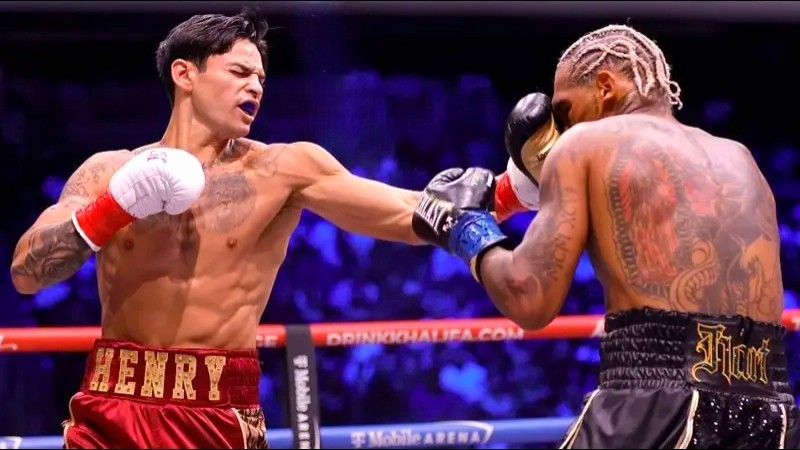
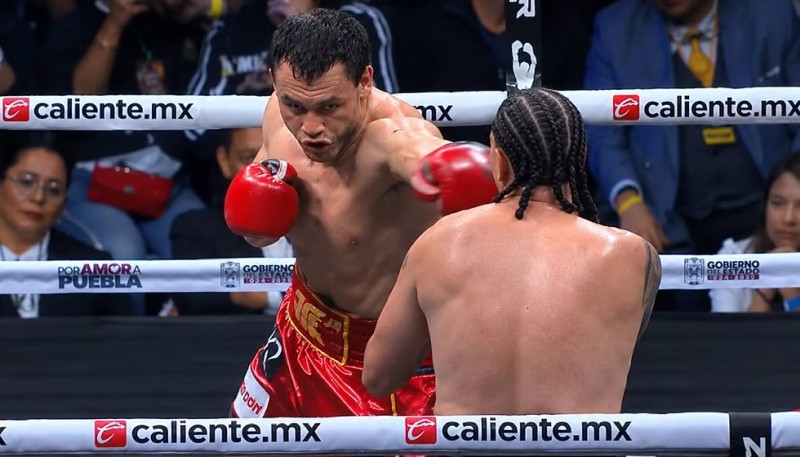
Well, well, well. Looks like Juan Manuel Marquez has Manny Pacquiao?s number after all. The problem for Marquez on Saturday night, however, was that the judges did not give him the numbers he needed to get the decision after the 12 rounds of hurt JMM put on the Pacman in their third encounter.
Before the two future Hall of Famers stepped into the ring, conventional wisdom (with which I agreed) held that Pacquiao would win decisively this time, after drawing with and winning a close split-decision over Marquez in their first two fights. During the three years that have passed since their second bout, Pacquiao has gotten bigger, stronger and better. Marquez has not. That should have tilted the balance decisively in Pacquiao?s favor. But it didn?t. As the old saying goes, that?s why they fight the fights.
For the second time in a row, Pacquiao heard boos from the crowd after the fight was over. In the case of his last bout ? an easy points win over Shane Mosley ? one could argue that Mosley?s reluctance to mix it up sparked the spectators? ire. Not this time, though. This time, the ticket-holders were incensed because they believed the judges had robbed Marquez of an upset win over his archrival. Two of the officials scored the bout in Pacquiao?s favor; the other called it a draw. On the scorecard of public opinion in the immediate aftermath of the bout, Marquez was declared the unofficial but deserving winner.
What, then, did the judges fail to see that was apparently so obvious to so many others? Conversely, what did the judges see that slipped past the naysayers?
It could well be that when a dominant fighter finds himself in an unexpected life-or-death struggle, he becomes a victim of his own reputation. After his close 2008 contest with Marquez, Pacquiao turned into a force of nature, blowing out some opponents (Ricky Hatton), beating others down (Miguel Cotto), or turning them into passive survivors (Mosley). Pacquiao could not control Marquez in any of those ways on Saturday, however. Marquez gave as good as he got, and then some. He made Pacquiao seem, if not an ordinary fighter, then much less than a superstar.
But was making Pacquiao look like less than the No. 1 pound-for-pound fighter in the world enough to secure a victory? The judges didn?t think so. A vociferous portion of the public demands to differ.
Pacquiao is still the WBO welterweight champion. But he is still not the champion of Marquez, despite holding 2-0-1 advantage over the Mexican marvel in their three fights.
Against just about all other fighters, Manny Pacquiao can do whatever he wants to do. Against Juan Manuel Marquez, he can?t. Saturday?s fight proves that this will always be the case, no matter how many times they fight, and no matter what the official win-loss tally may be.
Charles R. Saunders is the author of several books including Sweat and Soul: The Saga of Black Boxers in the Maritimes from the Halifax Forum to Caesars Palace, as well as the Imaro series of fantasy/adventure novels. Considered by many to be one of the leading authorities on boxing in Canada, he is the current Vice-President of Boxing for the Society of North American Sports Historians and Researchers. His latest novel, Damballa, which centers around a fictional heavyweight title bout, is available at www.gopulp.info.