As my wife and I entered the Gabriel “Flash” Elorde Gym, we were handed a copy of the program of the fight card. As I read the heading, the words spoken years back by a church minister vividly rang in my ears, “There is no charity in boxing as a fighter’s intent is to inflict the utmost damage to the other in order to win.”
These words came to mind since the fight card was dubbed “Boxing Kontra Droga” (Boxing Against Drugs). I can see charity – or love – in this boxing event I have been honored to be part of as a judge.
Knowing that a problem area of society would benefit from the “blood, sweat and tears” of the fighters fighting that night, I felt another kind of special appreciation for their sacrifices.
There is charity inside, beside and outside of the ring.
Inside the ring
” Boxing rules are set to protect fighters. The 3-knockdown rule keeps a fighter from absorbing unnecessary punishment.
” I don’t know if my memory failed me. In one of his fights, Muhammad Ali, was dishing out punches to an already defenseless opponent, called the attention of the referee to intervene and stop the fight to make him stop punching. If that is not charity from a fighter to an opponent, I don’t know what is.
At ringside
” More than a few times GAB ring physician Nasser Cruz examined cuts suffered by fighters that night. On his advice, the referee either motioned the fighters to continue or waived the fight as over. In the first case, it was charity to the audience who still wanted to see more exciting action from the fighters who could still go on with the fight. In the second, it was charity to a fighter whose injury had it gotten worse, preclude him from continuing to fight for his livelihood.
” As a judge, I felt somebody whisper in my ear to be soft-hearted and be favorable to a half black fighter in one of the bouts. It dawned on me that this fighter is an abandoned son of a Black American service man who may not have seen his father yet, and his father might not even be aware he had sired a son in the vicinity of the US Clark Air Force base Angeles City, Philippines.
I recalled William Magahin, a half Black American fighter from Angeles, Pampanga, Philippines who was determined to find his father through boxing. He became a World Boxing Federation welterweight champion in the ’80s and with his success he was able to trace the whereabouts of his absentee father in the US. Aged and already stricken with the ailment which eventually caused his death, William’s father saw and touched his son, and vice versa. This would’ve been difficult, if not impossible, had William not taken up boxing.
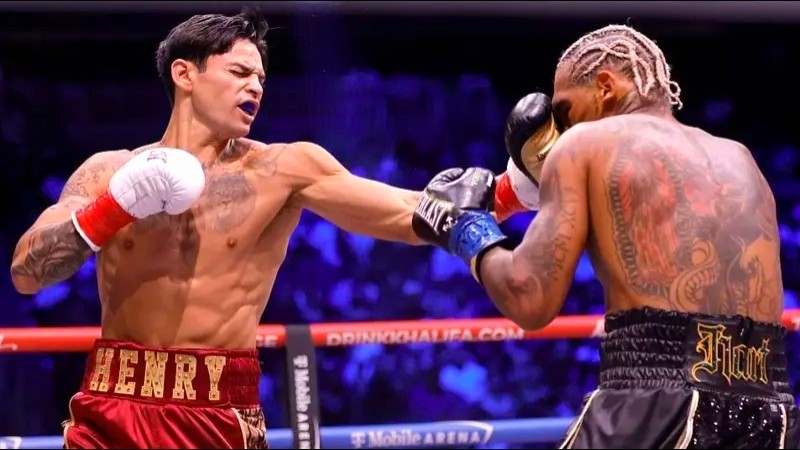
But as a judge, I maintained to be a fair one in that fight as in all others. Charity should be extended to both fighters in the ring. At the end of the fight, the total of my scorecard showed welterweight Sugar Ray Estrada, the half black American, draw with his opponent, Anthony Rosal. While one judge saw it for Estrada by a slim margin, the fight was declared a majority draw when the 3rd judge scored it a draw as well. Incidentally, that fight won the special cash price for the “best fight of the evening” donated by Laura, the widow of the late Philippine boxing hero, Gabriel “Flash” Elorde.
I just hope Estrada’s likewise absentee father, wherever he is in the US most likely, would exercise charity as well.
Outside the ring
” It’s humbling to read accounts of Oscar De La Hoya and Vernon Forrest doing charitable work outside of the ring. We have read likewise in the early days of Ricardo Mayorga’s welterweight reign that he was donating a portion of his boxing earnings to provide electricity to a village in his community.
” Buboy Fernandez, Manny Pacquiao’s trainer and best friend, attests to Manny’s charitable works. He related to me Manny’s reaction when, in a vehicle ride along one of the streets in Manila, little children came knocking on the window of their vehicle to beg and being motioned to go away. Manny “scolded” them saying, “Imagine yourself in their shoes. We have been poor like them.”
I’m sure many more unpublished works of charity by fighters, their managers, promoters and fight fans have been and are still being done worldwide even as you read right now.
There is charity in boxing! Let’s be glad we’re part of it.