The accolades are pouring in for seven-time world boxing champion Manny Pacquiao.
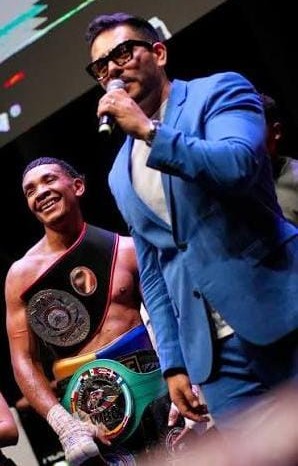
For beating Miguel Cotto to win his seventh world title in seven weight divisions in Las Vegas last Nov. 14, Pacquiao was awarded the first-ever WBC “diamond” belt and the WBO “super” championship belt. The “magnificent seven” accomplishment will surely be recognized by the Guinness Book of World Records because no other fighter in history has achieved the feat.
Awarding the “diamond” belt was the WBC’s way of sharing in Pacquiao’s glory. Since the fight was for Cotto’s WBO welterweight crown, WBC president Jose Sulaiman thought of a gimmick to gain mileage for his organization.
Sulaiman made it easy for promoter Bob Arum to accept the WBC “diamond” belt as a prize for the winner. He charged no sanction fee. Sulaiman said the recognition is strictly for “elite” boxers. The belt is encrusted with 18-karat gold fusion, diamonds, emeralds, rubies and about 150 Swarovsky semi-precious stones.
WBO president Paco Valcarcel, not to be outdone by Sulaiman, offered a “super” championship belt with privileges like eligibility as a mandatory challenger in any weight division, honorary membership for life and leeway in extending the period for a mandatory title defense.
Pacquiao has already been named Boxer of the Year by Sports Illustrated and the Boxing Writers Association of America twice.
As a private Filipino citizen, Pacquiao was given the Order of Lakandula by the government two years ago and last May, was appointed ambassador of peace and goodwill by President Arroyo.
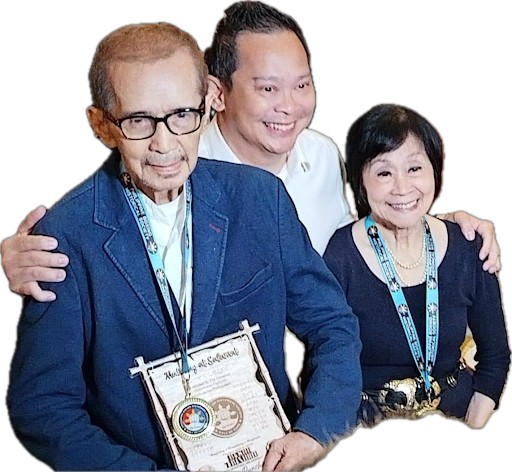
To top it all, President Arroyo conferred on Pacquiao the Order of Sikatuna with the rank of Datu in a public ceremony at the Quirino Grandstand, Luneta, last Friday. It’s the highest honor allowed by law for a Filipino or foreigner who isn’t or wasn’t a head of state. There have been less than 20 awardees of the Order in history and the list includes US secretary of state Hillary Clinton, the late Jaime Cardinal Sin and former US ambassador to the Philippines Francis Ricciardone.
The Order of Sikatuna was established by President Quirino through Executive Order 571 in 1953 to recognize “individuals who have rendered exceptional and meritorious services to the country and to diplomats, officials and nationals of foreign states who have rendered conspicuous services in fostering, developing and strengthening relations between their countries and the Philippines as well as personnel of the Department of Foreign Affairs.”
Pacquiao was given the badge and star of the Order comprising a Maltese cross in gilt and red and white enamel with a metallic composition of 95 percent silver and five percent copper.
The badge is suspended from a sampaguita wreath in enamel and attached to a sash, worn over the right shoulder with the star on the left breast under the heart. The ribbon of the Order is red with a blue stripe bordered on both sides with white stripes at the center. The ribbon is made of Philippine cotton hand-woven by a cooperative foundation in Bontoc.
The badge and star are encased in a box manufactured from sustainable lumber from a plantation in Mindanao with the brass top-plate featuring the seal of the President and the name of the decoration with Maranaw okir motifs.
The symbols of the Order are handcrafted and assembled by the Mint and Refinery Operations Department of the Central Bank.
Before the conferment, the Philippine Sports Commission (PSC), the Philippine Charity Sweepstakes Office (PCSO) and Solar Sports sponsored a program on stage to warm up the audience.
Sheryn Regis, the first runner-up of “Star In a Million,” sang two songs then there were exhibitions in pencak silat by Eiden and Pawe Abdulkarim, wushu by Daniel Parantac and Marie Stephanie Agbay and taekwondo by J. P. Sabido, Janice Lagman, Camille Alarilla, Galilee Tinaya and Ronnie Ortega.
President Arroyo was joined on stage by Pacquiao and his wife Jinkee. After the awarding, the Chief Executive and Pacquiao mingled with the ordinary people assembled in tents at the foot of the Quirino Grandstand in celebration of the PCSO’s “Common Tao Day.”
* * * *
Pacquiao actually baited Cotto to engage because he realized if the Puerto Rican worked the left jab consistently, it would be a long night. Cotto took the bait, abandoned the jab, moved forward and banged away, giving Pacquiao the opportunity to use his speed and throw his lethal combinations in the exchanges. Pacquiao even borrowed Muhammad Ali’s rope-a-dope tactic to invite Cotto inside – in the process, taking away the left jab.
When Cotto realized he was “tricked” by Pacquiao, it was too late. He tried to adjust by boxing from a distance starting the seventh round but by then, the Filipino had taken full control of the fight. Cotto wasn’t only outfought – he was also outwitted.
It was referee Kenny Bayless’ fourth Pacquiao assignment after the rematches against Erik Morales and Juan Manuel Marquez, and the Hatton massacre last May. Bayless also worked Cotto’s loss to Margarito by knockout.
* * * *
The judges in the Pacquiao-Cotto bout were Hall of Fame referee Robert Byrd’s wife Adalaide, Dave Moretti and Duane Ford.
Byrd and Moretti were judges in Pacquiao’s fight against Oscar de la Hoya last December. They both saw it 80-71, a shutout for the Filipino when the fight was stopped before the start of the ninth round. Moretti, 65, was a judge when Pacquiao lost a unanimous decision to Erik Morales in 2005. He had it 115-113 for the Mexican. Pacquiao has since won 11 in a row.
Ford, 71, was a judge in Pacquiao’s rematch with Juan Manuel Marquez. He scored it 115-112 for the Filipino who won via a split decision.
When Bayless stopped the Pacquiao-Cotto fight in the 12th round, Byrd had it 109-99, Ford 108-99 and Moretti 108-100, all for the challenger. Byrd gave Cotto only a round, the first, while Ford and Moretti were a little generous in awarding the Puerto Rican two.