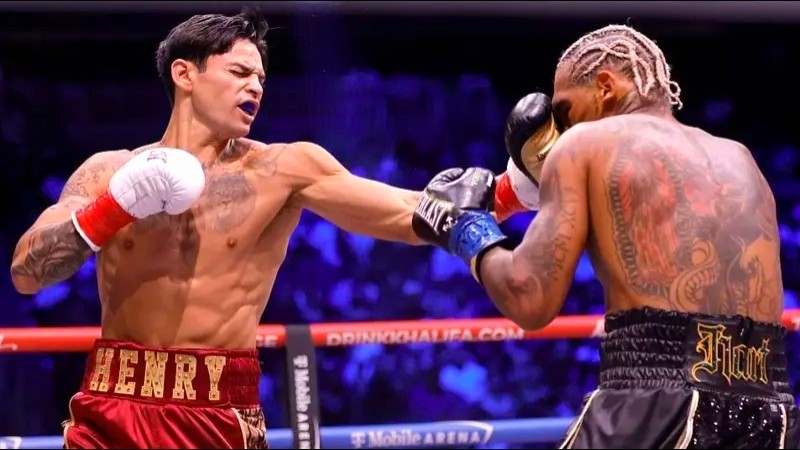
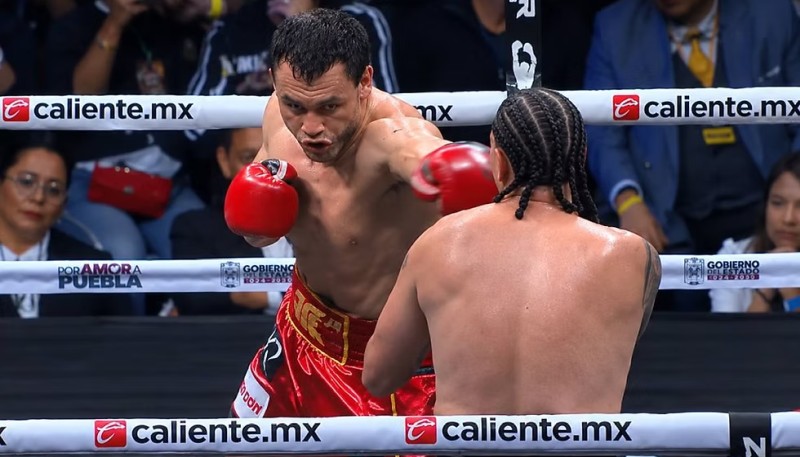
In the wake of Manny Pacquiao’s one-sided demolition of Miguel Cotto last Saturday, the focus was rightly put on Pacquiao. His performance was remarkable. But I was more interested in the circumstances surrounding Cotto, who took a slow, methodical whipping.
In September, the NFL released a study showing that Alzheimer’s disease and other cognitive disorders are more prevalent in former football players than in the general public. The same can be said of boxers; many ex-pugs suffer from dementia pugilistica, a neurological disorder that’s brought upon from suffering too many blows to the head.
Still, Bayless, regarded as one of the top referees in the sport, couldn’t find the correct moment to intercede until 55 seconds of the 12th round. Pacquiao landed a thudding left hook, and Bayless stopped the fight.
“I could have stopped that fight two rounds sooner,” Bayless said in a phone interview from his Las Vegas home. “He had taken some tremendously hard blows early in the fight. But there was nothing from Pacquiao [late in the bout] to convince me that it should be stopped. I just couldn’t stop it out of nowhere. I had to wait until there was something more.”
It was up to Cotto’s trainer, the 32-year-old Joe Santiago to bring an end to the fight. But when Bayless went to Cotto’s corner from the seventh round on to check on Cotto’s ability to continue, it was Cotto and Cotto alone who made the decision to carry on.
“It was all Cotto,” Bayless said. “His trainers never at any time got involved with questioning or wanting to make a decision to stop the fight.”
Was Santiago afraid that Cotto might fire him after the fight if he stopped it? Was Santiago fearful of not getting paid by Cotto? Who knows? Santiago couldn’t be reached for this story, but the procedures for paying trainers need to be scrutinized and perhaps altered to give trainers more autonomy in the corner.
So what’s the alternative? Trainers and boxers could have civil contracts drawn up by attorneys, but that’s expensive and is only enforceable in a civil court of law, not by the state commission, Stevens said. The commission could create a trainer-boxer contract but that’s a regulatory issue that state lawmakers have to address.
“I knew Cotto had done everything he could,” Bayless said. “He was losing the fight, he couldn’t do anything other than a knockout, and he didn’t even have the strength to do that.”
In such a situation, the trainer should have been there to do what the referee did not: protect the fighter. In a sport that physically assaults its athletes, that trainers don’t have more authority seems like a crime.
More than ever, football players rely on their coaches, team doctors and equipment to protect them from traumatic head injury.
In boxing, that responsibility falls on the referees, ringside physicians and trainers. Unfortunately, the person in the best position to protect a boxer from harm – his trainer – is hamstrung by the rules of the sport, which place trainers in subservient positions that compromises their duties to protect their fighter.
“Trainers are amongst the most unprotected groups that we have in all of professional boxing,” said Ron Scott Stevens, former chairman of the New York State Athletic Commission. “The entire situation would be made better if trainers were licensed for the appropriate skills that they possess.”
Trainers are paid out of fighters’ purse winnings. They are not paid by the promoter. They are not paid by the commission. They are paid solely by the fighter, who they essentially work for.
Trainers also don’t have contracts with most state athletic commissions, Stevens said.
If a boxer decides to stiff the trainer on his fee, the fighter has no agreement with the commission to fall back on. Most of the arrangements between boxer and trainer are based on a handshake agreement.
“Sometimes trainers are scared to stop the fight because they’re afraid that they might get fired after the fight,” said Pacquiao’s trainer, Freddie Roach. “If I had been in Cotto’s corner, after the eighth round I would have spoken to him and probably given him one more round. But I definitely would have stopped it after the ninth round. I guess his corner was tying to get a moral victory by going the distance.”
And Cotto will undoubtedly pay the price. Cotto wasn’t saved by the referee, either. Before the 10th round, referee Kenny Bayless said he was told by a ringside physician that Cotto looked as he did when he fought Antonio Margarito. Cotto was stopped in the 11th round of that 2008 match and was a bloody mess.