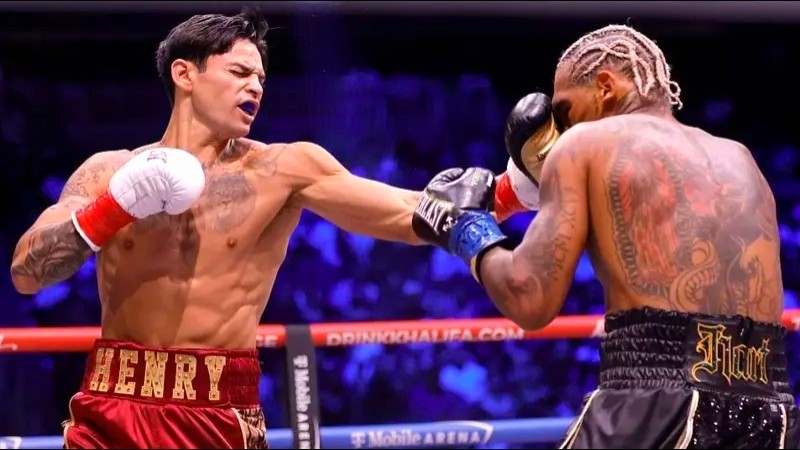
Richard Boock condemned the continuing existence of boxing in a column last month, citing its physically harmful objectives and consequential permanent injuries and fatalities. He joins a long line of such critics.
Perhaps it was an oversight but his contradictory statement, “The medical profession, without whose support the sport would never be allowed to operate, have nevertheless been staunch opponents,” says it all.
Given his forthright style I suspect Boock has periodically attacked sports administrations for being out of line with their members’ views. So too with medical associations for it is a curious fact that boxing has always attracted doctors as boxers, trainers, writers . . . notwithstanding their respective associations’ distaste.
Boxing is the oldest of all sports, traceable back three millennia to the late Bronze Age. Because of its appeal to literary types its history has been well-recorded, and I don’t just refer to macho-type writers such as Jack London, Ernest Hemingway and Norman Mailer, but also to those of a more effete disposition such as Lord Byron and George Bernard Shaw, both of whom boxed and were avid followers. Shaw even wrote a boxing novel, Cashel Byron’s Profession.
Aristotle evoked boxing in explaining the difference between pain and pleasure in courage, and astutely noted that “pugnaciousness should never be equated with courage”. Nearly 3000 years after he wrote that, the self-explanatory term, The Noble Art (of self defence) came into common usage.
Boxing aficionados understand the bewilderment of the sport’s critics. On face value it’s reasonable, but only on face value.
Why then boxing’s ongoing appeal? Why are more books published about boxing (about four a week on my estimation) than any other sport? Why also, are about a fifth of them written by academics (mostly historians and English literature academics) and a growing number by women? None of this equates with Boock’s sneering innuendo about boxers and by inference, the sport’s followers, as stupid.
Why have more movies been made about boxing than all other sports combined? Mind you, I know of no aficionado who will watch such films as they do the sport a disservice in always representing it as a slugfest. Nevertheless, all of this reflects boxing’s immense popularity as does its enormous financial rewards.
But think about that. Why, if as critics seem to believe, boxing’s appeal lies in witnessing brutality and a bloodbath, are champion boxers paid $20m and upwards for a single bout. The answer is that top boxers are the most skilled and the hardest to hit and enthusiasts react to that. The result of the recent Ricky Hatton-Manny Pacquiao fight, which drew Boock’s wrath, attracted astonishment in boxing circles, primarily because it was unexpectedly over so quickly. Ad Feedback
Boock might appreciate my point about what the fans really want if he was to watch a video of Bernard Hopkins, one of the world’s highest-paid boxers, still going today at 45. The main point of interest in a Hopkins bout is whether his opponent can ever hit him. Few have managed this feat.
Professional boxing was banned in Britain and America for most of the 19th century but much like prohibition, laws were ignored and eventually repealed. But even while still banned, Thomas Edison, when announcing his telephone invention, wrote by way of explaining its potential value, that “no longer will we have to wait for the result of boxing contests across the continent”.
More pertinently, professional boxing was banned in the oppressive “we-know-best” communist nations, but – Cuba and North Korea excepted (and not surprisingly, Sweden) – it no longer is. And that gets to the nub of the issue, namely the all-important issue of individual liberty.
Boxers box because they love it (getting them to quit is often a problem); spectators watch for the same reason. As in mountaineering, easily the most dangerous sport fatality-wise, boxers know the risks and accept the trade-off. That is a decision for them and them alone, just as with participants in other dangerous activities.
Boxing is perverse only to puritans who wish to inflict their values on others. But to logicians who understand the trade-off in risky pursuits, and who respect free will, there is no issue.
Aficionados, both participants and spectators, love boxing because, with the possible exception of test cricket, there’s nothing quite like it in complexity and excitement. But the magic of both test cricket and boxing are lost on the casual observer as they are a personal culture thing, only truly comprehensible to those learning their respective nuances and subtleties from childhood.
Not long before his death a few years ago, the doyen of British sports journalism, Peter Wilson, was the subject of an hour-long BBC television documentary on his life. He discussed great Wimbledon and FA Cup finals, test cricket series, Olympic feats and so on.
At the programme’s finish the interviewer put to Wilson that he must by now be blase about such events to which he agreed, but, added, “With one exception; I still can’t sleep the night before a major boxing match”.
That says it all.