Pacman. Flash Elorde. Pancho Villa.
Three outstanding Filipino boxers who have electrified the boxing world.
They ruled the ring in their own time and clime ? almost half a century apart within almost a hundred years.
Two of them ? Pancho Villa and ?Flash Elorde? ? are long gone, great heroes of their generation.
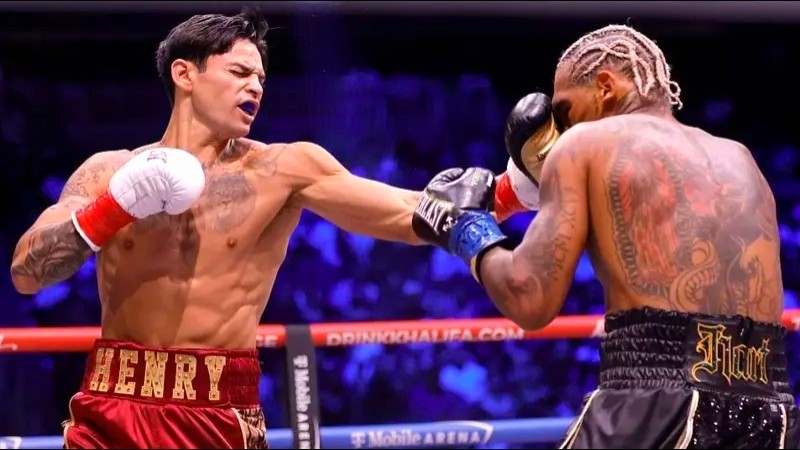
The other, Manny Pacquiao, Pacman to millions of Filipino boxing fans, is still hogging the headlines around the world for his wizardry in the ?square jungle,? knocking down or bludgeoning those who challenge his new legendary boxing prowess.
First things first.
Pancho Villa. His name is actually Francisco V. Guilledo, born in 1901 to a hacienda cowhand in La Carlota City (Negros Occidental) ? Rafael Guilledo and housewife Maria Villaruel.
Growing up without a father, who left his family when his son was six years old to join the US navy during the early part of the 1900s, young Francisco worked on the farm at a tender age to help his mother eke out a living.
The son, later at age 11, headed for Iloilo City to work as a bootblack.
He met and befriended a boxer, Manuel, in that city. The adventurous youngsters eventually boarded a ship to Manila to seek their luck in the big city.
?They settled in the slums of Tondo,? recounted a book titled Silent Storms: Inspiring Lives of 101 Great Filipinos written by Dr. Fernando A. Bernardo.
In Manila, Francisco met another boxer, Elino Flores, who had become his friend and sparring partner.
In one of their sparring sessions, Flores? boxing manager, Paquito Villa, got interested in Francisco when he saw how he boxed.
Although only about five feet tall and weighing less than 100 pounds, he floored Flores who stood five feet, six inches tall and weighed 132 pounds.
?The meeting of Paquito Villa and Francisco was the turning point of the latter?s life,? wrote Bernardo, a former Education deputy minister and former dean of the University of the Philippines Los Ba?os-College of Agriculture.
In 1918, when Francisco was 17, Villa legally adopted the fledgling boxer as his son and renamed him Pancho Villa.
But love intervened and Francisco almost turned his back on boxing.
He was deeply in love with a beautiful girl, Gliceria Concepcion, but he was not acceptable to her father. So Francisco returned to Negros and vowed not to fight again.
But his growing number of fans ardently clamored for him to go back to the ring, prompting him to again resume his boxing career and he fought with flying colors.
Paquito Villa later followed him to Negros and showed him a telegram from American promoter Text Richard, who had asked if Pancho wanted to fight in the US.
Eventually, Pancho, Paquito, Flores, and an American promoter left aboard SS President Grant and landed in New York. Before that, he had eloped with his sweetheart Gliceria.
Pancho Villa won his initial fights in the US but lost in one controversial bout.
?To appease him, his foster father, and his American promoter, he was given a chance to fight Johnny Buff, the American flyweight champion, on September 22, 1922. He knocked out Buff in the 11th round and became the US flyweight champion,? Bernardo wrote in his book.
His next world title bout was with Jimmy Wilde of Wales, on June 18, 1923 at the Pole Grounds in New York. He floored Wilde twice before knocking him out in the seventh round.
Pancho?s purse for nine months up to the world championship fight totaled $250,000. Before returning to Manila, he fought 13 bouts, which gave him an average of $20,000 per fight.
It was in New York that he again saw his father, who was on an American liner anchored at the New York Harbor at that time. The boxing champion knew that the stranger who had visited him and introduced himself as Rafael Guilledo, was his long-lost father.
?Calling him ?Sir?! Pancho pressed $5,000 into his hands. After a week (his father?s) ship left, and Pancho never saw his father again,? Bernardo wrote.
Pancho Villa?s last fight was with American Jimmy McLarnin, on July 4, 1925 in Oakland, California.
But four days before the fight, his face swelled owing to an ulcerated wisdom tooth.
Despite the pain he suffered and the doctor?s finding that his gum was already infected, he insisted on going ahead with the fight.
?When finally he was in the ring with McLarnin, he was fighting a one-fisted fight because he was using one hand chiefly to protect his afflicted face. He lost that fight on points,? Bernardo wrote.
Three days later, Villa?s wisdom tooth was extracted by a dentist. On July 13, his gum infection had spread to the throat.
He died the following day and his remains were shipped to the Philippines and laid to rest at the North Cemetery.
In October 1961, the prestigious Ring Magazine added his name to boxing?s ?Hall of Fame.?