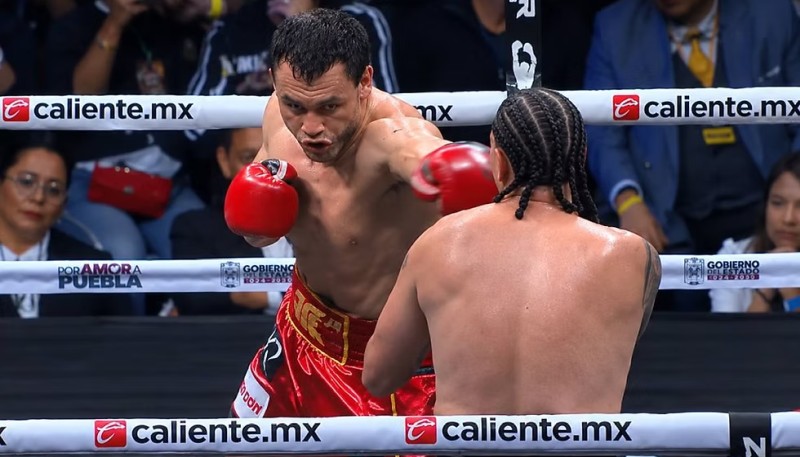
It was just a matter of time that boxing superstar Manny Pacquiao would become a contracted regular talent for entertainment shows of Philippine show business. That?s the route that quite a number of successful athletes have taken: invade show business after having made a mark in sports for after all both endeavors, especially professional sports, can be classified as entertainment.
Athletes who tried their hand at movies and TV include, probably the greatest Filipino boxer of all time, Gabriel ?Flash? Elorde and other fighters like Roberto Cruz (who, unable to cope with fame and fortune, had a short reign as world welterweight champion), Pedro Adigue; Anthony Villanueva; and overseas, Oscar de la Hoya; world billiards champion Efren ?Bata? Reyes; sprinter and now Singapore-based track coach, Lydia de Vega; Onyok Velasco, who simply gave up the chance to aim for the 2000 Olympic boxing gold medal after coming very close to winning it in 1996 in Atlanta, to be a regular TV talent; and taekwondo?s Monsour del Rosario.
To be sure, forays of athletes into show business has had mixed results much like the invasion by athletes and movie stars of politics has had spotty consequences.
Sports, show business and politics have different demands, life styles and cultures. In many cases, the demands of one endeavor go contrary and are even contradictory and hostile to the requirements of another. Show business very often requires staying up late into the night and early morning for shootings, tapings and appearances. Sports, like boxing, demand a greater amount of discipline, stamina and closer touch with reality for the simple reason that one?s life is at stake whenever one steps into the ring.
To be sure, Pacquiao and his handlers know that these additional activities could distract Pacquiao and that they presumably, have a game plan on how to make sure that Pacman?s ?flagship? activity, boxing, is not compromised by his involvement in show business. After all, it was boxing that brought Pacquiao to GMA last Saturday to ink a two-year deal (Sept. 8, 2007 to Sept. 7, 2009) as a performing artist.
The deal calls for Pacquiao to perform and appear in TV programs, projects and events of GMA assigned to the boxing icon, under separate agreements. The agreement, I understand, has other provisions that, in summary, states that Pacquiao is exclusively for GMA: he cannot appear on any television program, show, promotion or event of any station other than GMA and its subsidiaries and affiliates without the written consent of GMA.
Since the deal has been, so to speak, signed, sealed and delivered, it is now imperative for all parties to ensure that Pacquiao?s sense of balance is not upset. He has to comply with his contractual obligation to the best of his ability while at the same time continue to move forward into his very lucrative career as an international boxing icon. This is the challenge before people like Freddie Roach and all others who profess to protect Pacquiao?s interest and well being.
* * *
Reports state that the Philippines might end up sending around 600 athletes to the 24th Southeast Asian Games (SEA Games) in December in Thailand. The same reports indicated that so far, 492 athletes have qualified to travel to Thailand ?based on the criteria of gold and silver finish in the 2005 Manila SEA Games.? Should an additional 107 athletes make it to Thailand, the Philippines will have a total of 700 delegates, including coaches and officials, that will participate in the 24th SEA Games. That?s enough to fill up two Airbuses.
How are the other countries determining who makes it to their respective contingents to the SEA Games? Singapore, for example, focuses on youth development. Leonard Lim of The Straits Times reports that about half of Singapore?s 360-person contingent will be below 21 years old.
The reasons for emphasis on youth are two-fold: it will host the 2013 SEA Games and is bidding to stage the inaugural Youth Olympics in 2010.
The Singapore National Olympic Committee?s (SNOC) benchmark is at least a third-place finish in the immediately preceding SEA Games or an equivalent event. Women?s soccer, which did not meet the criteria, is appealing for reconsideration stating that the team?s recent results against regional opposition such as the Philippines, have improved. It also stated that the squad?s average age is 22, which means that ?their future is bright if they are given more exposure.? The words sound familiar, don?t they?