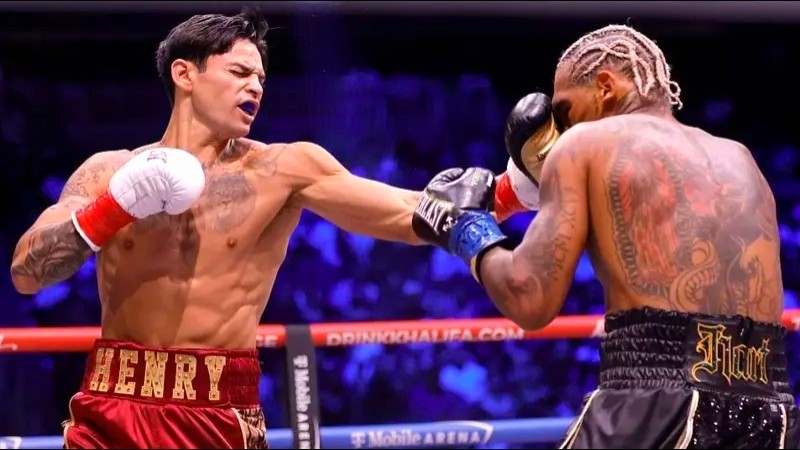
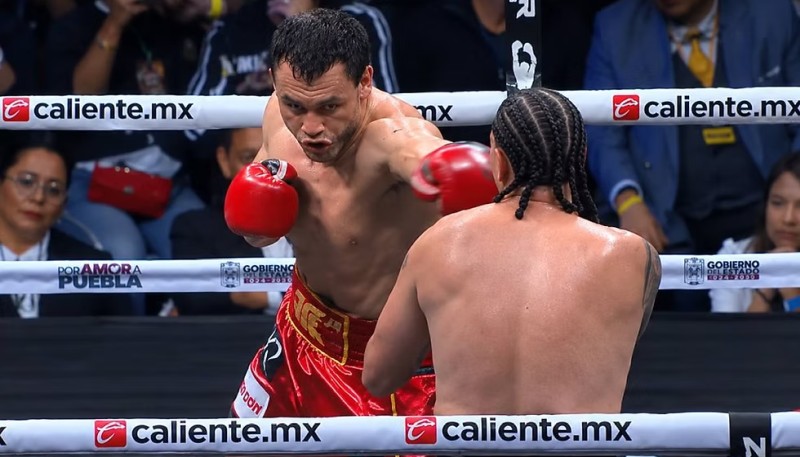
Street fights, for all their sloppiness and ugliness, are more fascinating than professional fights where rules are imposed on the heart of darkness?
October has been a slow month for boxing?a few bouts on the grade-B channels, nothing on the premium channels between A-list fighters, and the single mega-fight slated for this fall month evaporated like a bad pipe dream when the combustible Tyson Fury combusted.
With professional pugilism taking a hiatus, I started thinking about those less-than-professional fights that are rarely scheduled, never put on TV, but which are often more fascinating that the controlled matches in the ring, at least for the brief moments they last. Street fights. They usually just happen?a bad glance, a sharp word, a nudge too hard. Then, sometimes, and I say sometimes because most times people don?t want to fight, things escalate.
I thought of my few kid-fights, flailings that usually ended in abrasions from pushing and pulling and gabbing and dragging instead of clean connects. I thought of my fewer adult fights that ended quickly, fights that have, in my mind, taken on slow-motion detail but, if I?m honest, were not close to movie-worthy.
That?s how it is with street fights. Most go ugly, quickly deteriorating to ground-game pounding. When pavement?s the canvas (a street, a sidewalk, a schoolyard playground) the nuances and beauty of elegant boxing are usually absent.
When I first came to New York City there was constant action on the streets, which was why I moved to New York. Fights were always breaking out. Cops were always chasing people. The subways were rougher. Central Park was off-limits after dark. Times Square was a triangled-square often as dangerous as a squared circle. Then Giuliani came into power and the humorless man went to work, sucking much of the life out of New York?along with the bad action that defined the Big Apple, the good action disappeared and NYC?s decline into homogenized began.
The street fight I remember best is a Technicolor memory that?s becomes more vivid with time, probably because it was movie worthy. The best sports movies are about life, not sports, and this street fight had a theme.
June 11, 1982. I was still a kid, really, from a small town in Massachusetts, spending a summer in Manhattan, living low to the ground, too low to afford a ticket to the pay-per-view showing of the Larry Holmes/Gerry Cooney fight taking place a country?s width away in Las Vegas. Madison Square Garden was showing the fight; instead of paying to see the fight on screen, I waited outside the arena, in back where the entrance to The Felt Forum used to be, along with about a hundred other boxing fans. We weren?t close to the live action in Vegas, we weren?t close to the televised action in the Garden, but together, standing outside on a cool summer night, some of the energy, some of the anticipation that makes a mega-fight mega, shot us through with adrenaline.
Every three minutes, some good Samaritan would come outside, give a one-line synopsis of what was happening?Holmes is jabbing; Cooney?s throwing body shots; Holmes won the round, easy?then duck back inside for the next round. Separating the crowd outside from the Garden entrance were police barriers, those connecting metal-barred gates that keep parade watchers from getting too close to the parade. That night the line was clear. There were those inside, the privileged ticket holders watching the heavyweight blow-by-blow. And outside, there was us. And that?s what it felt like that night?a collective we, unified by our love of boxing, by our need to know, as immediately as we could, what was happening inside the Garden and, really, what was happening at Caesars Palace. Inside, paying customers were seeing the picture. Outside, we were making our own pictures based on a line or two of information superimposed on what we already knew about the great Easton Assassin with his superlative jab and the big man from Long Island whose gangly style belied body-crunching power.
I don?t know how it started, which is how it happens with most street fights you see, but two guys started jawing at each other. One was an Insider, a man who worked at the Garden. One was an Outsider, one of us. Both of them tipped the scales at over two-hundred pounds, making them legitimate heavyweights. The Insider was big, a tall, broad-shouldered man with a gut. Not a fat gut, but a gut that looked well-fed, steak and expensive whiskey dinners that coated whatever was solid around his middle with a layer of good-living fat. The Outsider was younger and thick?thick-featured, thick-chested, and if he had a gut his denim jacket covered it. He looked blue-collar. The other guy, the Insider, was at least trying for something more. I guessed he drove a luxury car, not a pick-up truck.
Most Insiders stay inside. That?s probably why they became Insiders in the first place?for safety. To his credit, this Insider un-hitched one of the police gates and walked forward. He was talking cocky, he was walking cocky, and he was telling the Outsider he was going to kick his ass. The Outsider didn?t look fazed. I heard one of his buddies say, ?Don?t worry. He won the heavyweight Gloves.?
To win the Gloves in a big city means you can do more than street brawl. The Outsider was the Insider when it came to the sweet science?he wasn?t a kid anymore and he?d lost that muscular definition that comes from rigorous training, but he knew (if his friend wasn?t bullshitting) how to fight.
Street fights are fast. Maybe that?s why they have a slow-motion feel, at least in retrospect. So little happens?a few steps forward, a circle or two, a couple of punches at most (and then, too often, a lot of grappling that feels under-water slow)?that everything is remembered, each detail significant like in the best still lifes.
The Insider moved forward, his big body big but not graceful. The Outsider circled to his right. The Insider lifted his hands. The Outsider?s hands were already up. The Outsider threw one left. The Insider stumbled. The Outsider threw one right. The Insider almost fell. The Outsider waited. Some men from the inside wearing MSG uniforms grabbed the Insider and walked his dazed big body back through the opening in the police gates, back inside. I remember the confused look on the Insider?s face. He was blinking a lot. A welt was starting to rise next to his eye. His mouth hung open like a one-year old or an old man suffering from dementia. His legs weren?t working. Two punches and all his bluster had been deflated. He was the opposite of a tough guy. He was the loser and no amount of talking and lying after that fact would make him anything else.
No one called the cops. It had been a fair street fight. And the Outsider seemed excited about his victory, accepted the congratulations of other Outsiders, even if he?d just kicked the ass of a sub-novice. Maybe the Outsider wasn?t aware of the fight?s theme?storylines are left to the writers and publicists and spectators (if they think that way)?but it was there.
The moral, the through-line of meaning, seemed clear. Most fighters come from hard places, from outside places where struggles are greater, or at least more basic. The inner cities are really outer places. Boxing gyms are full of outliers, kids who don?t quite fit in. By training, they?re able to channel a brand of aggression that isn?t acceptable, that gets people arrested on the street and, if not arrested, gets people hurt or killed. Insiders make the rules for self-protection. Outsiders, when they?ve been outside too long, when the weight of being outside presses too hard, break the rules so they can feel empowered, if only for one glowing moment. I?ve seen prisoners, rule-breakers who?ve been caught and put away, light up when they talk about their one big crime. The irony is that professional pugilists become professional only when they learn and perfect a craft, only when they play by the rules of prize fighting. But most professional fighters start on the outside where unbridled toughness resides. And street fights, for all their sloppiness and ugliness, are more fascinating than professional fights where rules are imposed on the heart of darkness.
The proof is this?if you?ve ever been to a professional fight and a fight breaks out in the cheap seats, everyone, everyone, watches the fight they didn?t pay to see. There are no ropes. There is no referee. There are no rules.
Max Kellerman, when he talks about why boxing is the most fascinating sport, sets up a hypothetical where someone comes to an intersection. On one corner, a baseball game is going on. On the second corner, a football game. On the third, a basketball game. On the fourth, a boxing match. Where do you look? You look at the two men fighting. And if there were a fifth corner where two men were street-fighting, no rules, no ropes, no ref, no gloves, you?d look there.
Adam Berlin is the author of four novels, most recently the boxing novel Both Members of the Club (Texas Review Press/winner of the Clay Reynolds Novella Prize). He teaches writing at John Jay College/CUNY. For more, please visit adamberlin.com