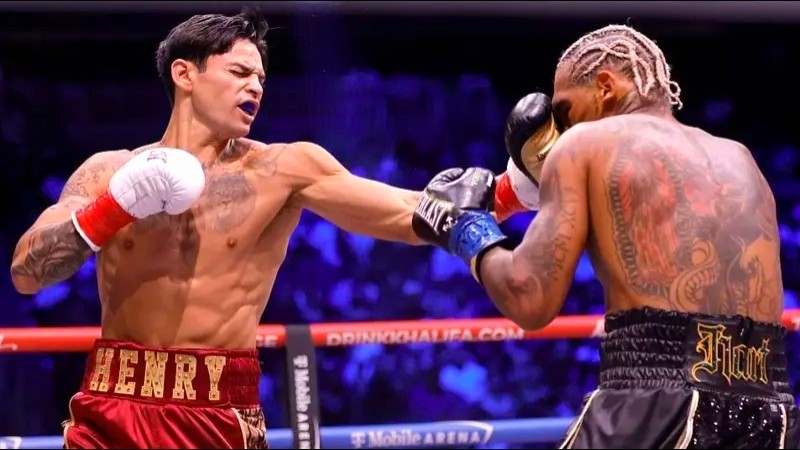
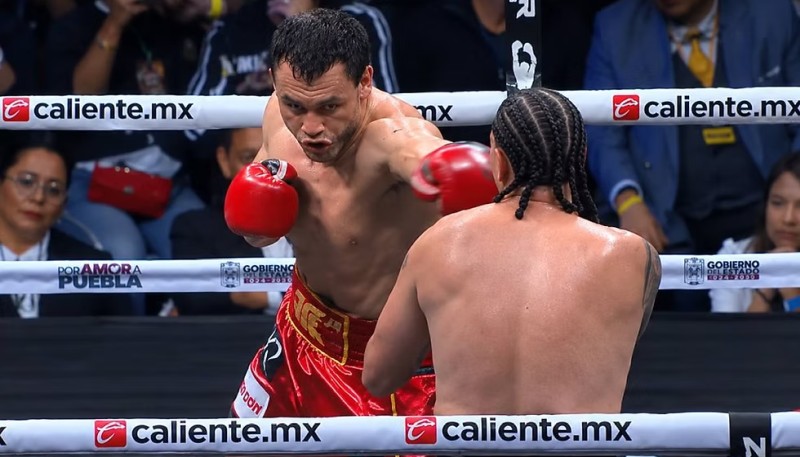
Before 11,020 of his fellow cornhuskers at the CenturyLink Center in Omaha, Nebraska, on Saturday night, Terence Crawford did what all in attendance hoped for (and even more expected) when he stopped Dierry Jean in ten rounds. It was a performance exemplifying the ?parse and dismantle? style Crawford has used to flawless effect. No, he does not explode from his corner, spurred into battle by any number of isms trusted to turn a stretch of canvas into an existential battlefield. Crawford does, however, invariably treat opponents according to their ability; which is to say, Jean, a competent but unremarkable fighter, stood no chance.
Nor did HBO hide Jean?s prospects in the pre-fight propaganda. Where you might expect these vignettes to focus on details that emphasize the quality of the matchup?and thereby the broadcast?Jean was introduced primarily as a man who overcame struggles with alcohol and gambling. A fighter who has spent his training camp half cut at a craps table is unlikely to imperil an HBO A-lister, but the introduction of Jean, Montreal, Quebec, via Haiti, seemed less like a celebration of his recovery, of his regained fitness for combat, and more like a diversion. With Jean, as they have for fighters facing similar odds, HBO developed a character rather than profile an athlete. Jean the fighter? Crawford was left to reveal that. It took him less than a round.
In the first round, Crawford switched southpaw, and after lulling his quarry into a pawing match, pulled Jean?s lead hand down and landed a cross that stung ?All In?. Moments later, a right hook had Jean on the canvas. Jean beat the count as the round ended and teetered safely to his corner, admonishing himself for falling for this bit of trickery. His opponent solved, Crawford, Omaha, Nebraska, fought southpaw for the remainder of the fight, using his power hand to stick Jean with jabs and shake him with right hooks.
Crawford wears on fighters not only with his fists but with his range. Despite his size, he works where opponents can touch him, where ?Bud? still has to rely on slips and parries to protect himself. He concedes this risk to better employ his arsenal, a concession that reflects Crawford?s modus operandi: he is looking to get rid of his opponents?not simply outbox them. Jean, 140, landed his share of blows, (including a particularly vicious right hand in the later rounds) but he did so as a fighter all-too-conscious of the perils of his aggression. This awareness tempered Jean, who as early as the fourth round was punching like a fighter trying to stay an execution rather than pursue victory.
This shift in purpose was not lost on Crawford, 140, who preyed on Jean?s yielding by diversifying his attack, mixing in hooks to the body and loading up on his punches. His maliciousness was well-served, particularly in the sixth, when Crawford momentarily reverted to orthodox and hammered away. With Jean now fearful of throwing much more than a single jab or cross at a time, Crawford timed these punches with counters and started pinning Jean along the ropes.