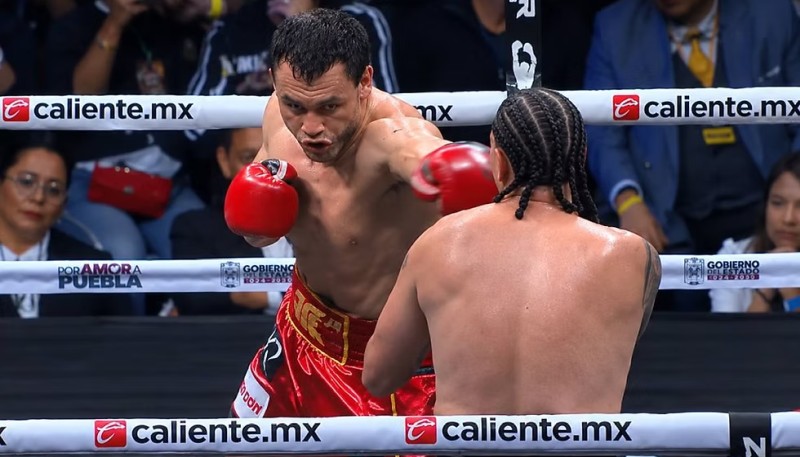
Can technology save boxing? Of course not, but at the very least, it can make it better. Let?s help get Boxing into the Technology Age?
?Let?s welcome boxing into the 21st century. The technology is there, use it.??Mark Weber (Fight Saga)
?The risks associated with boxing should never be trivialized, but science and technology could possibly help to mitigate them.??Allan Hahn, Adjunct Professor at University of Canberra, Australia
Both rugby and cricket use extra officials in the stands, and tennis great Roger Federer has been won over by the Hawk-Eye system in his sport. The NFL continuously tweaks the game to improve the use of technology. And the MLB and NBA also have instant replay system. In boxing, however, technology has been somewhat slow to catch on. This in turn has contributed to a phenomenon where being a judge can be a thankless task and where attention is received only when something controversial and/or negative occurs. The arguments rage on about how to improve the quality of judging, but aside from recommendations from Jim Lampley and the ever-emotional Teddy Atlas, there have been few solid suggestions. In fact, some of the boxing judges themselves seem to be in denial.
The following are the major current or potential usages of technology in boxing:
Use of Monitors
Veteran judge Dave Moretti says, ?You have people who are concentrating for three minutes, looking at nothing but the gloves, nothing but the punches. These other people are judging from TV, they?re judging from twenty rows back and they don?t see the effect of the punches all the time.?
That?s not necessarily so. Many observers feel viewing a fight on a monitor provides a much better vantage point. TV announcers use monitors and there is absolutely no reason why the judges cannot use them as well. As a respected boxing aficionado recently pointed out to me, the view the judges get is in no way as good as the view provided to those who watch on television. Judges often get blocked by the referee, and often by the back of a fighter who is working an opponent on the far side ropes.
Nearly a decade past the moment when football and basketball have chosen to follow suit, boxing still won?t give ringside judges a monitor to refer to for a cleaner view. That step would cost practically nothing. Giving the judges a small monitor with a clean feed?no commentary, no graphics, just the video?allows them at least a fighting chance to be on the same page with viewers who continue to criticize them.
Pod Index
The people at Pod Index, LLC have created a great way to track the consistency of each judge and breakdown how often each judge agrees with his or her counterparts on a round-by-round basis.
More specifically, the Pod Index is a sports statistics company founded in 2013. It was recently hired by two prominent boxing and MMA state commissions to assist them in evaluating their judges. Though not a panacea, the Pod Index is designed as a new method of determining consistency.
Here is how it works. The commissions send the Pod Index all of their master score sheet data, which is entered and stored in an online database. The company then analyzes the scores for consistency and produces user-friendly reports. The commissions can then use those reports to help evaluate their officials in an objective and purely quantitative way.
The Pod Index also conducts official scoring reviews for its clients. After a controversial decision, the Pod Index hires five professional judges to score the fight on video, anonymously. This increases the sample size of scores from 3 to 8, allowing the commission to better determine if there were any irregularities in scoring.
California (CSAC) was the first commission to sign on earlier this year, while Nevada (NSAC) signed on shortly thereafter. The Pod Index is also partnering with international sanctioning bodies on various reporting and analysis.
Since its inception, Pod Index, LLC representatives have presented at IBF, WBA, NABF, and ABC Conventions. The Index was also presented at the recent WBC convention in Las Vegas where it was well received.
The specialty statistics consultant for two of the most powerful boxing commissions in the world is now expanding its reach by offering consultative services to promoters and managers to help them determine if the proposed judges for a match give their fighter a disadvantage. It?s complex, but in short, the company leverages CompuBox data to analyze trends in judging as it relates to individual style preferences.
See: https://www.youtube.com/watch?v=9ENBuJxPrA4
Use of Instant Replay
Arguably the best system is the NHL?s which was adopted in 1991. The professional hockey organization sets up a monitoring booth dubbed the ?War Room? in Toronto. At any moment, the referee can decide to review a play and make a call to the ?War Room? to decide whether or not a goal should count or not.
See more at: http://www.fightsaga.com/news/item/2758-Boxing-and-Instant-Replay-The-Sport-Needs-a-War-Room#sthash.l0ldIUhE.dpuf
?I think that with instant replay, we will be able to make these corrections, if necessary, on the spot?It?s the fairest way to go in the 21st century.??Larry Hazzard
Hall of Fame member Larry Hazzard feels that the use of instant replay will put boxing at the level of the four major sports when it comes to getting the calls right. When he first headed the New Jersey State Athletic Control Board, Hazzard instituted instant replay review capabilities during fights. After his departure in 2007, however, New Jersey ceased with the practice. Now that Hazzard is back and in charge in New Jersey, he?s brought back instant replay review for boxing and MMA contests.
Says Hazzard, ?You have to make those decisions right there, on the spot, by using instant replay. I have no problem making on-the-spot decisions. That?s what leadership is all about. If a referee makes a mistake, he should be overruled. It?s only fair to the fighters. Most fighters only get one major opportunity, especially a world title fight. If a guy is fighting for a world title and loses, he might never get another shot. It would really be a shame if a referee makes a mistake and costs a fighter a chance at a victory. We have an opportunity to do something about that in boxing and we should.??Larry Hazzard (New Jersey.com, Nov. 8, 2014)
In June 2014, it was confirmed that instant replay would be used in world championship fights and any other affiliated championship of the WBC, WBA and IBF effective immediately.
The following, from Sherdog?s C.J. Tuttle, is the protocol for how and when instant replay may be used:
1. The boxing organization, in conjunction with the local commission, will appoint a panel in charge of instant replay. The panel will consist of the supervisor, the local commission supervisor, and the specifically appointed monitor supervisor. 2. The promoter, with the support of the television network, will provide a monitor to be placed at the head table of the commission with headphones for audio commentary to receive the live feed. 3. Instant replay is limited to review (a) whether a cut or other injury to the face is the result of a punch or otherwise; or (b) whether a punch is thrown after the bell signaling the end of a round and (c) in any major situation that can change the outcome of the bout and where the replay clearly shows the actions are contradictory to the live ruling of the referee. 4. The referee may call ?time out? during the bout and consult with the instant replay panel, if in doubt, as to any scenario. However, it is recommended that all reviews are done during the resting minute period. 5. The instant replay panel will review any controversial instance that may have occurred in any round. A determination of the referee may be overruled solely if the instant replay monitor clearly and conclusively reveals, according to each member of the panel, that the ruling of the action by the referee was mistaken in his original determination. 6. The referee may request to verify the action by watching the TV monitor or may choose to accept the panel?s recommendation, which is the final decision and the ruling that will be enforced. 7. Both corners and the audience will be notified of the final decision
Instant replay can minimize, if not eliminate some of the mystery associated with knockdowns vs. slips, accidental fouls vs. intentional fouls, if a cut was the result of a legal strike or a head butt, and finally whether or not a blow occurred before the bell rang?particularly when such issues are called in the late rounds and can turn the fight..
The announcers have it. Why not the judges?
Sharing CompuBox statistics with judges
In between rounds there?s a 60-second break so the issue here would be whether there would be time enough for coordination. Perhaps the bigger issue is whether these stats are all that that essential since they are far more quantitative than qualitative. Nevertheless, in an otherwise even round, they could be helpful.
However, as the CompuBox site states, ?The CompuBox stats in no way, shape or form, determine a winner of a fight. The stats are used to enhance a telecast, show the estimated barometer of activity by both fighters and paint a picture of the activity on a round-by-round basis. Even though our database of over 5,000 fights (and counting) shows that a fighter that throws and lands more punches will win 90% of the time, the 10-point judging system clearly is the only way to determine winners in a fight.?
See: http://compuboxonline.com/about/
Numbers don?t lie?except in boxing.
PunchForce
?From the fan perspective and the fighter perspective, I am all for it.??Keith Kizer, former executive director of the Nevada State Athletic Commission
?I don?t need the British Medical Association to tell me getting hit on the head can?t do me any good.??Terry Marsh, undefeated light welterweight champion
?Even with the ?automation? that is supposedly provided by the PunchForce device, there is a lot of data that has to be processed into something that, well, means something. Remember, some of the scientists who have worked on this, and some of the executives who have placed a certain value on it, may not know all that much about ring generalship or defense.??Charles Jay (Boxing Insider)
At the risk of oversimplification and aside from the outrageous fiction of the power punches shown in Rocky movies, this technology is designed to measure the speed and force of a boxer?s punches and transmit that information instantaneously to viewers of HBO broadcasts. But its real potential may be broader. Yet, the technology has yet to launch even though the Federal Communications Commission granted approval to HBO?s PunchForce in February, essentially ruling that it would not interfere with other transmissions. Just why is not clear. ?It would really have to get field-tested,? said Greg Sirb, executive director of the Pennsylvania Athletic Commission.
A word about Boxing Judges
Boxing judges are human. They deal in a subjective world, and anyone can have an off night. Unless a clear and documented pattern is present, judges should not be subject to the reverse halo effect whereby the perception of a negative or undesirable trait in individuals, brands, or other things influences further negative judgments about the traits of that individual, etc. Also, once a judgment about negative traits is made, that judgment influences future perceptions so that they confirm the initial judgment. That is known as confirmation bias. Thus, when a boxing commentator launches himself into a tirade over judging in a particular fight, he may be engaging in confirmation bias?a kind of ?See, I told you so.?
There are many fine judges working fights these days, but to name a few is to risk excluding others. Nevertheless, Julie Lederman, Glenn Feldman, Dave Moretti, Joe Pasquale, Hubert Earle, Benoit Roussel, Tom Shreck, Don Trella, Steve Weisfeld and a few others quickly come to mind. But no matter what their prior track record might be, it often is the case that if they make one ?questionable? call in the eyes of fans, certain promoters, and/or certain boxing commentators, they are tagged as ?bad? judges and become a dart board for Bob Arum?s selective criticism. That is simply wrong.
See: https://www.youtube.com/watch?v=htmjXsZjUX4
And the beat goes on, and on and on.
Conclusion
The above methodologies (and there are others such as the Wayne State Tolerance Curve) can help close the gap on subjectivity. There are no silver bullets here, but when combined, the net impact could well ease the reverse halo effect that now unfairly impacts judges to wit: Only negative or controversial incidents are called to attention.
Can technology save boxing? Of course not, but at the very least, it can make it better. Let?s help get Boxing into the Technology Age.
Ted Sares enjoys writing about boxing. He is a member of Ring 4 Boxing Hall of Fame (New England) and a member of Ring 10 (New York). He is one of the oldest active powerlifters in the world and competes throughout North America under the auspices of the RAW, USPA, and the Elite Powerlifting Federations He is the 2014 EPF Nationals Champion in the Grand Masters Class and the 2015 EPF Northeastern Grand Master Champion.