Once hailed as British Boxing?s leading ambassador Ricky Hatton?s fall from grace has been spectacular to put it mildly.
Not so long ago Ricky was everyone?s favourite sportsman, when he traveled to America to fight it was not unusual for over 30,000 fans to make the trip as well. Unfortunately so many have now turned against their former hero.
Even the boxing hierarchy reacted, by revoking his professional boxing license, as well as his seconds and manager licenses and fining him ?20,000 after finding him guilty of misconduct – in that his actions and behaviour were detrimental to the interests of Boxing and to the public interest and that he had brought the sport into disrepute.
However, we should remember that our sporting heroes are human, after all we all make mistakes at some time. Ricky is still Ricky, he is one the greatest boxers of our generation and should be hailed for his achievements.
Ricky Hatton?s case highlights an issue that affects many athletes as their career draws to an end. The dramatic ? not to mention traumatic ? change in lifestyle required from people whose life has been dedicated to intense physical challenge up to this point can affect them deeply, leading to all kinds of problems both mental and social.
Leading sports psychologist Andrea Firth-Clark explains the challenges faced by not only Ricky Hatton, but all athletes that have to adapt to the ending of what was not only a career, but their whole world.
?Lately, Ricky Hatton is being vilified, some people are outraged, some don?t understand how he could have let himself down, his family, fans and his sport down. However, like many of our retiring athletes, it is Ricky Hatton who has been let down.
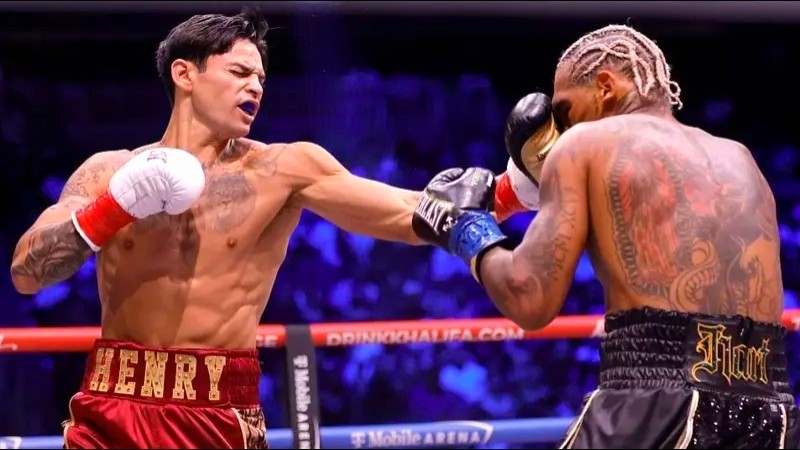
He was not helped enough after his heavy defeat by Manny Pacquiao, the manner of this defeat, a knock out, was a hard pill to swallow for Ricky and by his own admission he descended into depression. His retirement does not seem to be of his own free will, it seemed to him he had little choice but to do so and in fact it is not even clear if he had actually retired until his boxing license was taken away. His career as a boxer has kind of just petered out. There was no hero?s send off, no pomp and ceremony, a very disappointing end to what had, despite the Pacquiao fight, been an outstanding career.
Many athletes retire from sport with little or no emotional upheaval. For others retiring from sport requires a difficult emotional adjustment. In short, giving up a lifetime of competitive sport and all that it involves can result in an emotional crisis based on the loss of their athletic identity. Taylor and Watson quote research that found 88% of footballers and 61% of Olympians experienced emotional stress after retirement. Ricky has admitted to being depressed saying ?I’ve been in such a low place, such a bad place I couldn’t tell you?.
Failure to adjust to life after retirement is not just restricted to retirement from sport. For any of us retiring from a life we have grown used to can lead to emotional turmoil. Some miss the camaraderie associated with an everyday routine; others feel that they have lost their identity, part of what makes them unique. ?A lost sense of identity can cause people to lose confidence in their ability to make decisions and plan appropriately for the future?. Dimarco (1997).
Sports performers need to accept they are athletically past their peak. For many it is a life style they have lived obsessively since early childhood. A lot of athletes experience the retirement process as a major loss in their life, akin to grief. Like Ricky, they have a hard time admitting that part of their life is over. In Ricky?s case, the question that he could not resolve after his unexpectedly heavy defeat was did it need to be? It is this question that, in many ways, made it harder for Ricky. At his age, 31, not old for a boxer, had he been able to overcome his depression sooner and had he avoided his self destructive behaviour, there is no real reason why he needed to have retired just now. He had a choice, he could have chosen not to let one defeat define his career boxing career. With adequate support, despite other issues in his personal life, he could have bounced back much quicker.
Athletes are still relatively young when they retire, nowhere near the retirement age of other professions; therefore they have additional worries along with those shared by everyone else, such as can they continue to live the life they have grown financially accustomed to? Do they need to down size? Can they hold down another type of job? Do they have transferable skills? Is it possible for them to somehow stay involved in their beloved sport? Not all successful athletes make a great deal of money from their sport so some will need to find a means of supporting themselves after a life dedicated to a sport which has not allowed them to accumulate a nest egg.
Successful athletes are used to feeling and being treated as special, once they retire they are treated just like everyone else, they are no longer top dog, someone else will come along to take the top dog role. In addition once they retire the athlete loses constant contact with members of their support group; such as trainers and coaches with whom they have built a daily and close relationship. It is for these reasons that Lavellee and his colleagues argue that retirement for sports men and women is likely to be more traumatic than for non athletes.
Yet, we expect our athletes to be able to handle this transition on their own, when often what is needed is some form of mentoring to help them cope effectively with this transition. Generally, the more control an athlete has over their retirement the easier it is for them to adapt to their new life and the different routine and mindset necessary.
A lot of planning and effort goes into the building and maintenance of an athlete?s career. In comparison little thought or goal setting is given to the retirement years. Athletes that tend to do well upon retirement are those with a great support network, those who have developed other interests outside of their sport, or who have planned their second career or next job well.
Some athletes approach retirement calmly, addressing the issues logically, accepting the inevitable and actively planning and putting in place effective coping mechanisms. Others are much more emotional, these athletes will find it hard to adjust to life outside of elite performance in their sport. Athletes often delay addressing the issue of retirement; denying that retirement is looming then becoming angry or depressed once it happens. This emotional distress is stronger especially if they have not achieved all they wanted before they retired, or if they finish their career on a low. Early planning is the key, planning the next stage of their life is best done whilst still flourishing as an athlete.
Unlike, athletes who announce their retirement before their last competition or finish their career on a high, on their own terms with a fitting send off, Ricky , despite having other businesses to secure his future, had not planned to retire straight after his last fight, for Ricky it was a bolt out of the blue, a real anti-climax to an illustrious career.
One of the cruelest means of retirement is when the athlete realises or is told that they are no longer fit or talented enough to compete or there is a prolonged drop in form. In Ricky Hatton?s case a serious defeat such as his loss to Manny Pacquiao near the end of his career affected him badly. No doubt had he not suffered such a devastating loss so near the end of his career he would have found retirement as an athlete easier.
Some athletes such as Sue Barker, Gary Lineker, Michael Johnson have all become successful commentators and seem to have transitioned well from sport performer to commentator. If the athlete?s whole identity is not just that of an athlete they can adjust well. If they carefully plan their retirement well in advance and if they have good support, someone to confide in about their feeling and if they can be mentored by those who have gone through the process already they are likely to adjust better to life after elite sport. It is important for all governing bodies to provide this for their elite performers. It is not good enough to say to them, thanks for the memories, now you are on your own.
Ricky is one of the lucky ones despite his sudden exit as a boxer, he still has a life in boxing. He has highly successful businesses including his boxing promotion business, leisure centre, boxing equipment and leisure wear company. This is a man used to success, I am sure he will not let one failure define his future.
Ricky is fortunate to have other strings to his bow, not all our athletes have his business acumen, or are involved in such high profile sports. It is therefore important that we help them to plan effectively for their retirement from sport and not leave them unsupported in this transition.
I hope, one day soon Ricky will receive the retirement send off he deserves devoid of the derision he has recently received.?
Taking note of Andrea?s perceptive insight perhaps sports governing bodies could take a leaf from the military, which for long serving personnel offer courses to help them adapt, upon retirement, to civilian life, as well as providing a long term support network.
Whilst the comparison between a serving soldier and an athlete may seem strained, when you look at the discipline and dedication each give to their vocation the similarities become much clearer. Both have an extremely regimented life which is focused on them achieving one goal.
An initiative such as this would clearly be a positive way forward. Ricky dealt with his depression with alcohol and recreational drugs. Ok, not the smartest way, but we could so easily be mourning him had he decided to take the same route as former Great Britain rugby league player Terry Newton, who committed suicide on Sunday.